
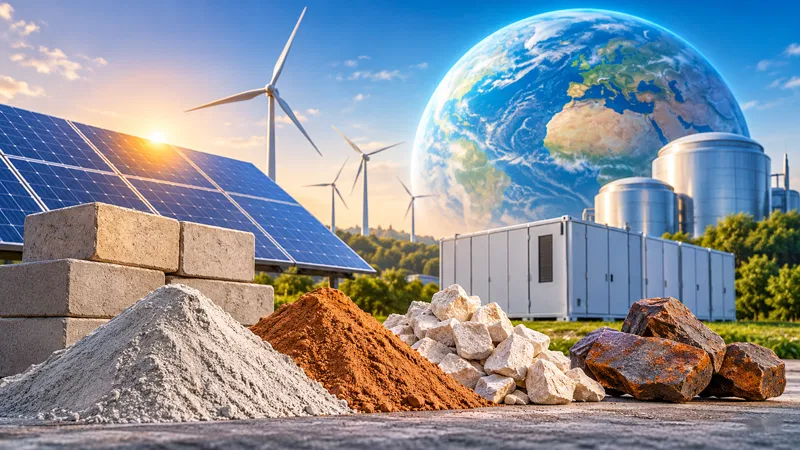
A new report from the World Economic Forum (WEF) and Frontiers identifies ten technologies that by 2030 will help reduce emissions, reduce dependence on major fossil fuel suppliers, and provide reliable energy for more people. For this, everything is there, all you need is desire and… money. More money is better.
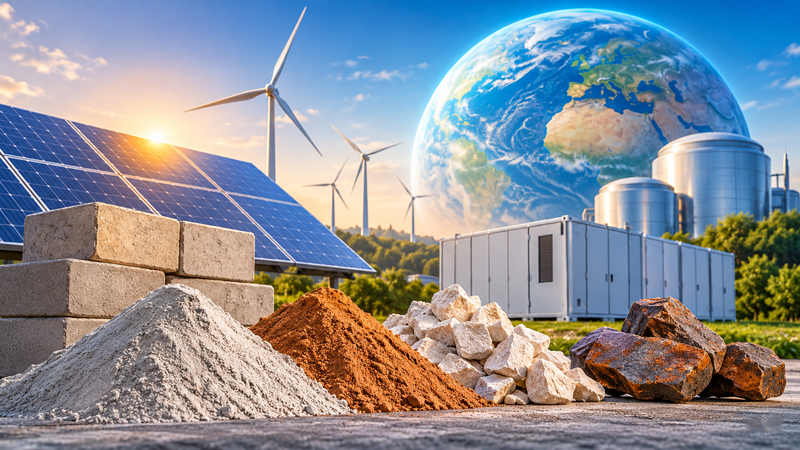
Image source: AI generation ChatGPT/3DNews
The WEF and Frontiers report is based on research from the Potsdam Institute for Climate Impact Research (PIK). Back in 2009, PIK researchers proposed the concept of “planetary boundaries”—indicators of the state of a number of characteristics of the Earth, beyond which potentially threatens life on the planet. For example, these include the level of ocean acidification, loss of biodiversity and other parameters. In 2026, scientists report, seven out of nine such indicators will be exceeded on Earth. Moreover, the vast majority of threats to the planet come from energy or related areas.
How we produce energy has a big impact on how much carbon enters the atmosphere and how quickly oceans acidify. This affects how land, water and minerals are used, and how well communities cope with heat waves and other shocks. That’s why the report evaluates each technology in terms of its impact on planetary boundaries, equity and security. It weighs the benefits and disadvantages for the planet, people and the systems that provide energy.
This is the future will determine the following ten technologies:
Cement based on fired clay and limestone (LC3). It is proposed to replace almost half of the clinker in cement with burnt clay and limestone. Clinker is obtained from the same components by firing at a temperature of about 1450 °C. This process is proposed to be replaced by adding clay fired at temperatures up to 800°C and limestone, which would reduce carbon emissions by up to 40%. Virtual power plants and networks. The software will coordinate home batteries, electric vehicle chargers and smart thermostats to provide power or reduce load, while digital twins—virtual copies of the grid—will predict its future behavior. Managing your home battery, charging your electric car, and even using hot water will have to take into account the needs of the country. Batteries based on common materials. It is necessary to reduce dependence on lithium and China. Sodium, zinc and iron batteries should become an alternative to lithium batteries, inferior to them in lightness, but gaining in resistance to cold and fire safety. Particular attention is paid to iron-air batteries, which accumulate and release energy during redox reactions with iron. Simply put, we are talking about the reversible formation of rust. Thermal energy storage devices. Renewable energy is proposed to be stored as heat in bricks, sand or molten salt to be used to run industrial furnaces, which account for about a fifth of global energy consumption. Bill Gates’s company is closely involved in bricks, and Finns are involved in sand. Tandem solar cells based on perovskite and silicon. These are solar cells with a layer of perovskite deposited on a silicon cell. This combination allows you to cover a wider spectrum of light and produce approximately 20% more energy from the same cell area. Advanced submarine high voltage direct current (HVDC) transmission lines. Such lines typically connect national power grids to move excess clean energy to where it is needed. The technology is proposed to ensure the flow of electricity and balance the energy systems of neighboring countries. Modular nuclear reactors. These are small factory-assembled reactors that can be transported to places where energy is produced – a kind of atomic “batteries” with megawatt power. Such reactors are designed to provide cleaner energy at a competitive price. Photovoltaic systems integrated into buildings. Convert silicon-coated roofs, facades and windows into solar generators without using new land. Floating offshore wind turbines. Installation of wind turbines at depths of more than 300 m to harness the energy of the strongest sea and ocean winds. New generation lithium batteries. Development of lithium-sulfur and solid-state batteries, which have greater energy capacity with less weight and less fire hazard.
“Many of the energy solutions we need already exist in laboratories. The challenge is getting them into homes, factories and power grids fast enough for it to make a difference. Open science accelerates this process by allowing engineers, business leaders and governments to build on the results of collaborative research. This report provides credible data to those deciding how to strengthen energy security while reducing climate damage,” said Frederick Fenter, editor-in-chief of Frontiers.
If you notice an error, select it with the mouse and press CTRL+ENTER.