The maneuvers of satellites in orbit are monitored in the optical and radio range, which limits the observation areas to the sunlit side of the planet and the location of the radars. Thus, satellites in the Earth’s shadow over areas where there are no radars remain invisible, and their maneuvers in complete darkness can pose a danger. But now the United States has “night” vision in space – an orbital thermal imager.
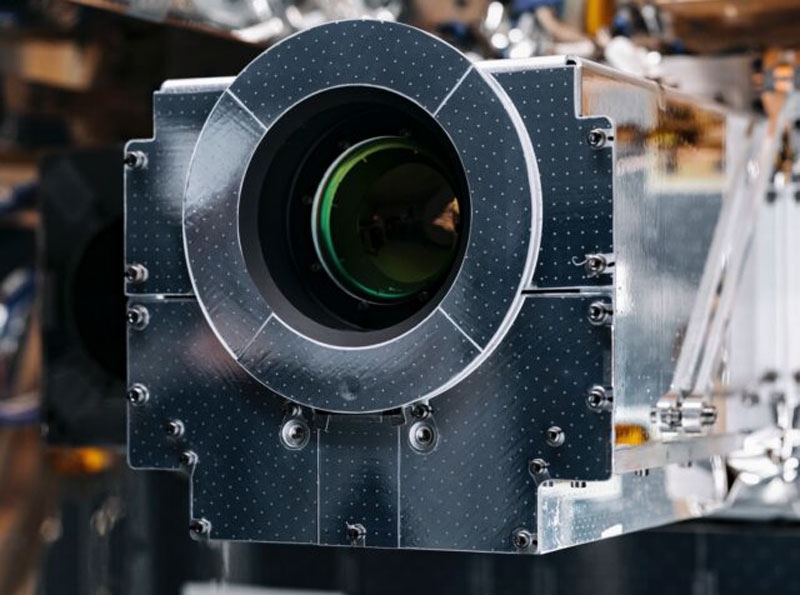
Image source: Anduril
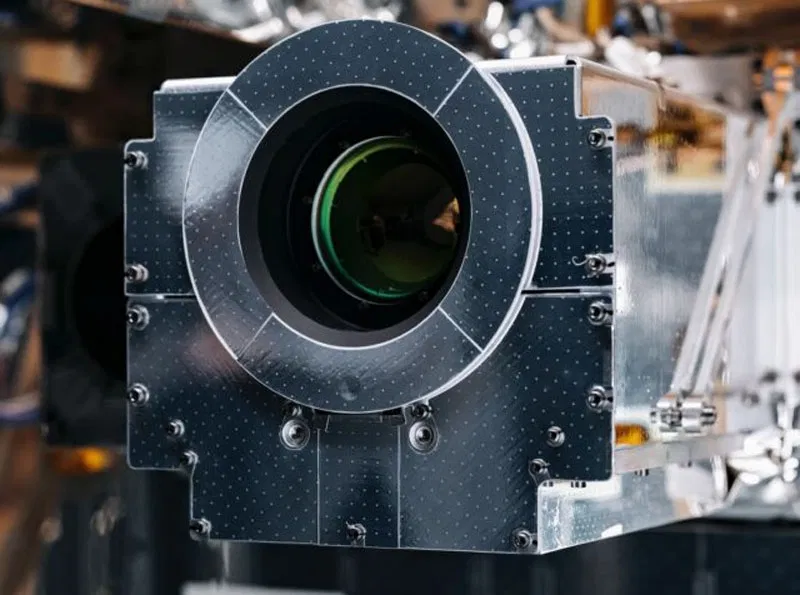
About the successful demonstration of the technology the other day reported American defense technology company Anduril Industries demonstrated an orbital infrared sensor for detecting and tracking satellites as they fly through the Earth’s shadow. The development should solve a problem that arises when using conventional optical observation systems: when a satellite is no longer illuminated by the Sun, it becomes much more difficult to detect by reflected light.
The new device operates in the long-wave infrared range (LWIR, Long-Wave Infrared) and registers the own thermal radiation of spacecraft. According to Anduril, the sensor has a wide dynamic range and small restrictions on observation in the direction of the Sun, making it capable of obtaining images even in complete darkness. At the same time, he is not afraid of direct sunlight hitting the lens if the shooting is carried out on the illuminated side.
Testing of the new optical complex and other advanced equipment is carried out on the Anduril-216 satellite, launched in July 2026 as a secondary load on a SpaceX rocket. The microwave-sized device operates at an altitude of about 590 km and spends about a third of each orbit in the Earth’s shadow. It is in this part of the orbit that infrared equipment demonstrates an advantage over conventional optical cameras.
The satellite platform was manufactured by Apex Space. In addition to the Anduril infrared sensor, two third-party optical-electronic sensors, a computing module for processing data directly in orbit, and a payload power management system are installed on board. The project was financed by Anduril itself, without a separate government contract for the creation of a demonstrator. At the same time, the company does not intend to create satellites on its own, and will continue to order platforms externally.
An important part of the complex was the on-board computing module Mission Compute Module. It is designed to combine information from different sensors, process images and formulate decisions on tracking objects directly on the satellite, without the need to transmit the original data to Earth for analysis. The module is designed to run resource-intensive artificial intelligence algorithms and has an architecture with removable computing boards that allows you to connect third-party software.
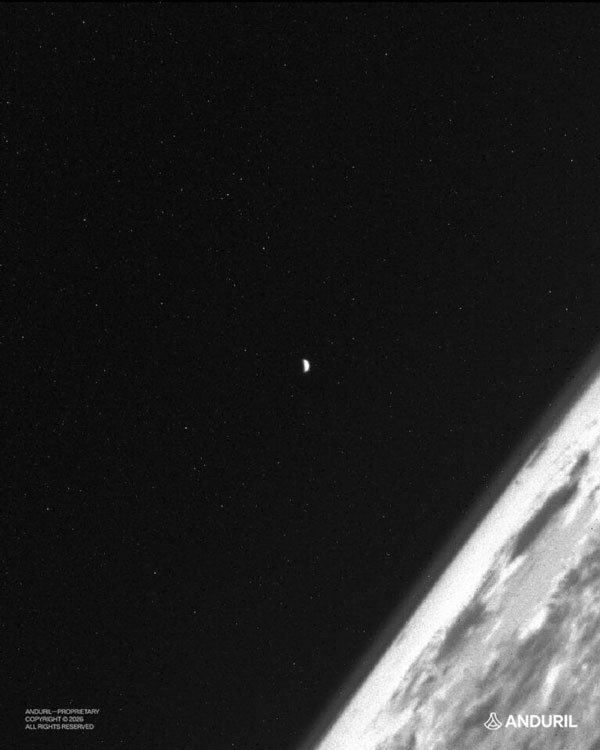
As an example of how the infrared sensor works, the company provided a photograph of the crescent Moon above the edge of the Earth. There are no photographs of satellites on the night side of the planet. According to the developers, the sensor can not only detect infrared radiation from satellites in the form of a spot, but also distinguish individual details in the image.
Now the developers are optimizing the system for observing objects in low Earth orbit, considering in the future its use in other orbits and in lunar space. Anduril intends to sell the resulting data to companies and government agencies, without planning to supply anyone with ready-made space “thermal imagers.”
If you notice an error, select it with the mouse and press CTRL+ENTER.