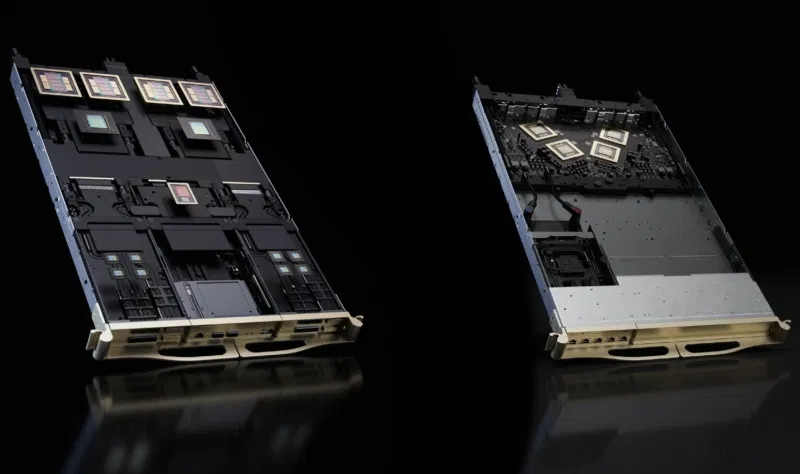
Data center operators in Singapore, Malaysia, Thailand and Indonesia must now obtain a special US government license to purchase advanced artificial intelligence accelerators from Nvidia and other US manufacturers. This is stated in the temporary order published by the US Department of Commerce.
Image source: Nvidia
There is a boom in the construction of AI data centers in Southeast Asia – the demand for this capacity is partially provided by China, including technology giants Alibaba and ByteDance, whose access to advanced equipment Washington intends to block. “This rule is intended to ensure that existing restrictions on access to critical technologies are not circumvented through remote computing mechanisms through data centers in third countries,” the US Department of Commerce said in a statement. The four countries listed above, along with Brazil, also “pose an increased risk of leakage” of advanced semiconductors—access to which Washington is seeking to deny Beijing.
Washington has stepped up efforts to tighten export controls following the resignation of Nvidia CEO Jensen Huang over his involvement with a former employee of the Singapore data center operator, Alice Huang, who is suspected of working for Chinese intelligence. U.S. lawmakers are also considering a series of measures aimed at further restricting sales of AI accelerators, as well as China’s access to ASML’s semiconductor manufacturing equipment. These measures are planned to be included in the annual defense bill, which should be adopted before the end of this year.
Singapore authorities said they are “carefully studying the new measure” and are working with companies to understand how it may affect their operations. “If you want to participate in the game, you will have to follow US rules,” said the head of the Malaysian Ministry of Commerce, Johari Abdul Ghani. “This will create additional difficulties, but we have yet to assess the overall impact on the economy,” said Bank of Thailand assistant governor Chayawadee Chai-anant.
Indonesian authorities are analyzing this measure and collecting opinions from industry representatives. The government is working on a mechanism that will “facilitate legitimate trade while reducing the risk that dual-use goods and technologies will be diverted or misused,” the country’s government communications agency said. Brazilian authorities are “closely monitoring developments” related to the new rules, they said, but declined to assess their impact.
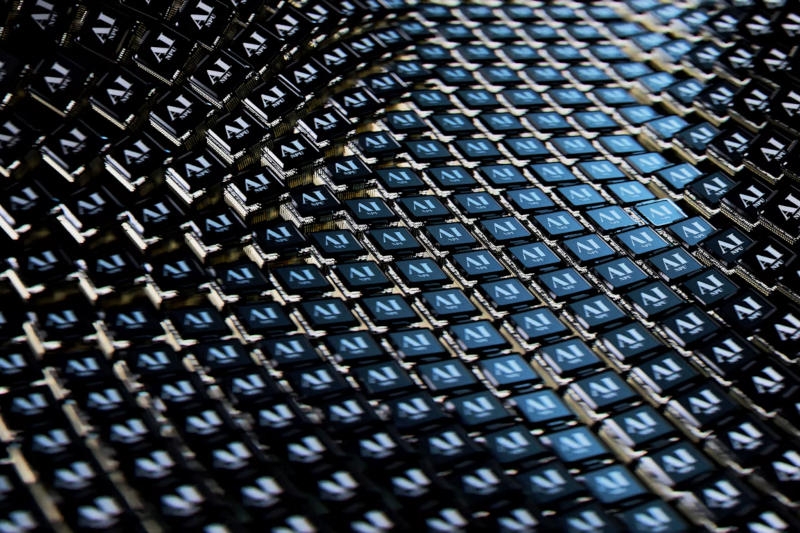
Image source: Igor Omilaev / unsplash.com
Discussions in Washington about revising the rules related to remote access to AI accelerators have been going on for several months and intensified last summer, when the Chinese Moonshot AI introduced an AI model almost as good as the flagship systems of Anthropic and OpenAI. The espionage scandal with Huang became a reason for the White House to put pressure on the Ministry of Commerce and encourage it to take action. Chinese companies remain reliant on Nvidia hardware—it’s estimated that by 2027, that hardware will account for at least 30% of China’s AI development needs through leases of data center capacity in Southeast Asia and smuggling of accelerators.
The new rules come as US President Donald Trump, accompanied by Commerce Secretary Howard Lutnick and Treasury Secretary Scott Bessent, heads to the region. The day before, he made a stop in Manila, Philippines, to meet with leaders of several countries. Next, he will head to Chinese Shenzhen, where he will meet with Chinese President Xi Jinping.
In parallel, the United States intends to strengthen cooperation with allies in the field of advanced technologies and infrastructure as part of the Pax Silica initiative aimed at competing with Beijing. Over the weekend, the United States and nine partner countries, including Singapore, agreed to create a mechanism to protect critical goods, software, technical expertise and components needed for AI supply chains. The agreement covers categories of products “the theft, illicit transfer or acquisition of which by hostile actors could provide them with a significant military or intelligence advantage,” the US State Department noted.
The global AI boom has fueled the growth of a number of Asian economies supplying data center equipment. They were able to compensate for the consequences of rising energy prices due to the Iranian conflict. The new measures may have a negative impact on Asian data center business, but the region’s position in the semiconductor supply chain will remain strong, experts say. Demand for cloud computing from Chinese customers has fueled the booming data center industry in Southeast Asia, and patterns like these are not easy to track. Buyers of Nvidia accelerators are reluctant to disclose information about their Chinese customers, and Chinese companies themselves often seek to distance themselves from the use of leased capacity, even when it is permitted.
Alibaba, for example, worked with Nvidia accelerators in Malaysia through the Singaporean company Megaspeed. In this case, the customer was nominally a Singaporean company controlled by a structure in the Cayman Islands. Now the United States is investigating the activities of Megaspeed – the data center operator is suspected of violating export control rules, in particular when shipping Nvidia equipment to China.
If you notice an error, select it with the mouse and press CTRL+ENTER.