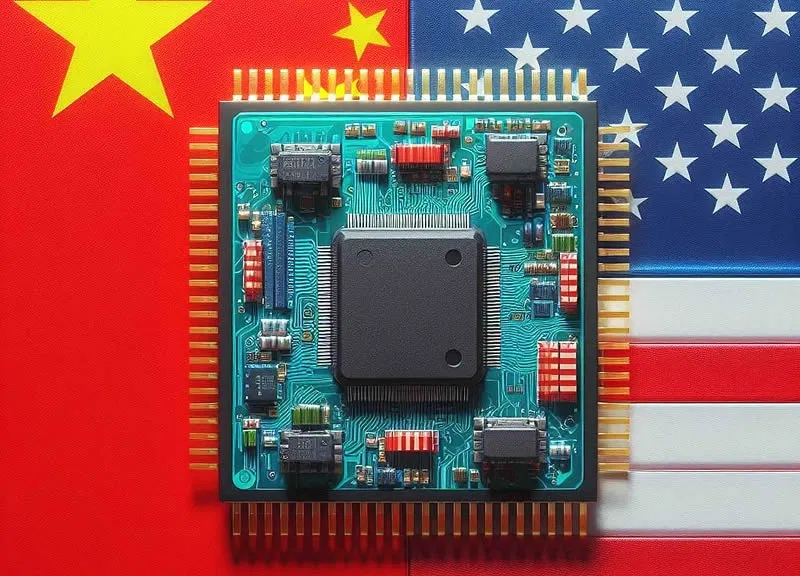
The US is considering creating a tracking system for advanced AI chips similar to Apple’s Find My. The technology will allow checking their actual location and identifying cases of illegal export to China and other countries under sanctions. To do this, it is proposed to use geolocation and unique GPU hardware identifiers.
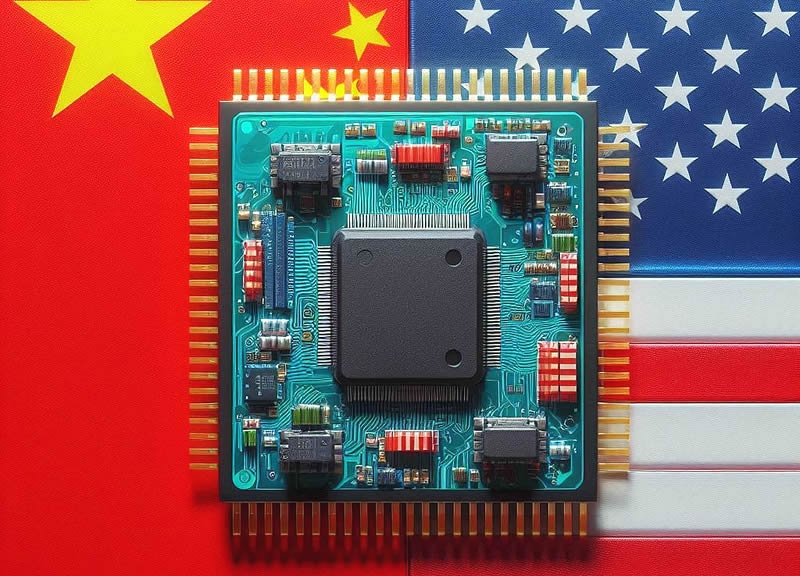
Image source: AI
One of the promising methods is checking location based on signal travel time (Ping-Based Location Verification, PLV). The method involves sending requests from the chip to several trusted servers located in different parts of the world, then measuring the round trip time of the signal. By comparing the received data, the system will be able to determine the approximate location of the device.
Georgetown University’s Center for Security and Emerging Technologies (CSET) senior researchers Kyle Miller and Jacob Feldgoise say the highest-performing data center GPUs should be monitored first.
Manufacturers will be able to build PLV mechanisms directly into new chips, and firmware updates will be available for already released devices. An additional tool can be encrypted digital sovereignty certificates that confirm the physical location of equipment at a certain point in time.
However, the system has limitations, the publication notes. IEEE Spectrum: Signal checking does not allow tracking of inactive chips that are in warehouses or in transit, and the lack of response makes it unclear whether this is due to technical reasons or an attempt to hide the location.
In addition, attackers with physical access to the equipment can block signal transmission or extract cryptographic keys. Therefore, experts suggest supplementing digital control with physical inspections of data centers. Another area of focus is hardware identification, the ability of which researchers have already demonstrated to create unique fingerprints of Nvidia H200 GPUs based on manufacturing characteristics and random numbers.
Interest in such technologies is due to the fact that American export restrictions introduced in 2022 have not stopped the flow of advanced accelerators to China. In this regard, in March 2026, the US House Foreign Affairs Committee approved a bill requiring mandatory verification of the location of advanced AI chips, and in September, US lawmakers called for it to be brought to a vote.
At the same time, experts warn about the high cost of control and the possibility of circumventing restrictions through foreign cloud services.
If you notice an error, select it with the mouse and press CTRL+ENTER.