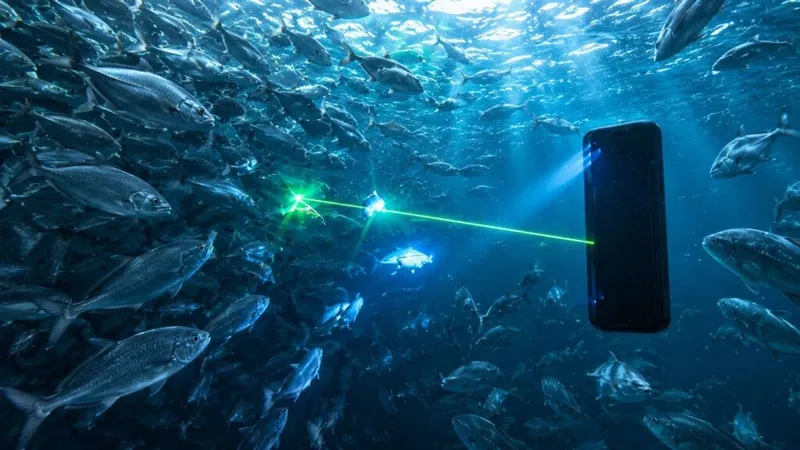
Salmon farming has been plagued by parasites such as sea lice for decades. Treatment of cages with chemicals, hot water and mechanical cleaning of live fish is accompanied by the loss of individuals. To solve the problem of destroying parasites, Norwegians have adapted underwater laser systems that specifically destroy parasites on the skin of free-swimming fish.
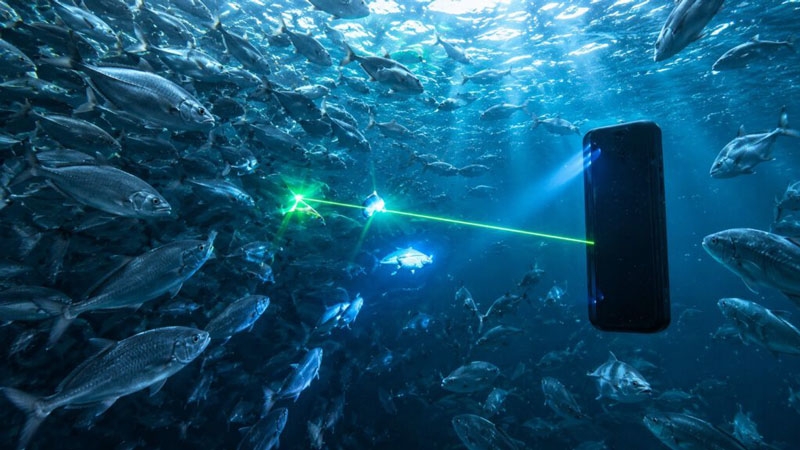
Image Source: Stingray Marine Solutions
The project was started to be developed by the Norwegian company Stingray Marine Solutions about ten years ago. By 2025, more than 2,000 such systems had already been installed along the coasts of Norway and Iceland. Underwater laser robotic systems provided 24-hour monitoring of approximately 92 million salmon and trout. The accumulated experience in operating such systems allows us to draw a preliminary conclusion about the undoubted benefits of the development.
The extent of the harm caused by traditional parasite removal methods has been well documented by the Norwegian veterinary authorities. Research compiled in the FAO AGRIS database showed that in a typical cage holding 150,000 fish, the average mortality within two weeks of hot water treatment was 790 fish. Mechanical pest control increased this figure to 928, although results varied widely between sites. To this should be added the loss of fish from the parasites themselves, which attach to the skin of the fish and feed on their tissues and blood, weakening them and ultimately leading to death.
Each Stingray laser machine represents submersible module with several cameras, LED lighting, sensors and a laser emitter. Stereo cameras capture images of swimming fish, and software with machine learning algorithms recognizes parasites on their skin (dimensions adult males of these crustaceans reach 6 mm, and females – 12 mm). To improve recognition, blue illumination with a wavelength of 450 nm is used, increasing the contrast between sea lice and salmon skin. After detecting a parasite, the system directs a laser beam at it with an intensity of up to five pulses per second. The underwater module is also equipped with its own propulsion unit, allowing it to be remotely rotated 360 degrees.
A study of data from Norwegian fish farms for 2023 found that sites that used laser treatment were 50% less likely to require additional parasite treatment within a week. However, the average number of sea lice on fish was the same or lower than at sites without such installations. Earlier studies revealed a strong dependence of the results on the operating conditions of the cages, which does not yet give rise to widespread use of such technology. Frequent cases of laser damage to the eyes of fish have also been reported, which reduces their quality of life and body weight gain. The method turned out to work, but obviously has its flaws. But lasers fight weeds with a bang, although that’s another story.
If you notice an error, select it with the mouse and press CTRL+ENTER.