
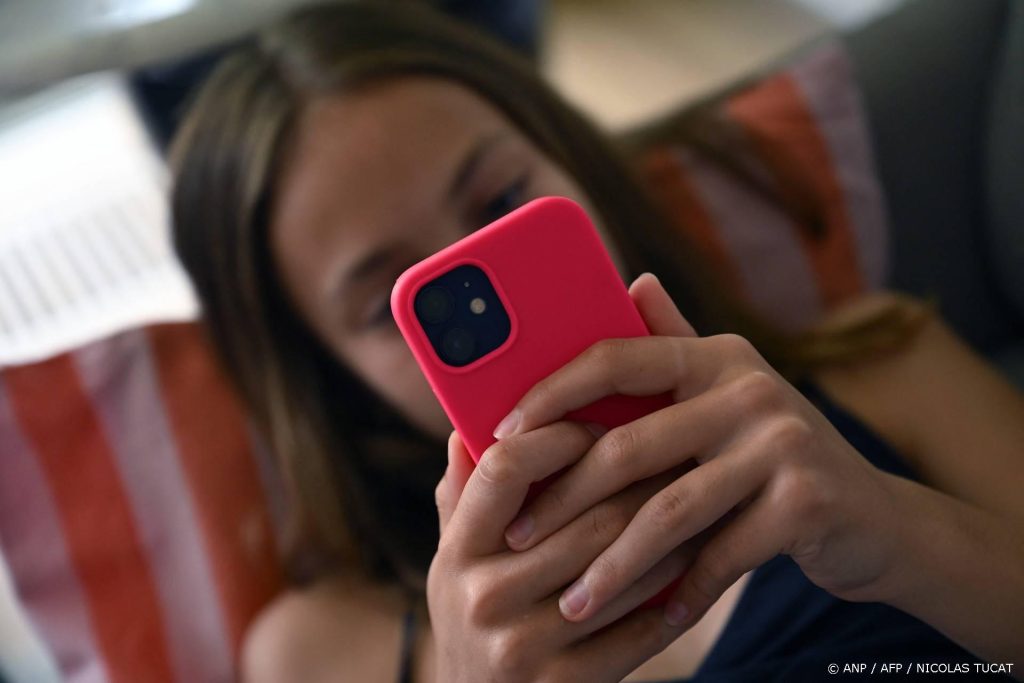


You probably already know that scrolling on your phone for hours on end isn’t exactly conducive to your sleep and focus. But your smartphone can do other things for you. Doctors warn that physical changes may occur after years of heavy phone use.
Now it even has a name: mobile phone body.
Sitting in front of a screen nine hours a day
We spend a lot of time behind screens. The average Dutch person spends nearly nine hours a day in front of a phone and/or computer screen. All that time eventually leaves its mark on the body. It’s especially hard on your neck.
Because, honestly, how do you feel while reading this? Your head will most likely be tilted slightly forward and your gaze will be downward. It is this attitude that causes problems. When you look at your phone, the muscles in the back of your neck must constantly support your head. Once is of course no problem. But if you do it every day, for several years, the burden will pile up.
Twentysomething develops neck problems from smartphone
Spine surgeon K. Daniel Riew told U.S. News that he is now even seeing people in their twenties with neck discomfort in his clinic Inc.com. This was an age group he had rarely encountered before. This phenomenon is also known as ‘Technology neck‘ Naming.
And then sit upright all day? According to Riew, this is not an ideal solution. Anyone who regularly forces their hips and knees to form a 90-degree angle is often unable to maintain this position for long periods of time. Eventually you break down.
Prevention is important
His advice is compelling: Lean back a little. An angle of about 25 to 30 degrees, combined with lower back and head support, can help the chair absorb more weight. This can have a big impact on your neck.
Prevention is important. According to surgeons, long-term damage to the discs cannot always be reversed.
What about your eyes?
We also worry about our eyes. In particular, myopia rates are increasing among children around the world. Smartphones are often blamed for this, but according to ophthalmology researcher Donald Muti, the reason is more subtle. The screen itself may not be the biggest problem. What role can it play? Children who spend a lot of time behind screens spend less time outdoors. It turns out that daylight is important.
Research shows that spending about two hours a day outdoors can help prevent myopia in children. You don’t have to sit in bright sunlight for hours to achieve this. Even in the shade, outside light is usually strong enough. For adults, there seems to be little reason to panic. Muti said screens mainly cause eye strain or inflammation.
Average clamping force decreases
There are also some shocking things going on. People’s average pinch strength decreases. Grip strength says more about your health than you think. Scientists use it as an indicator of general muscle strength.
You may quickly think: that’s because all we do is move our thumbs across the screen all day long. But it’s not that simple. Researcher Johannes Beller found that the decline in grip strength began generations before smartphones. So the reasons appear to be broader. We move differently, do less physical work, and our daily routines change.
Should smartphones be thrown into the trash?
No, luckily not. You really don’t have to say goodbye to your smartphone right away. However, it might be wise to pay attention to your body more often. For example, hold your phone close to eye level instead of always looking down. Change positions regularly, stay active, and make sure your child gets enough time outside.
Because one night of sluggish rolling isn’t going to suddenly change your body. But staying in the same position for hours every day, for years on end? Your body may eventually notice this.
These are the most read articles right now:
- Which is actually more economical: washing dishes or using a dishwasher?
- Jiry (43) now talks about his departure from Iris in B&B Vol Liefde: “There was no love in that moment”
- Relationship psychologist explains ‘Nausea’: the three stages of sudden disgust for your partner
- Statement on the day: “Following fatal accident, farmers’ protests on highways should be banned from now on”
- Reporter discusses Iris from B&B Vol Liefde: “She only thinks Jiry is sexy and has zero empathy”