



Germany’s Federal Competition Authority has raised questions about the way Apple makes requests for data consent.

Apple will have to intervene specifically for Consent to data collection and use on iPhone and iPad. The decision follows the intervention of Germany’s federal competition authority, Bundeskartellamt, which raised questions about the way Apple makes requests to users related to third-party apps.
According to preliminary assessments by regulators, the screen is used forApplication tracking transparency Users can be guided to decline data sharing and be more inclined to accept it in connection with personalized advertising.
So the question is, It’s not just about the content of the requestbut also the way the information is presented.
German authorities accuse Apple
Elements identified by the German authorities include the icons used, the different wording of messages, Some descriptions were deemed uncleara space designed to illustrate the benefits of material sharing and the layout of available options.
Overall, according to the regulator, these aspects may result in different treatment for Apple’s apps and those developed by other companies.
iPhone 20: Here’s the trick Apple can use to achieve a bezel-less look

This question is particularly important given Apple’s role as gatekeeper in this situation. European Digital Markets Law. The application tracking transparency system has Introduced with iOS 14.5 and make cross-application tracking a practice that often requires user permission.
Apple has four months to fix the problem
Apple has it now Four months to intervene with consent screen. The planned changes should eliminate some potentially discouraging elements in pop-ups for third-party apps, such as warning hand icons, and introduce more neutral settings more similar to those used for requests from Apple apps.
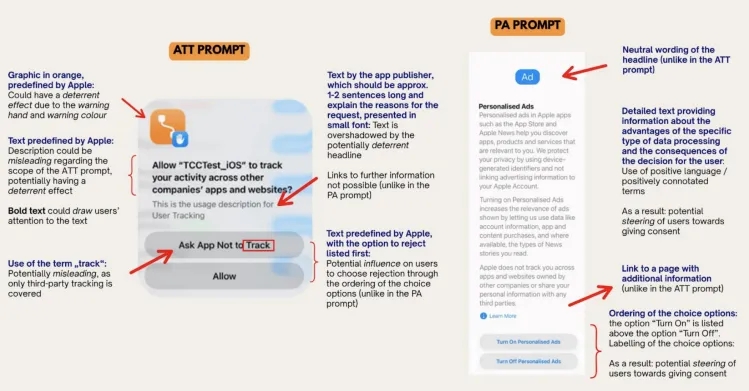
Another change will affect developers. Third-party applications will be able to Integrate or link Apple-requested consent windows with other data collection requests.
According to reports, the new rules will no longer be limited to Germany but should take effect almost everywhere All countries in the European Union.