
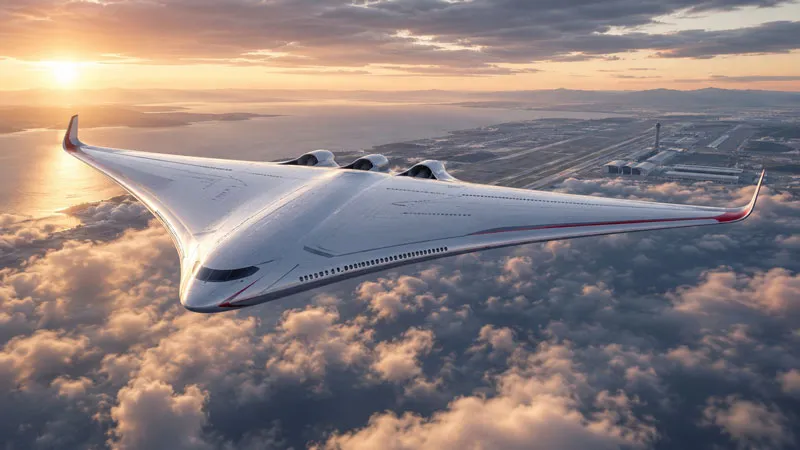
Chinese engineer here we go Wind tunnel testing of an unusual concept for a passenger aircraft with a “flying wing” fuselage. The wings of this aircraft are part of the fuselage and passenger compartment. The U.S. B-2 “Spirit” stealth bomber also adopts a similar design. But if the Americans are using this to increase the stealth of their aircraft, the Chinese are trying to save fuel.
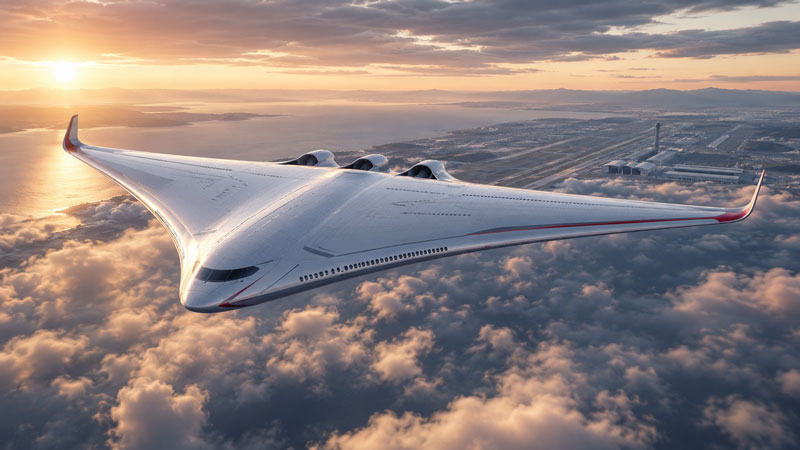
Image source: AI Generation ChatGPT/3DNews
All else being equal – the weight and size of the aircraft – the “flying wing” fuselage reduces the aircraft’s drag and increases lift. This obviously saves fuel in flight. In addition, the liner’s design capacity – 800 passenger seats – will be included in the economic feasibility pool. By comparison, today’s most spacious passenger aircraft remains the Airbus A380, with approximately 555 seats.
The development of this unusual passenger aircraft is being led by experts from the China Aerodynamics Research and Development Center (CARDC), which has previously been involved in the development of the C919 passenger aircraft and the Y-20 military transport aircraft. According to the original concept, the new full-size aircraft should have a wingspan of approximately 85 m and a length of only 43 m. For comparison, the wingspan of the Airbus A380 is approximately 80 m. By the way, the wingspan of the B-2 Phantom is almost one and a half times smaller.
During the tests, the researchers studied the aerodynamic properties of the device, the transition of the boundary layer from laminar to turbulent flow, measurement accuracy, longitudinal and transverse stability, and structural deformation under aerodynamic loads. When Mach speed is below 0.7, the maximum lift-to-drag ratio (the ratio of lift to drag) reaches about 20. When M=0.8, the number drops to 17.6, which is still considered a high result for this unusual layout. Developers say the resulting model can serve as a reference for studying the aerodynamics and aeroelasticity of “flying wings” and developing new wind tunnel testing methods.
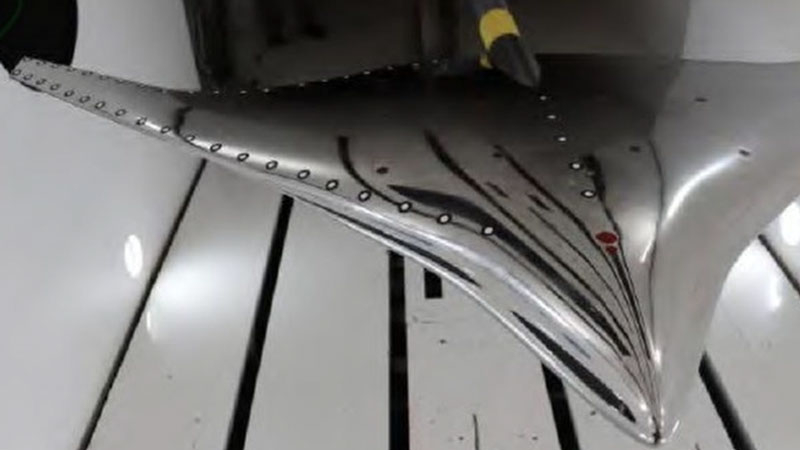
Image source: CARDC
The promising 800-seat aircraft has yet to receive an official name and is still in a very, very early development stage compared to other Chinese civil aviation projects. At the same time, China is developing the C929, a wide-body long-distance passenger aircraft carrying about 280 passengers that is expected to first fly around 2030, and is also studying the concept of the supersonic C949.
The huge “flying wing” represents a very distant technological future: before this design can become a passenger aircraft, the strength and sealing of the unusually wide interior space, the controllability of the tailless aircraft, the evacuation of hundreds of passengers in the event of an accident, and even the compatibility of the 85-meter wingspan with existing airport infrastructure need to be solved. Tests conducted so far by CARDC have first confirmed that the passenger aircraft can take off in principle.
If you find an error, select it with your mouse and press CTRL+ENTER.