

For the first time since February 2024, the United States has updated its list of technologies critical to the country (Critical and Emerging Technologies, CET). Only 14 of the original 18 categories remain, with advanced cloud services, high-performance storage systems, data centers, batteries, solutions integrated with power grids and gas turbine engines, and AR and VR being removed from the list. Report Tom’s hard body. Post-quantum cryptography, integrated photonics, high-entropy alloys and consumer security operating systems have also been added.
This list is used to establish export controls, review foreign investments through the Committee on Foreign Investment in the United States, evaluate applications for government funding of research, and make decisions regarding priority development and research spending. In other words, whether a technology is included or excluded is critical to it.
It is worth noting that gas turbine engine technologies (aerospace and industrial) and their digital control systems that appeared in the 2024 list did not find a place at all in the updated version. Some list items are simply moved to other sections and subsections. In addition to this, the energy component has also changed – the “clean” energy production and storage category has been replaced by the nuclear direction, including thermonuclear energy, space nuclear power systems, and high temperature and radiation resistant materials.
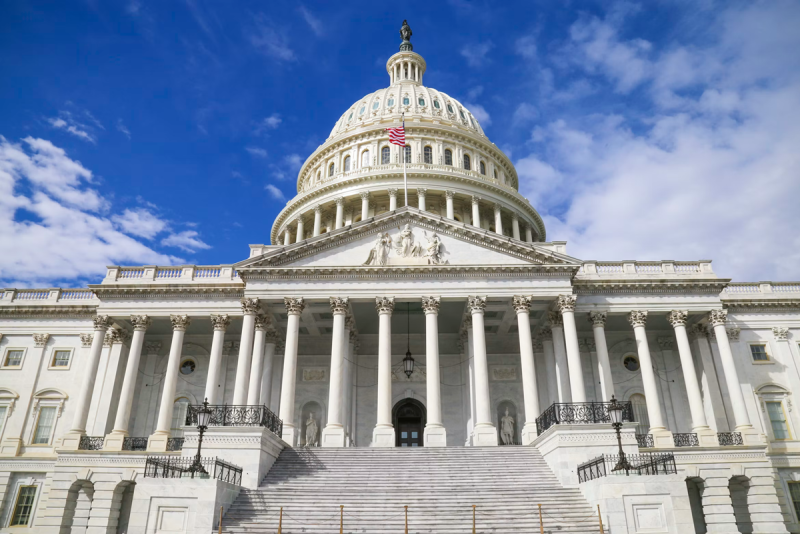
Image source: Louis Velazquez/unsplash.com
The “Advanced Computing” category was renamed “Future Computing Technology”; advanced cloud services, high-efficiency storage systems, data centers, modeling and simulation technologies, etc. were eliminated. Instead, edge computing, photonic and neuromorphic technologies, spatial computing, and more emerge for tactical environments. Importantly, these changes occurred during the heyday of data center construction. However, it is consistent with a new U.S. strategy in which federal funds will flow to places where public funding complements private funding, rather than stimulating competition with it.
The scope of artificial intelligence has also undergone some changes. In addition, previously dedicated subsections on unmanned systems, robots, etc. have been added. Post-quantum cryptography appears on the list for the first time, and integrated photonics appears in the semiconductor category. The advanced manufacturing category has added high-entropy alloys, advanced composite materials, digital twins, etc. Special attention is also being paid to technologies that allow the replacement of rare earth elements with more common raw materials.
In this context, national leaders are trying to strengthen supervision of the data center industry. So Pennsylvania Governor Joshua Shapiro sign An order giving the state the power to block the construction of new data centers. Additionally, back in July, Donald Trump declarePennsylvania will receive more than $90 billion in investment to develop artificial intelligence, data centers and energy. One of the biggest is Amazon’s move to invest in $20 billion Expand Pennsylvania’s cloud computing infrastructure and drive artificial intelligence innovation. Former AWS Already received Building 15 data centers on an area of 650 hectares near the Pennsylvania Nuclear Power Plant, but facing some problems Continue to decide.
At about the same time, Texas Governor Greg Abbott announced that several companies had agreed to set new standards for water consumption, electricity and quality of life. August 2026, OpenAI, Amazon, Google and Meta✴ firm Meet Texas’ new requirements for data center construction. The tightening of policy on data centers comes amid growing protests among Americans who don’t want new data centers built near their homes. Even in Microsoft. A May Gallup poll found that seven in 10 Americans opposed establishing data centers in their communities, with 48% “strongly opposed.”
Source: