



Nine years ago, SanDisk Start developing Secret 3D Matrix Memory 3D NAND type. Everyone is waiting for memory that allows you to get more bits out of each DRAM crystal for the same money. Despite SanDisk’s claims of impressive progress, the company is in no rush to start producing the revolutionary chips. Management said it’s just that her time hasn’t come yet.
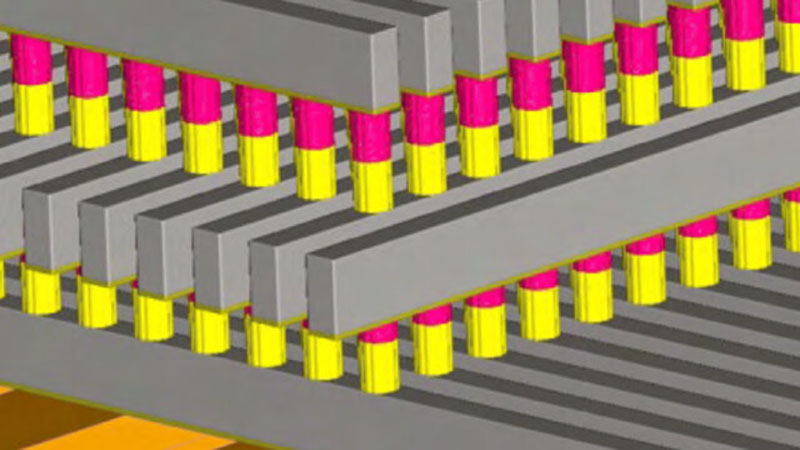
Image source: SanDisk
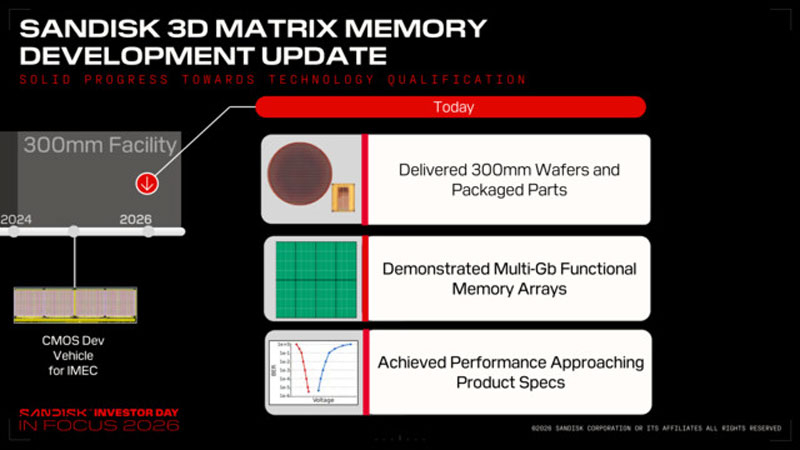
SanDisk Chief Technology Officer Alper Ilkbahar announced at the 2026 Investor Day that for the first time, 3D matrix memory chips were manufactured on 300 mm wafers and packaged in packages for further testing. During testing, the performance of individual storage areas with multi-gigabit capacities was demonstrated, and according to management, performance levels are very close to the planned specifications for the final product. A year ago, on the same stage, Ilkabaha had Tell Regarding this technology, research has been ongoing since 2017.
Essentially, 3D matrix memory is a potential replacement for DRAM with a three-dimensional structure, which should offer comparable performance and several times greater capacity. The ultimate goal is to reduce the cost per bit by half compared to DRAM. The company has made steady progress over the past year on prototypes it built with research partner IMEC of Belgium, producing prototypes on standard 300mm wafer hardware in multi-layer memory stacks.
Despite the encouraging results, Ilkabaha stressed that there is still a long way to go before entering the market. “Work continues, but this is a long-term project. We will keep you updated on progress.” – he said. Meanwhile, the updated plan (if it can be called that) does not include any specific dates for the next phase. The company once promised to start production of 32-64 Gbit 3D Matrix Memory chips, but did not give any date.
Let us add that the type of 3D matrix storage unit is not fully understood yet. Most experts tend to believe that this is a PCM-type memory based on phase change of intracellular materials. SanDisk developed this memory together with Intel as part of the 3D XPoint project. Alternatively, it could be a ReRAM type of memory. Western Digital (which later acquired SanDisk) was working with 4DS to develop ReRAM memory. Regardless, SanDisk avoids talking about the topic.
If you find an error, select it with your mouse and press CTRL+ENTER.