


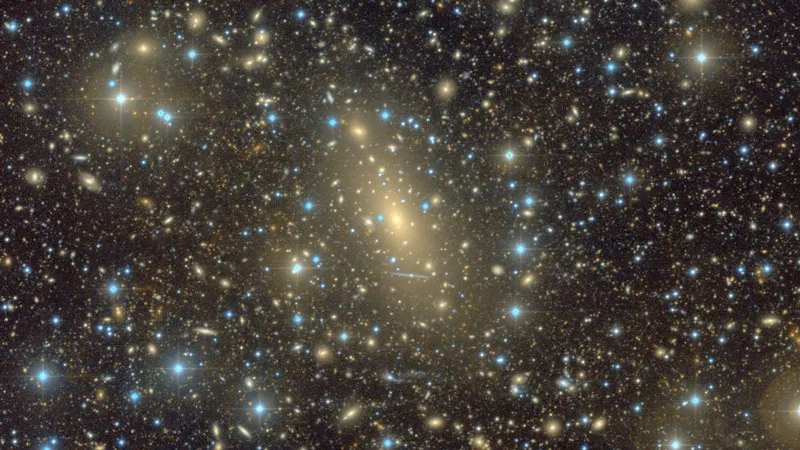
astronomer Clarified size The giant elliptical galaxy IC 1101 is located at the center of the Abell 2029 star cluster, which is now considered the largest known galaxy in terms of stellar mass size and volume. New, deeper observations show that the galaxy is about 520 kiloparsecs across, or about 1.7 million light-years. That’s 17 times the diameter of the Milky Way – about the distance from the Milky Way to the neighboring Andromeda Galaxy.
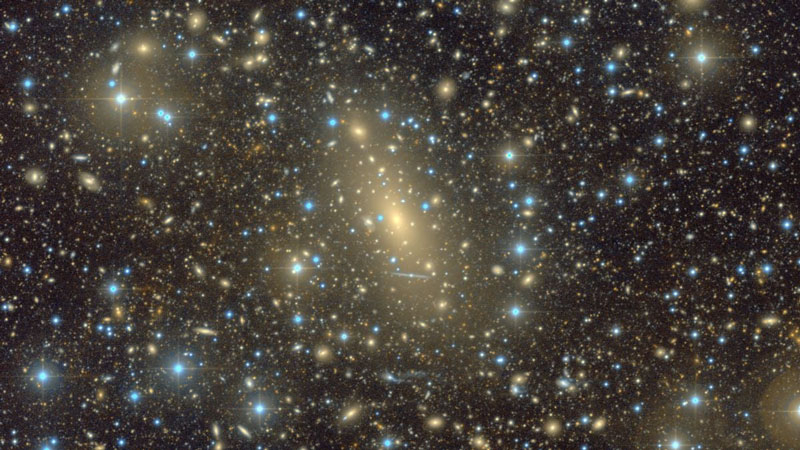
Image credit: Isaac Newton Telescope
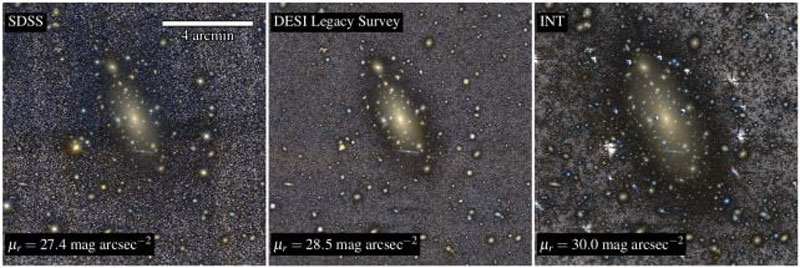
The main problem in measuring IC 1101’s size is not detecting the galaxy itself, but determining its boundaries. In supergiant elliptical galaxies, the light from stars at the boundaries fades away into the faint glow of intergalactic gas and surrounding objects. And it’s not that close—the IC 1101 galaxy is a little over a billion light-years away, which doesn’t make it any easier to observe.
To study IC 1101’s outline, scientists used the universe’s deepest images of this part of the sky, taken with the Wide Field Camera on the 2.5-meter Isaac Newton Telescope at the Roque de los Muchachos Observatory in Spain, and removed the scattered light from more than 250 foreground stars to highlight the galaxy’s extremely faint glow and compensate for the turbulence of Earth’s atmosphere.
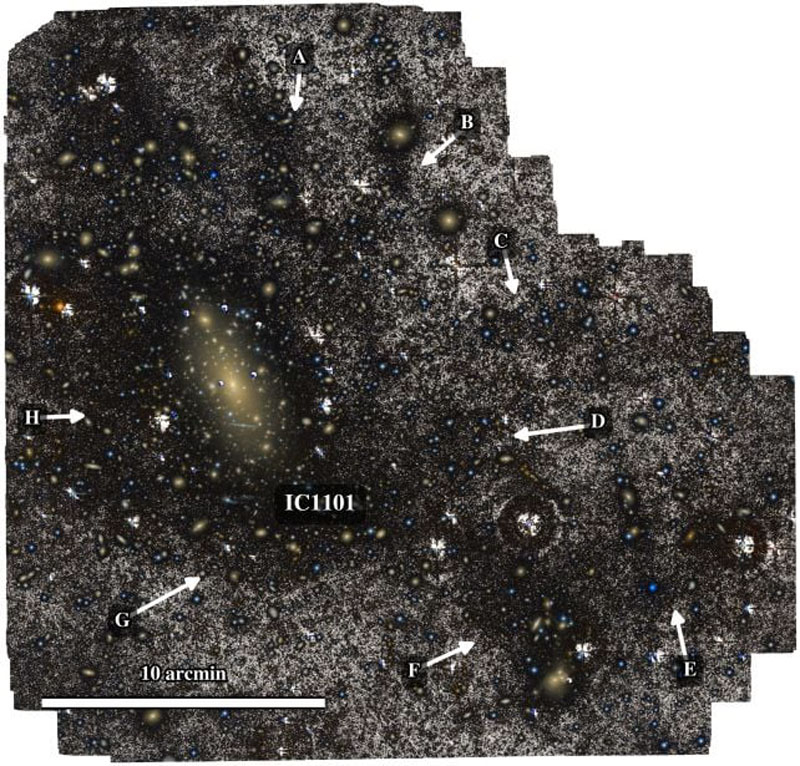
As the “cleaned” data shows, there are many indications that the galaxy IC 1101 formed through mergers with other galaxies over billions of years. Its growth, and that of similar giant stars yet to be discovered, is due not to the birth of new stars but to the gravitational absorption of its neighbors. According to new estimates, the stellar mass in IC 1101 alone is about 3.4 trillion solar masses—significantly larger than the stellar mass of the Milky Way.
To compare scales, just know that if the Milky Way were placed one after the other, approximately 17 galaxies would fit into the diameter of the IC 1101 galaxy. However, even this massive object is not a fully formed object – faint asymmetric structures have been found around it, indicating the continued absorption of material and the gradual growth of the galaxy.
Processes in IC 1101 show that the largest structures in the universe continue to form even billions of years after their creation. Scientists suspect that, in part, this is a future galaxy, the result of the evolution of galaxies in large galaxy clusters, and that there will eventually be a survivor. This remains to be confirmed – and other equally massive galaxies discovered. This group of astronomers and other teams intend to do so in the future.
If you find an error, select it with your mouse and press CTRL+ENTER.