
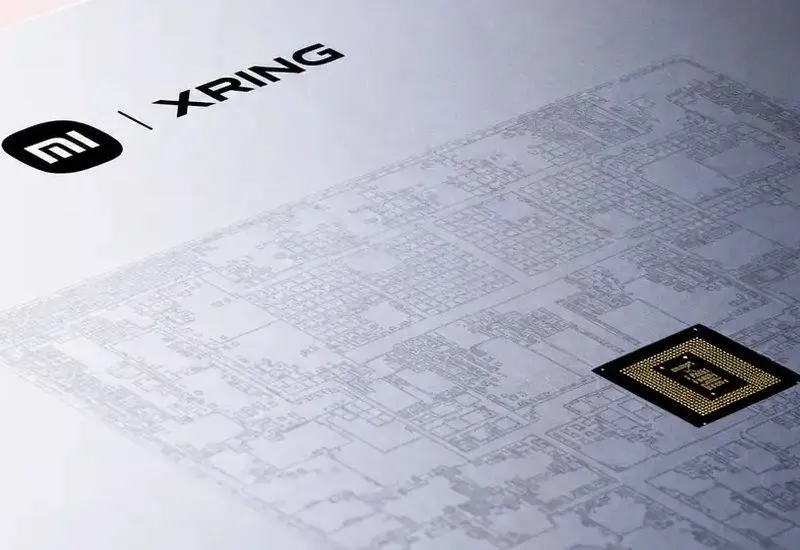
As autumn approaches, business activity is also picking up in potentially sluggish areas such as the market for smartphone parts. Xiaomi started this week by releasing its own 3nm Xring O3 processor, which will debut as part of the Xiaomi Mi 18 Fold foldable smartphone scheduled to be released in September this year.
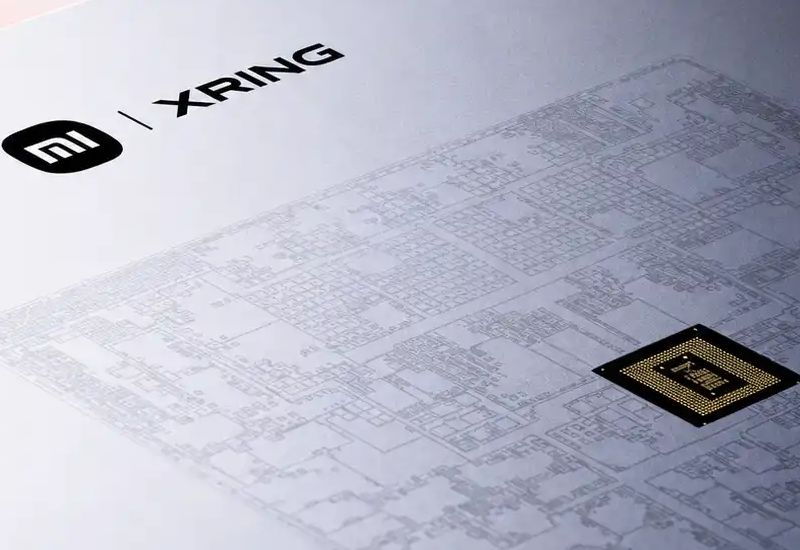
Image source: Xiaomi
The Xring O3 processor is unique in many ways. First of all, this is the first Chinese-designed chip that will be produced by Taiwan Semiconductor Manufacturing Company using advanced 3nm process technology. According to sources interviewed by Reuters, Xiaomi may need 200,000 to 300,000 Xring O3 processors this year. Secondly, this chip becomes the first mobile processor to support LPDDR6 memory. The new chip supports data transfer rates of up to 10667 Mbps and bandwidth of 113.8 GB/s, a 48% advantage over the Xring O1.
The emergence of the Xring O3 shows that Xiaomi will not limit itself to isolated attempts to make its own processors. The company continues to develop its platform and seeks to gain more control over key components of its devices, which have traditionally been provided by Qualcomm and MediaTek. At the same time, Xiaomi has shifted from the relatively niche Xring O1 to releasing more complex 3nm chips and supporting the latest memory, which means that its ambitions in this direction are clearly growing.
In addition to the foldable smartphone Xiaomi 18 Fold, the new Xring O3 can also be installed on the Xiaomi Pad 9 Pro Max tablet. Chip area 133 mm2 It has 24 billion transistors, 26% more than the previous generation. Xring O3 is optimized to work with Xiaomi’s proprietary artificial intelligence model. Its tensor computing performance reaches 200 TOPS, and its vector computing performance is improved by 3.13 TFLOPS. AI increases the processing speed of local data by 45%. Two new AI computing units have been added to the CPU, and 8 neural acceleration units have been added to the graphics subsystem. Computational latency has been reduced to a record-breaking 82 nanoseconds, and the processor’s energy efficiency has also been improved.
Xiaomi said last week that its shipments of devices equipped with Xring O1 processors have recently exceeded 1 million units since its launch in May last year. Among them, smartphones account for approximately 150,000 units. TSMC will also produce two other chips for Xiaomi: 6nm Xring O100, which will accelerate MiMo’s proprietary artificial intelligence models when running on consumer devices; and 3nm Xring D100, which will be used in the in-car systems of the brand’s cars. There he will be responsible for active driver assistance systems and Autopilot. The chip combines a 20-core CPU and a 16-core NPU, and the highest configuration is equipped with 160GB of unified memory. This is enough to run AI models with up to 200 billion parameters locally. Xring O3 has begun mass production, and Xring O100 and D100 will begin mass production next year.
If you find an error, select it with your mouse and press CTRL+ENTER.