
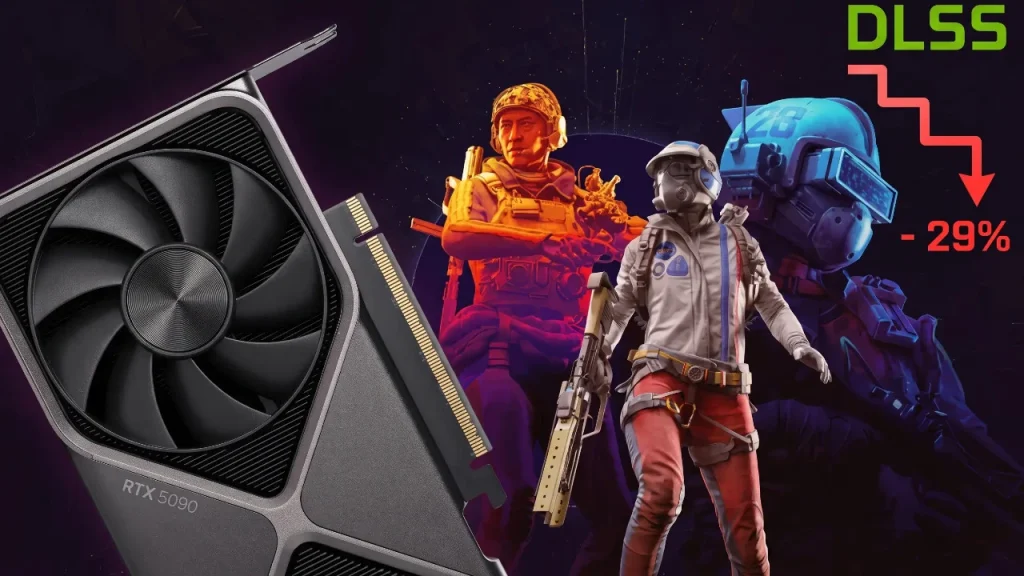


New testing and performance analysis of flagship GeForce RTX 50 Series graphics cards, including the RTX 5090, reveal unexpected nuances when using Smart Scaling. It turns out that when the popular DLSS “Quality” mode is enabled at 4K resolution, processor performance takes a huge hit, and even the most powerful AMD Ryzen 9000X3D gaming processor starts to choke. You might think these are just graphics cards that are too powerful to handle 1440p rendering, but the problem is actually much more serious.
Due to the lack of a hardware scheduler in NVIDIA’s architecture and the specific software overhead of the processor driver, the scaling effect of RTX 50 series graphics cards at 1440p and 1080p resolutions is significantly worse than at heavy native 4K. In a real gaming scenario, this results in the gap between the top new product and competing previous-generation models or cards being narrowed to 29% of the calculated value. Paradoxically, the vast majority of gamers buy a 4K monitor and turn on the upscaler to increase frame rates, thereby inadvertently moving the graphics card into a disadvantageous processor range, where neither the processor nor the graphics card itself can take full advantage of the frame rate due to NVIDIA’s weird architectural decisions.