
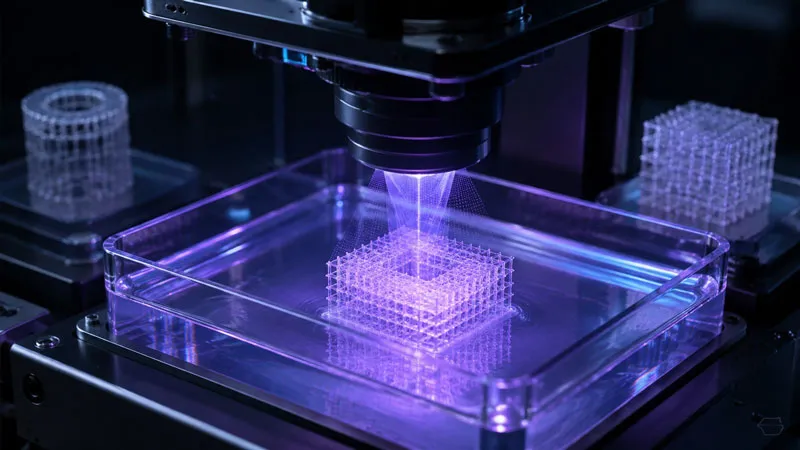
Scientist at the University of Utah developed A new volumetric 3D printing method allows you to create complex microstructures in a single exposure instead of layer by layer. The technology is based on holographic formation of light fields: using a special mask to transform a laser beam into a three-dimensional light pattern within a photopolymer, rather than moving the laser head or applying thousands of layers sequentially.
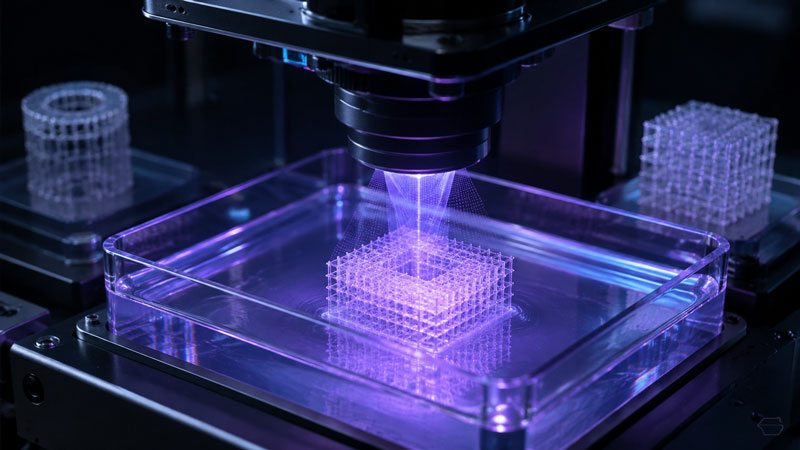
Image source: AI Generation ChatGPT/3DNews
A key feature of the system is a mechanism to compensate for the optical distortion that occurs when light passes through thick layers of photosensitive material. Traditional photolithography techniques only work well on the surface because as the laser penetrates deep into the transparent but never uniform polymer, the light is scattered and the image loses clarity. To compensate for these deficiencies, the scientists wrote a program to build a phase mask that corrects these distortions in advance and directs laser energy only to the desired areas. The working material used is SU-8 photopolymer, in which the molecular chains cross-link under the influence of light and transform the liquid composition into a solid structure.

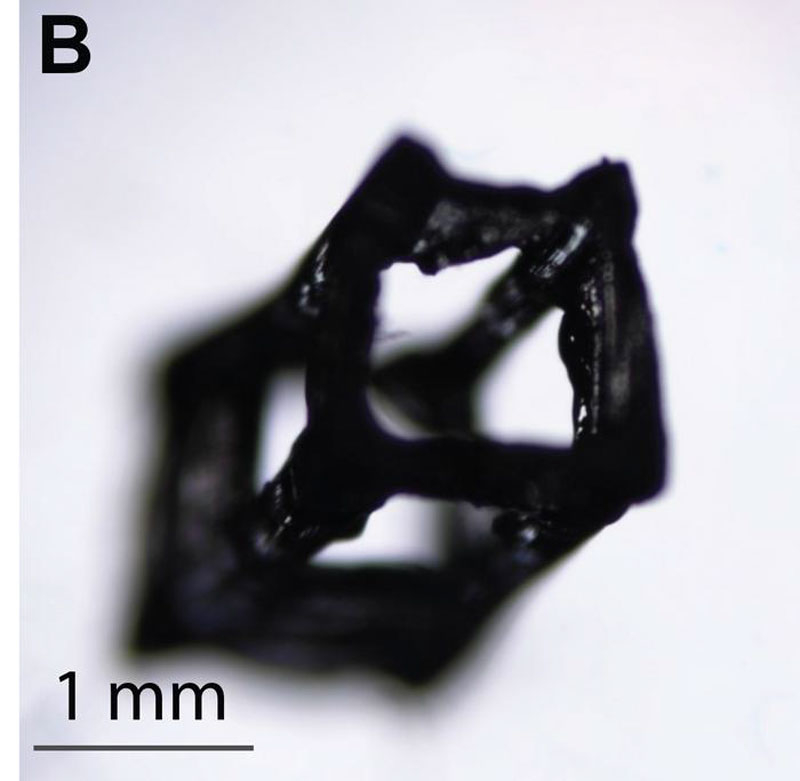
Image source: “Science Advances 2026”
During the experiment, the prototype 3D printer created hollow structures, microtube arrays and components with individual parts measuring approximately 6 microns. The challenge was printing the height of the hollow elements, which the researchers eventually solved. Printing speed is 1mm3/s, with a resolution of 24 µm per voxel. Each cubic millimeter of this model contains 105 voxels. Models of the entire volume are created instantly in seconds; for example, production of millimeter cylinders and cubes takes 7.5 seconds. At the same time, the models were mechanically strong and achieved their goals; in particular, the printed microtubes served as capillaries for pumping liquids.
Developers believe that in the future holographic printing may be used for the mass production of microfluidic devices, including medical devices, microelectromechanical systems (MEMS) components, optical components and metamaterials with predetermined properties.
If you find an error, select it with your mouse and press CTRL+ENTER.