



If the developers of electric air taxis consider the reduction of noise levels compared with classic helicopters to be an undoubted advantage of their products, the creators of more compact forms of unmanned air cargo transport have no such basis for comparison and must think seriously about ways to reduce noise levels.
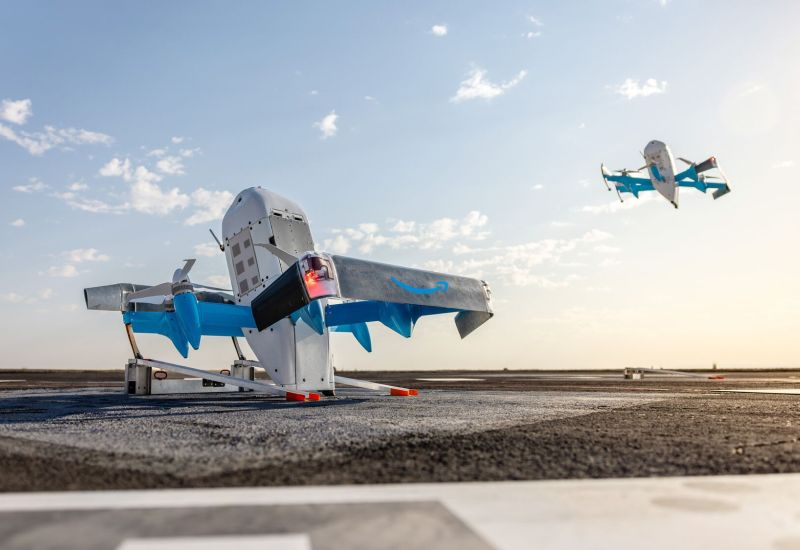
Image source: Amazon
Portal Axios Using Amazon, Wing, and Zipline as examples, we examine the differences in how delivery drone developers approach this problem. Amazon, in particular, expects its drone emergency order delivery service to cover nearly 500 major cities in the United States by the end of this year. Zipline is receiving financial support from Uber and hopes to operate at least 1 million drone food delivery trips per day by the end of 2029. Amazon expects to reach more than 40 million Walmart customers through similar services by 2027.
The Amazon MK30 drone (first photo) weighs nearly 36 kilograms, making it the largest and heaviest of the air cargo vehicles the three companies are considering. At the same time, it is able to provide services to customers within a radius of 12 kilometers, with an air speed of up to 117 kilometers per hour and an on-board order weight of up to 2.3 kilograms. It’s designed for vertical takeoffs and landings, but it spends most of its flight time in the air by spinning its rotors parallel to the ground. At the destination, the cargo is dropped from a height of approximately four meters, so there may be special requirements for its packaging and safety.
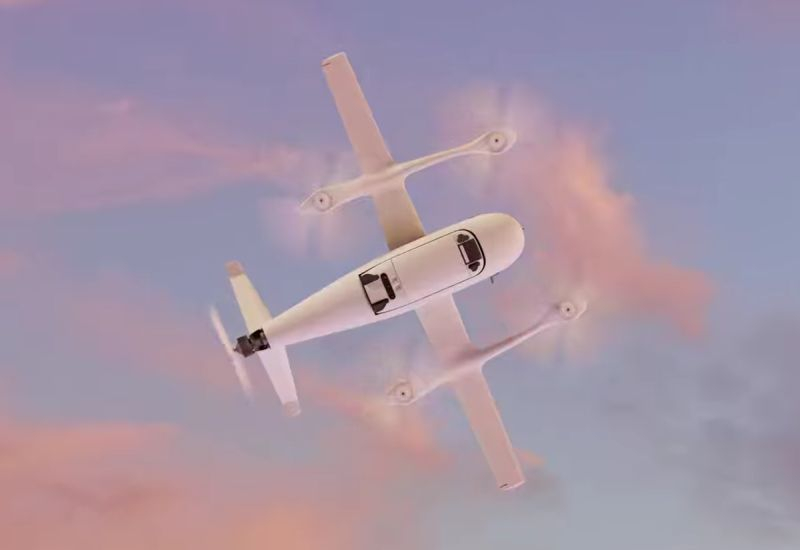
Image source: Zipline
The Zipline Platform 2 drone (pictured above) has a layout similar to that of a five-rotor aircraft, with a more compact drone inside the fuselage used to carry the delivered cargo. The system can move at speeds of up to 112 km/h, has a range of up to 16 km, and is capable of carrying more than 3.6 kg of weight. The wingspan of the mother aircraft exceeds 2.4 meters and weighs 25 kilograms. It hovers over trees nearly 90 meters high. The drone descends through an internally loaded cable. If necessary, it can use the traction propeller at the tail to control its position. After lowering the payload to the Earth’s surface, the child drone is sucked into the arms of the mother drone and returned to the store warehouse.
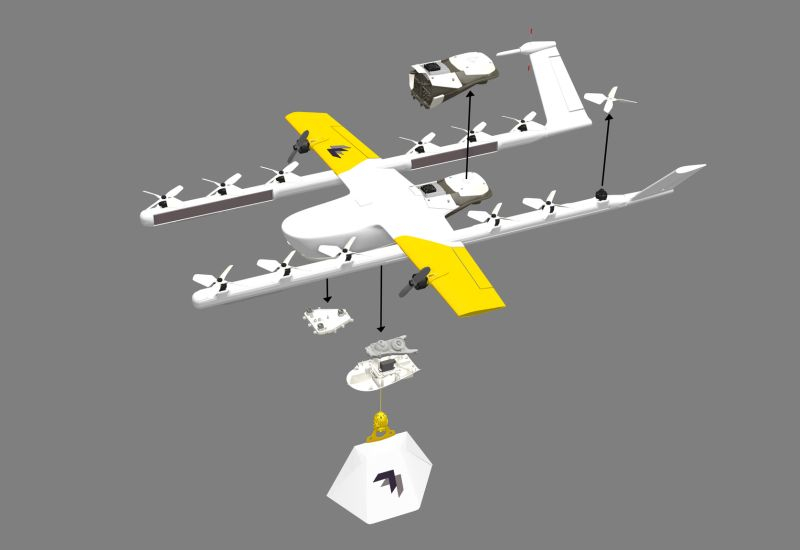
Image source: Wing
Wing’s Hummingbird 8000-A drone is the lightest of them all, weighing no more than 7.7 kilograms and having a wingspan limited to 1.8 meters. In addition to the wings, some of the 12 propellers are located on the transom of the fuselage; they are responsible for vertical movement. The drone is capable of transporting cargo weighing up to 2.3 kilograms over a distance of up to 19 kilometers at speeds of up to 96 km/h. At the delivery site, the drone lowered the goods in cardboard prisms via cables from a height of about 23 meters above the ground.
One of the reasons for the fixed height of the drone above the unloading site is that the developers want to protect customers and their neighbors from the annoying noise of the propellers. According to FAA estimates, the Zipline solution remains the quietest, producing no more than 79 decibels, followed by the Wing drone at 84 decibels, and the Amazon heavy-duty delivery vehicle closest to the ground, 15 meters from the unloading site, producing 88 decibels. From a practical perspective, the most popular drone option is probably the one that makes the least noise when making deliveries.
If you find an error, select it with your mouse and press CTRL+ENTER.