
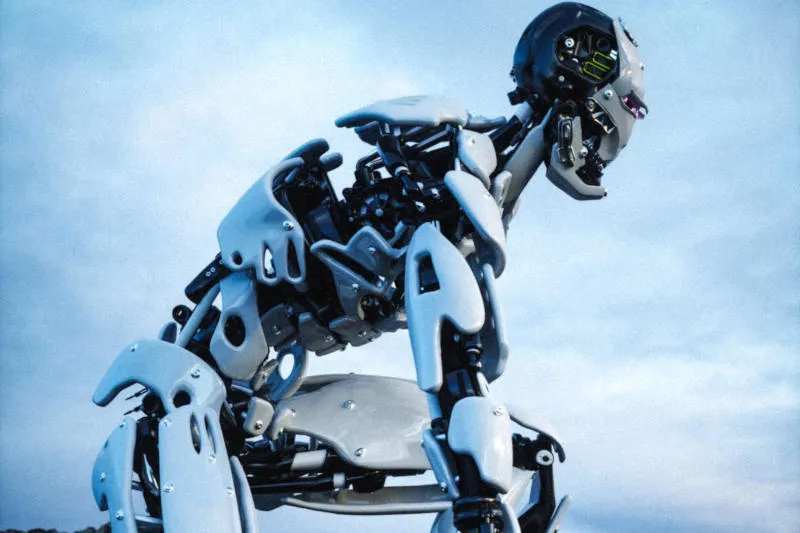
Yuan✴ Various models of robots are being tested in data centers that will service equipment: connecting cables, restarting servers, and performing other tasks. This will allow the company to expand its data centers while controlling labor costs.
Photo credit: Cash Macanaya / unsplash.com
Robots from Watney Robotics, Kinova and ABB were used in the test. One experimental project involves a Kinova Gen3 robotic arm used to restart or shut down servers. If successful, robots could take on up to 80% of some workers’ workload. Yuan workers✴ They have fewer illusions: those in manual labor also face the threat of unemployment. At some locations, the company has implemented the simplest of robot designs — a pointy stick that presses the power button on a computer or other device to reboot it remotely. The company rejected threats against workers. “The United States is in the midst of the largest infrastructure boom since World War II, and there is a severe shortage of skilled workers to fill the gaps; we need more workers, not fewer.A Meta spokesperson told Wired✴ Frances Brennan.
Until recently, robots were not suitable for working in data centers—they were expensive and could damage servers while trying to perform even simple tasks. Now they are cheaper and AI models are more practical than they were just a few years ago. Now several startups are building robots that can assemble servers, replace parts and connect cables. Robots can provide high productivity at a lower cost than human labor, especially in less densely populated areas where data centers are plentiful and skilled workers are scarce. In the long term, a complete transition to robotic maintenance of data centers will enable these objects to be located underwater, in space, or in other uninhabitable environments.
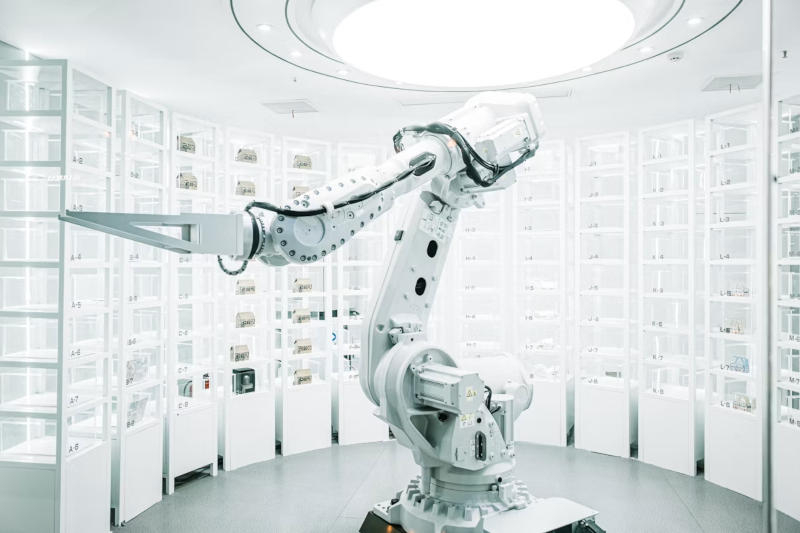
Image source: Luo Zhenyu/unsplash.com
In Altoona, Iowa, Meta✴ The world’s largest data center complex is located here, where hundreds of employees work. The company opened in 2014 and still enjoys property tax abatements, saving tens of millions of dollars annually. The city saw this as a profitable compromise in order to boost prestige and create jobs. But even here, workers in group chats began discussing how they might be laid off in the coming years as a result of the introduction of robots. Even if robots don’t completely replace humans, companies can hire less qualified workers at lower wages.
In a meta video posted on YouTube in 2023✴ There is talk of a driverless robot tractor that can transport heavy server racks within data centers, with inventory tracked by wheeled robots with barcode scanners developed by the company itself. Microsoft, Google and Amazon all have their own robotics projects. Robot tractors and stocktakers are already in use across multiple metadata centers✴including Iowa and Virginia. Despite some limitations, they do a great job. The inventory robot is also used for fault identification, but due to the black and white cameras installed, it cannot distinguish between green and green traffic lights. It struggled in corners and drove through cables that hindered the wheels. The robot also has to move between buildings, which requires the presence of a human being – who opens doors for the robot and controls the machine with a remote control. Inventory robot moves too slowly – meta at certain times✴ I originally wanted to use drones instead, but later gave up on that idea.
Startup Watney started operations in 2023 – initially it showed off a robot that could fold laundry and clean commercial spaces, but now the company has changed its image and is building robots for data centers. The Prometheus data center complex in New Albany, Ohio, uses four-wheeled ABB robots “with a scissor lift mechanism and a six-axis arm on top.” Currently they are busy reinstalling parts, but in the future they will be able to perform other tasks with less human intervention. According to Meta staff✴the robot takes too long to charge and is not always suitable for certain tasks. For example, they can’t do the intensive cabling work on Nvidia’s GB300 supercomputers, which are designed with the human hand in mind so basic operations can be done in minutes. Redesigning the equipment will take some time; in the meantime, the robots will adapt to the job.
If you find an error, select it with your mouse and press CTRL+ENTER.