
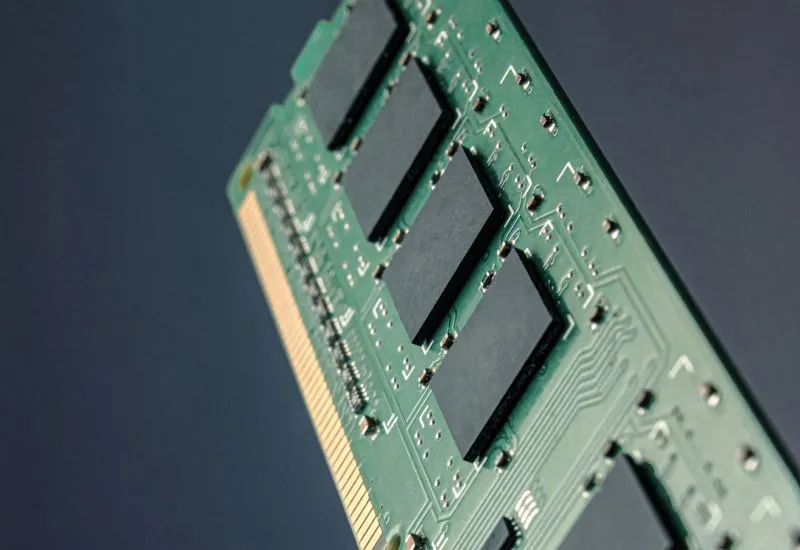
Following the release of Nvidia’s quarterly report, it became known that the company’s financial obligations to suppliers increased from $119 to $279 billion over the past period, more than doubling from the previous quarter. Much of the money will be used to buy memory for Nvidia’s compute accelerators and off-the-shelf server systems based on them. Combined with other financial guarantees provided to partners, this significantly increases Nvidia’s risk.
Image source: Unsplash, Ian Talmacs
The Wall Street Journal drew historical comparisons to the bubble that ended the dot-com stock boom earlier this century. At the time, investors were attracted by the new business prospects of dot-com companies, but the huge capital investments left many disappointed. Cisco Systems’ demand for telecommunications equipment has been growing and it has provided substantial financial guarantees to component suppliers. When everything collapsed, she had to write off $2.2 billion in losses at 2001 prices in just one quarter.

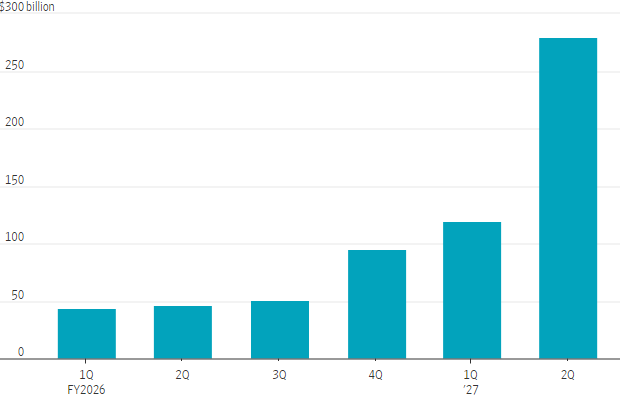
Image source: Wall Street Journal
Sources emphasized that this is far from the case with the current artificial intelligence boom, but overall, the growth dynamics of Nvidia’s financial liabilities are worrying. In an unusual move to reassure investors yesterday, the company’s management said revenue will grow 70% in the next fiscal year, and if parts suppliers can guarantee a more significant increase in shipments of their products, Nvidia’s own revenue will grow even more, as demand is expected to double next year. At the same time, the forecast provides justification for Nvidia’s financial obligations to suppliers growing to $279 billion last quarter. However, it’s important to understand that this increase in volume in just one quarter is largely driven by current memory price dynamics and a disproportionate increase in supply assurance from a physical perspective.
This isn’t the only area where Nvidia’s spending is growing. The company committed $125 billion as part of its $500 billion AI Bank initiative, which promises a minimum residual value for accelerators purchased by customers. Nvidia is ready to guarantee $105 billion for one of startup OpenAI’s data centers. Nvidia also has another $36 billion in financial obligations to the cloud giants it sells its products to. It also paid $20 billion in data center leases to its customers and partners and provided an undisclosed amount of guarantor to individual artificial intelligence startups. All these transactions and relationships are becoming more and more complex, but the most common result is an increase in sales of Nvidia products, so in conditions of market growth, such activities of the company continue to justify themselves.
If you find an error, select it with your mouse and press CTRL+ENTER.