
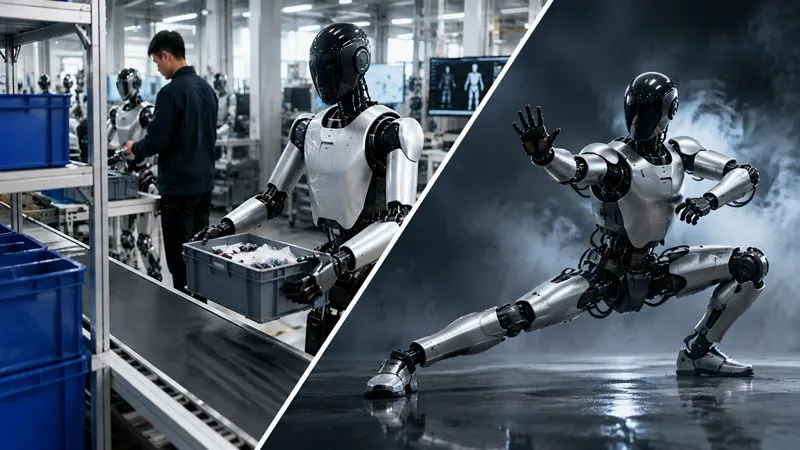
An impressive dance and kung fu show by humanoid robots in China has turned out to be a hoax. They also fail to fulfill their primary purpose – to replace human labor in factories. this Showed the work A professional center in Liuzhou where robots are taught the skills to work in various production conditions. In reality, the skill levels acquired by robots are so low that employers are not interested.
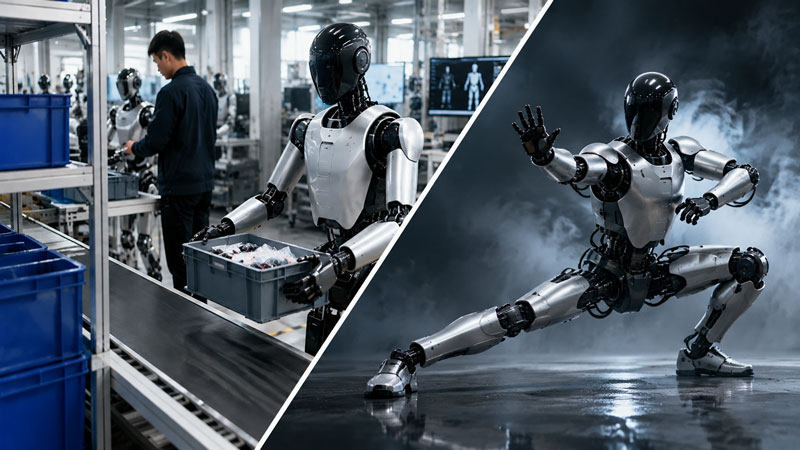
Image source: AI Generation ChatGPT/3DNews
China has a vested interest in a robotic factory workforce. The country’s population is declining and aging. For the first time in centuries, the birth rate is lower than the death rate. China’s economic phenomenon has long relied on surplus labor, so much so that authorities are planning to leave it to humanoid robots to sustain it. Robots built to imitate humans should be able to perceive the “human-machine interface” that controls machines and equipment with minimal effort, but this has not yet been achieved in practice. At least if we’re talking about labor efficiency approaching human efficiency.
This spring, Reuters representatives visited a training center in Liuzhou, where UBTech has supplied about $18 million worth of humanoid robots and equipment since last year. The purpose of the center is to create and train robots with work skills. To this end, human trainers wear numerous sensors and use the robot’s feedback to demonstrate production operations through examples. According to organizers, the center aims to sell skills to interested companies.
We soon discovered that even simple operations required a large number of repetitions: from 50 to 300 times. Training has proven to be costly, with no guaranteed return on investment. Now it looks like a dubious and sizable investment in technology that sucked in huge amounts of money but had no clear plan to make a profit.
China has undoubtedly become a technological leader in the development and production of humanoid robots. But it turned out that they easily learned to dance and demonstrate kung fu skills, but were not actually ready to replace people in machines, kitchens, and trenches. Maybe the Reuters colleagues were just jealous? On the other hand, the situation is similar in the areas of e-mobility and solar energy – these technologies are also ahead of their effective use. The Chinese authorities seem to have difficulty planning, or the technology is so advanced that controlling it is a waste of energy.
If you find an error, select it with your mouse and press CTRL+ENTER.