
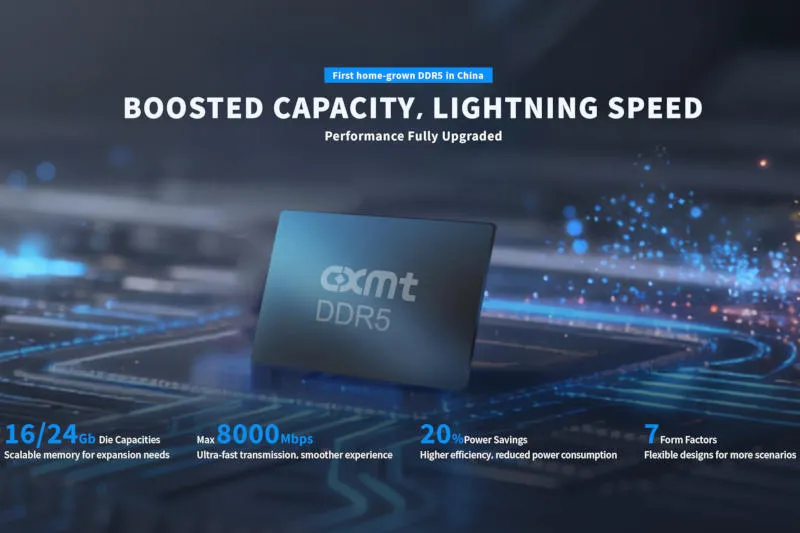
Chinese company Changxin Memory has formulated the “Hefei Plan” – a large-scale DRAM development plan that, according to South Korean prosecutors, included acquiring key Samsung technologies and poaching its engineers. according to Uncut News Referring to criminal case information, the plan was formulated shortly after Changxin Depository was established in 2016. Over the past decade, the Chinese company has grown into a major DRAM manufacturer and now controls about 10% of the global market.
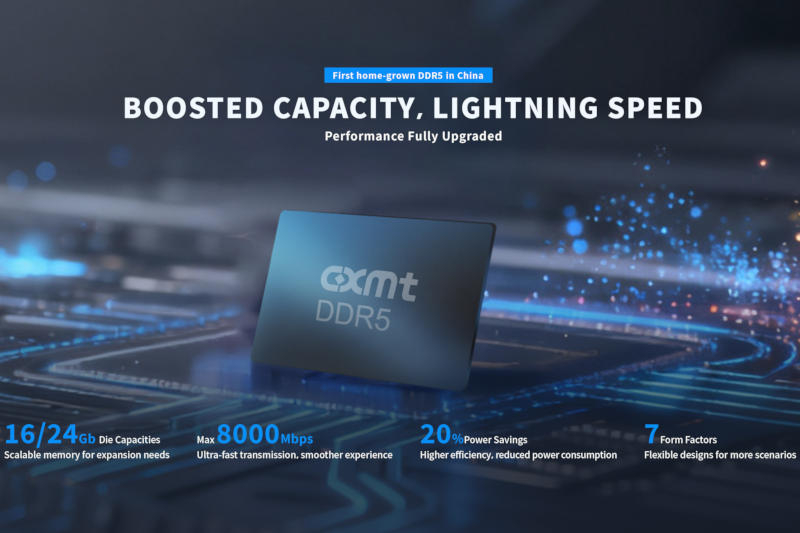
Image source: cxmt.com
The Hefei project is a step-by-step plan for DRAM development and production. The document was prepared around August 2016 by the head of Changxin Memory Development Department, who was responsible for DRAM development at Samsung, and employees responsible for investment in production equipment. This happened only two months after Changxin Storage was established. According to the prosecution information, the company planned to obtain Samsung’s key technical data including the process recipe plan (PRP) by September 2016, attract Samsung’s key engineers by October, complete technical preparations by July 2017, and start mass production of DRAM in August 2018, with a monthly output of 10,000 wafers.
The PRP details the entire DRAM manufacturing process of approximately 620 steps. The file contains the name and sequence of operations, process parameters, information about equipment, consumables and methods used. Samsung has been developing an 18nm DRAM process since April 2012, employing more than 1,100 experts and spending approximately 1.6 trillion won. Access to Samsung’s internal information is restricted because the company considers it a trade secret.
In August 2016, Changxin Storage attempted to independently program its own 18nm DRAM production PRP based on the memories of a former Samsung engineer it hired. It turned out that this was not enough: the experts were unable to reconstruct from memory some 620 technical stages as well as process parameters and material information. However, according to the prosecution, Changxin Storage received a message from PRP Samsung as early as September, which even included the name of the equipment supplier and its model. Based on this data, the company’s own PRP was prepared from September 23 to 26 and then handed over to former Samsung experts for verification and supplementation.
In 2019, Changxin Storage announced the development of 8Gbit DDR4 chips and began selling them in China. The ensuing artificial intelligence boom and global memory shortage have driven the company’s rapid growth, with its share of the global DRAM market growing from around 4% in the second quarter of 2025 to 10% in the second quarter of 2026.
By the end of 2026, Changxin Storage expects to increase the production capacity of its three fabs to 350,000 wafers per month – in comparison, Micron’s wafer output is about 375,000-385,000 wafers. The company also plans to build another factory in Beijing, eventually increasing its total production capacity to more than 600,000 wafers per month. In the second quarter of 2026, Changxin Storage’s revenue increased by 716%. After its IPO on the Shanghai Science and Technology Innovation Board in July, the company’s stock price rose by 466%. During this placement, Changxin Storage raised US$8.6 billion.
The company intends to use approximately 70% of the funds raised to further expand DRAM production, rather than on more expensive and complex HBM. At the same time, Changxin Storage has provided HBM3E samples to Chinese AI accelerator T-Head and Cambricon developers.
South Korean prosecutors estimated in December last year that Samsung’s losses due to suspected technology leaks amounted to at least tens of trillions of won. The investigation continues: The case is being heard at the Seoul Central District Court, and questioning of witnesses is expected to last until October.
If you find an error, select it with your mouse and press CTRL+ENTER.