

CEO Sam Altman speaks on Sources Podcast Forbes explainspublicly admitted that his startup OpenAI is developing a humanoid robot, then added that the company would not limit itself to this form factor. He believes that everyone should have their own robot.
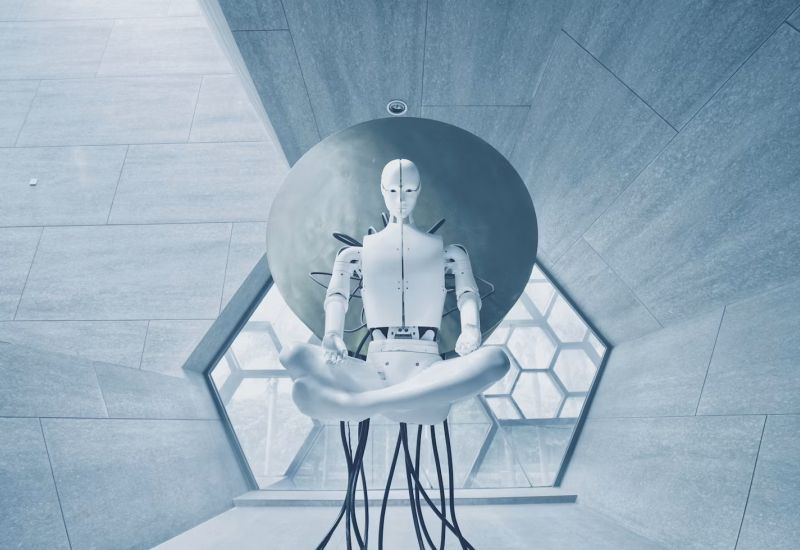
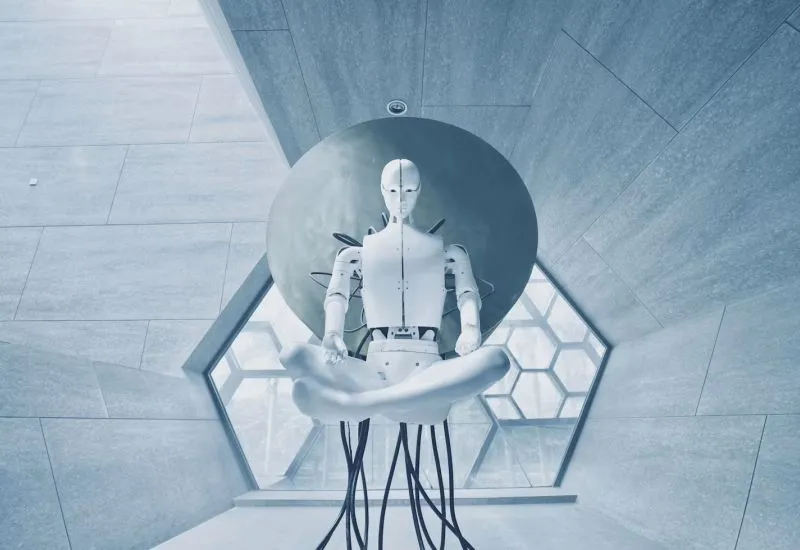
Image source: Unsplash, Aideal Hwa
“I think all of that is more important than the formation of the brain that makes the robot work,” — Altman emphasized the importance of developing software for humanoid robots. In recent years, the robotics industry has seen companies excel in both mechanical and electronic solutions and control software, but these advances have rarely been concentrated in one company. OpenAI invested directly in Figure in 2024, when the humanoid robot developer raised $675 million for its development. A year later, Figure itself gave up its technical cooperation with OpenAI and focused on its own development.
Ultraman explains the need to create humanoid robots very simply: “The world was primarily built for people. So if you want to open a door, or type on a computer, or operate some device, or clean the kitchen, or whatever, we basically built the world for people, and I want to make sure we continue to do that. So conforming to that form factor is a good trend.”.
In response to a question about the inevitability of widespread adoption of robots in daily life, the head of OpenAI said rather cautiously: “I don’t think it’s the most important thing to implement first. But, yes, I think one day, each of us will have a personal robot.”. Ultraman, by the way, shares the same views as his long-time rival Elon Musk, who is determined to flood the market with humanoid robots. According to him, in ten years there will be about a billion robots operating on our planet.
Scaling up production is not that easy, as evidenced by the example of Tesla, which promised to produce around 10,000 humanoid robots by 2025 but actually only started assembling them individually last month. The supply chain for robot parts is concentrated in China, and producing humanoid robots without relying on them would increase production costs from $46,000 to $131,000, according to OpenMind estimates.
As the source noted, OpenAI was developing the robot several years ago, but in 2021 it had scaled back its dedicated project because it couldn’t get enough data to effectively train the robot. The paradox is that training robots requires operating large numbers of robots to accumulate the necessary experience and data. Vertically integrated companies are the winners here. Therefore, Figure decided to stop borrowing robotics software from OpenAI in 2025, as it would be more accurate and useful to develop its own AI models for these tasks. Also, as the Figure rep acknowledged, you can’t borrow hardware components to create a robot.
A job listing in the field of robotics on the OpenAI website indicates that the company intends to independently develop hardware for humanoid robots. Only production can be entrusted to contractors, and the company wants to centralize key technologies in its own hands. At the same time, OpenAI management has not given any hints about when its robot will appear on the market, and competitors, especially those in China, are not standing still. For the creators of ChatGPT, the competition may be too tough.
If you find an error, select it with your mouse and press CTRL+ENTER.