




The most interesting point in the comments
Last quarter, 5nm technology accounted for 33% of TSMC’s total revenue, while 3nm’s share remained at 30%, although up from 25% in the first quarter. It is predicted that in the second half of the year, the 3-nanometer process will become the main force of the company’s revenue structure, and 5-nanometer will retreat to the background.
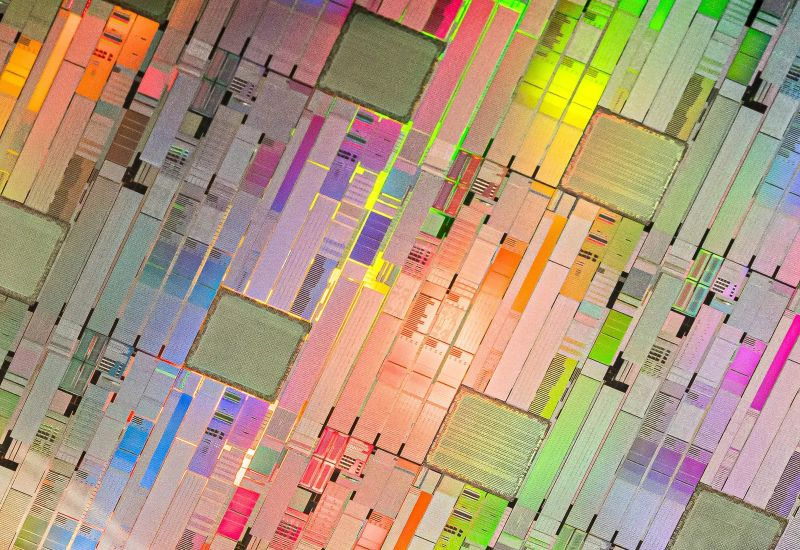
Image source: TSMC
To do that, TSMC’s latest technologies (excluding the more modest 2nm) will have to overcome a hurdle of 30% of total revenue and, in absolute terms, a record $12.7 billion. This trend will have a favorable impact on the company’s profit margins. TSMC will supply 3nm chips not only to Nvidia, but also to AMD and Broadcom, but it is the first of these companies and the Taiwanese contractor’s largest customer in this field. Wedbush analysts said that if TSMC processes about 150,000 silicon wafers per month using 3-nanometer technology in the first half of this year, that number will grow to 180,000 silicon wafers per month by the next quarter.
At the same time, the output of 2nm products is also increasing. By 2028, combined with 3nm process technology, silicon wafer production should increase to 400,000 wafers per month. The new enterprise plans to launch 3nm technology. One of them will start operations in the Tainan Science and Technology Park in Taiwan in the first half of next year. TSMC’s second factory in Arizona, USA, will also be dedicated to the production of 3-nanometer products; production will begin in the second half of next year. In Japan, TSMC’s second factory (JASM) will start producing 3nm products in 2028.
At the same time, Angstrom-level technology processes that are “thinner” than 2 nanometers are also being mastered. first half of this year Complete the work of adapting the A16 process to mass production conditions. In addition to Apple and Nvidia, OpenAI will also be preparing to use this technology. The latter orders Jalapeno’s own wafers, using 3nm technology for production, but their second generation will be able to combine A16 and CoWoS packaging technologies. As far as Nvidia is concerned, TSMC’s A16 process may be needed to produce Feynman architecture GPUs and Rosa CPUs.
Tell Google about this to receive more frequent links to our news on technology and IT markets
If you find an error, select it with your mouse and press CTRL+ENTER.