



Analysts pointed out that global smartphone production in the second quarter of 2026 was 275 million units, a decrease of 8% from the same period last year. TrendForce. The decline was smaller than expected, leading to an upward revision to the full-year forecast.

Two trends contributed to the positive dynamics: some consumers no longer put off smartphone purchases for fear of further price increases due to memory shortages; and market conditions have stabilized, with manufacturers increasing previously reduced production. Therefore, TrendForce analysts raised their forecast for global smartphone production this year from 105 million units to 1.07 billion units, which is equivalent to a 14% decline instead of 16%. Still, short-term improvement doesn’t mean the market has begun to recover; it’s delaying the impulse to buy. The impact is fading, contract memory prices will continue to rise in 2027, and the worst for the smartphone market may not be yet to come.
Ranking first in the second quarter was Samsung, which produced 62 million smartphones, a 7% increase from the same period last year. The South Korean company has become more aggressive in entrusting the production of entry-level and mid-range smartphones to third-party companies to cover high memory costs.
Apple ranked second with 52 million units, and its output increased by 14% compared with the same period last year. The effective pricing strategy of the iPhone 17 series ensured the growth of the American manufacturer, but with the arrival of the iPhone 18, price increases seem inevitable.
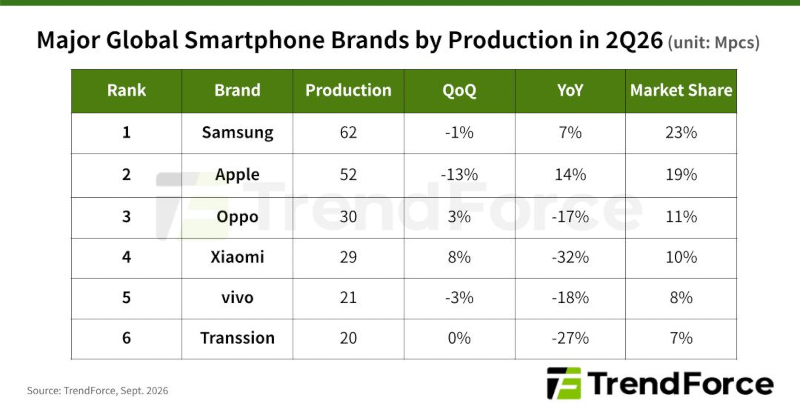
Image source: trendforce.com
Oppo, Xiaomi and Vivo ranked third to fifth with 30 million, 29 million and 21 million smartphones respectively – the Chinese giants abandoned aggressive pricing strategies aimed at gaining market share and made maintaining their current positions and preventing further declines in profitability their top priority. China’s home market accounts for a large share of Oppo and Vivo sales, but Huawei is aggressively increasing its market share. Ranked sixth is Transsion, which produced nearly 20 million smartphones, a 27% decrease from the same period last year. The company has been hit by the memory shortage as it has more entry-level models and lower inventory of low-cost memory compared to rivals.
Overall, TrendForce emphasized that the upward revision of the full-year smartphone forecast mainly reflects the temporary impact of users delaying the purchase of smartphones and brands resuming previously reduced production plans, rather than a fundamental improvement in market conditions. The outlook for the global smartphone market remains uncertain: memory shortages will continue into 2027 as pent-up demand weakens.
If you find an error, select it with your mouse and press CTRL+ENTER.