
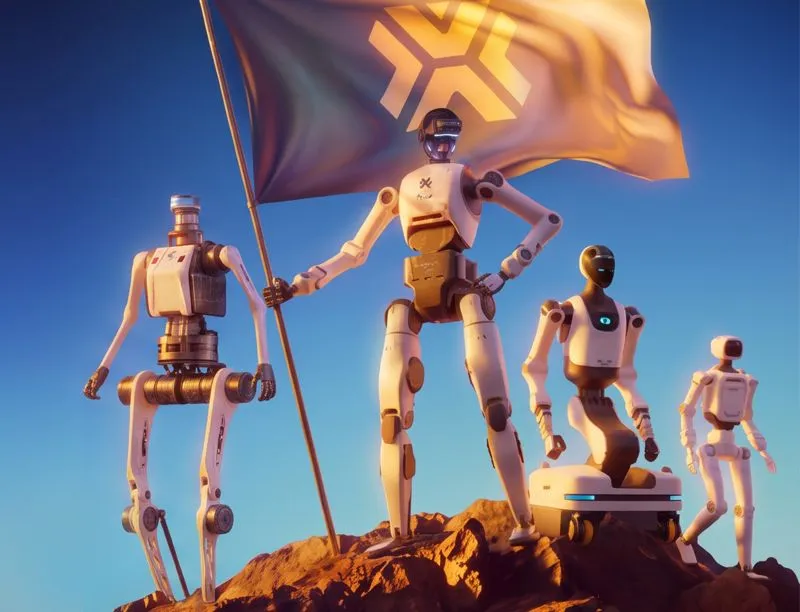
One of the main results of the World Robot Games held in China in August was the achievements in the field of track and field. A humanoid robot developed in China can travel 100 meters faster than current world record holder Usain Bolt. mechanism Reuters shared the impressions of the robot developers, which made it possible to achieve such results in the 100-meter race.
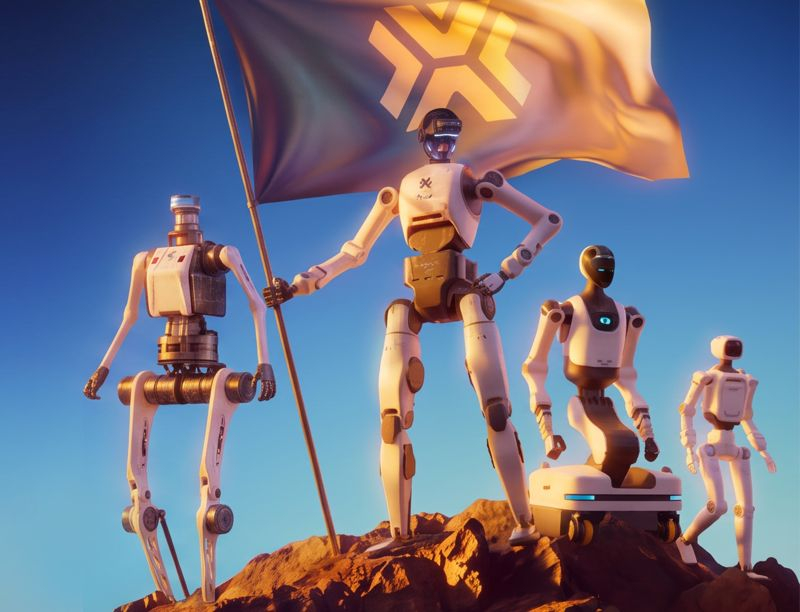
Image source: X-Humanoid
According to sources, the Tiangong Ultra robot, which set a new record for a distance of 100 meters, and the more compact Omni robot, which performs well at a distance of 400 meters, were developed at the Beijing X-Humanoid Center, which is located in a 17-story building and specializes in developing robots for various purposes, robot hardware components, and related artificial intelligence-based software.
X-Humanoid representatives said that it was the improvement of the control program with the help of artificial intelligence that made it possible to achieve record results in the robot competition. The robot prototypes used were unreliable and had different characteristics from each other, so the software had to be literally customized for each specific instance. The record-breaking robot’s creators considered its ability to reach speeds in excess of 10 m/s a major breakthrough, and progress has since accelerated. The Ultra robot is used at a distance of 100 meters and can reach speeds of 17 m/s. It weighs 75 kg and has certain difficulties in braking. In fact, by the time the race started, the development team hadn’t had time to practice the move, so the robot sprinted to the finish line with its opponents at impressive speeds, crashing directly into a giant soft pad.
We had to take several robots to the competition because sometimes they needed spare parts because of injuries sustained during training—the robots would actually break arms and legs. The control program must be developed in several stages. In the preliminaries, Ultra achieved a time of 9.39 seconds in the 100-meter distance. In the semi-finals, he improved his 100-meter time to 8.86 seconds. In the final, he ran 8.64 seconds. All of these steps require a lot of software setup, and the technical team needs to stay up all night to prepare for the robot competition.
Representatives from the center said future versions of the X-Humanoid robots should become lighter and safer, and they should learn to brake more effectively after running. In practical situations, they are planned for inspection of technical structures and rescue operations, logistics and various types of service activities. The robots learn to move stably on surfaces of different qualities, but the main task that the creators have to solve in the preparation phase for series production is to achieve stability and reliability of the robots so that they can be trusted to perform various tasks autonomously.
If you find an error, select it with your mouse and press CTRL+ENTER.