


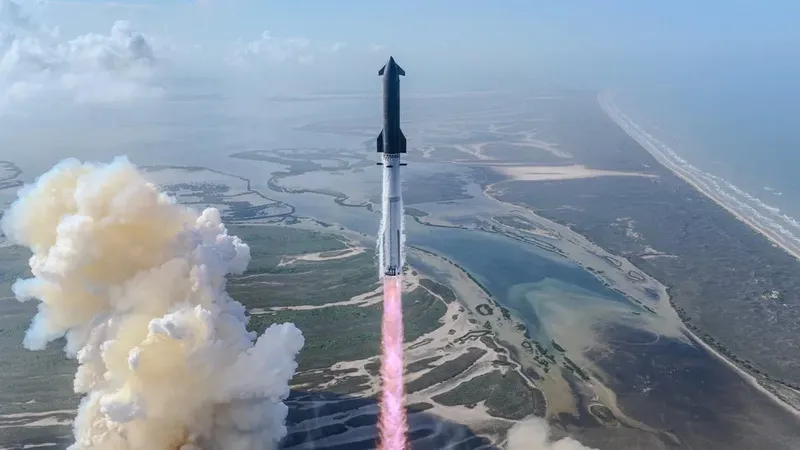
SpaceX has announced the planned date for the first orbital test launch of its Starship super heavy rocket. The launch is scheduled to take place on September 22, starting at 8:15 am Eastern Time (3:15 pm Moscow time) and lasting 75 minutes. The giant rocket will launch from the SpaceX Starbase in South Texas.
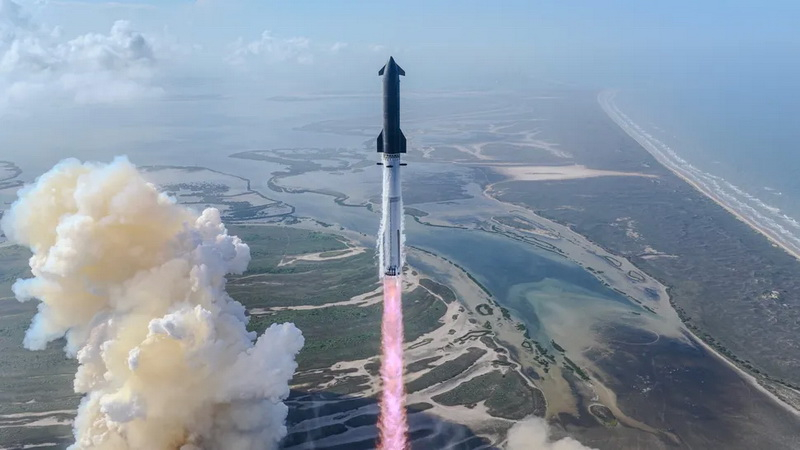
Image source: SpaceX
This launch will be the 14th launch of the Starship rocket, which debuted in April 2023 and has completed two flights in 2026. But the first 13 flights of this 124-meter-tall rocket were all suborbital flights, so the 14th launch will be a milestone event for it.
“Entering orbit will allow us to begin the next phase of Starship development, designed to ensure its full and rapid reusability. This will also be the first time we plan to put Starlink V3 satellites into orbit as a payload, which will significantly increase the speed and reliability of communications around the world.”” SpaceX noted in description Flying 14 missions.
SpaceX’s broadband satellite Starlink network deployed in low-Earth orbit currently has more than 11,000 active satellites. There is not yet a larger, more powerful V3 version of the satellite. Their evacuation plan was carried out using starships. Flight 14 will put as many as 26 next-generation vehicles into orbit – the first planned if all goes according to plan. SpaceX founder and CEO Musk said that the company’s goal is to eventually have a Starlink mega-constellation composed of 100,000 V3 satellites.
The three Starlink satellites planned to be launched on the spacecraft’s 14th flight are equipped with cameras. After separating from the rocket, they will photograph the heat shield of the starship’s upper stage, tentatively called the “spaceship.” SpaceX will use the resulting images to analyze and potentially improve the heat shield that protects the spacecraft during re-entry into Earth’s atmosphere.
If all goes according to plan on September 22, the 52-meter-tall spacecraft will orbit the Earth six times at an altitude of approximately 275 kilometers. Then, about 10 hours after launch, the device will conduct a landing maneuver in the Pacific Ocean west of Chile. The plan differs significantly from previous starship flight scenarios. During the suborbital mission, the ship flew for approximately 65 minutes, failed to complete one orbit around the Earth, and crashed in the Indian Ocean off the coast of Western Australia.
However, for the Starship system’s first stage – the Super Heavy Accelerator – Flight 14 will be a repeat of an already proven scenario. If all goes according to plan, the giant rocket will land in the Gulf of Mexico about seven minutes after takeoff, as has happened on many previous flights.
During Flight 14, a robotic arm on the Starbase launch tower captured the spacecraft and Super Heavy booster. To date, SpaceX has successfully captured Super Heavy spacecraft with turrets three times, but has never done so on the spacecraft itself. Elon Musk said this return method will become standard for starship flights in the future, which will allow equipment to be reused faster and more efficiently.
The main goal of the 14th Starship flight is to enter orbit. Other phases of the plan were postponed to the future. One of the most anticipated events will be the tower’s capture of the spacecraft and refueling of the device in orbit – an operation necessary for missions to the moon, Mars and elsewhere.
If you find an error, select it with your mouse and press CTRL+ENTER.