
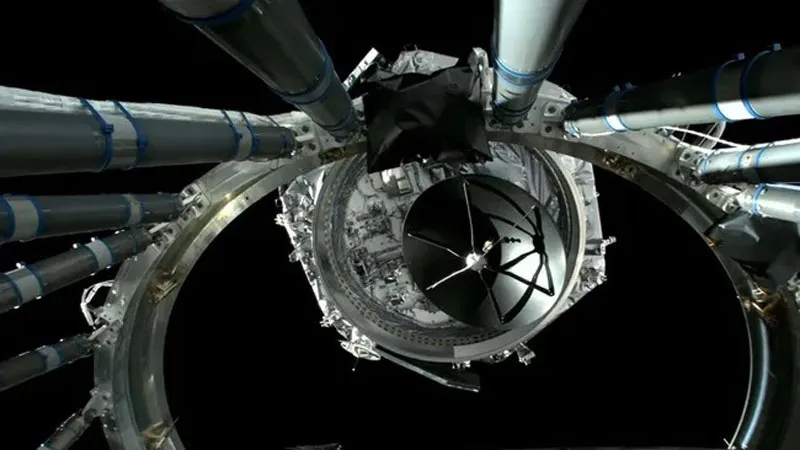
NASA engineer Start booting Equipment onboard the new “Great” Nancy Grace Roman Telescope, which launched on August 30. Now he is on a three-month flight to the L2 Lagrange point of the Sun-Earth system, about 1.5 million kilometers from our planet. The telescope will receive its first science images in early 2027, following a months-long instrument calibration phase.
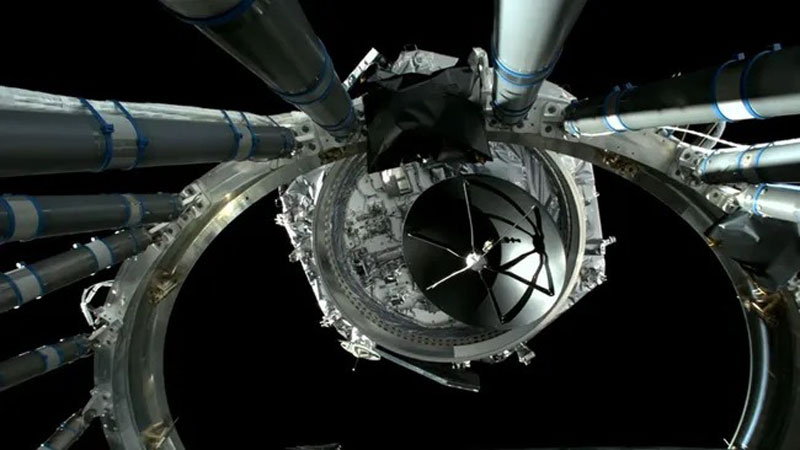
The moment when the telescope separates from the acceleration stage. Image source: NASA
The first device to be launched is a Wide Field Instrument (WFI) wide-angle infrared camera with a resolution of approximately 300 megapixels. It is equipped with 18 infrared detectors, with a total area about the size of a laptop screen, while the matrix of an ordinary smartphone is no larger than a postage stamp. Before turning on, the sensor is in warm-up mode at -65 °C for approximately 10 days to naturally remove contaminants and moisture that may have entered the sensor during startup. The heater is then turned off and the device is cooled to approximately -143°C, after which the infrared matrix can be started and will then operate at a temperature of approximately -183°C.
After turning it on for the first time, engineers checked the camera’s calibration system, the mechanism for changing filters and optics, and the focusing system. The first test image of the star field has been obtained: because the optical system has not yet been adjusted, the stars look blurry, but this image confirms the normal operation of the detector and becomes the starting point for further precise adjustments of the telescope. Once set up, WFI will be able to quickly scan large swaths of the sky, examine the distribution of galaxies, the properties of dark matter and dark energy, and conduct large-scale searches for exoplanets.

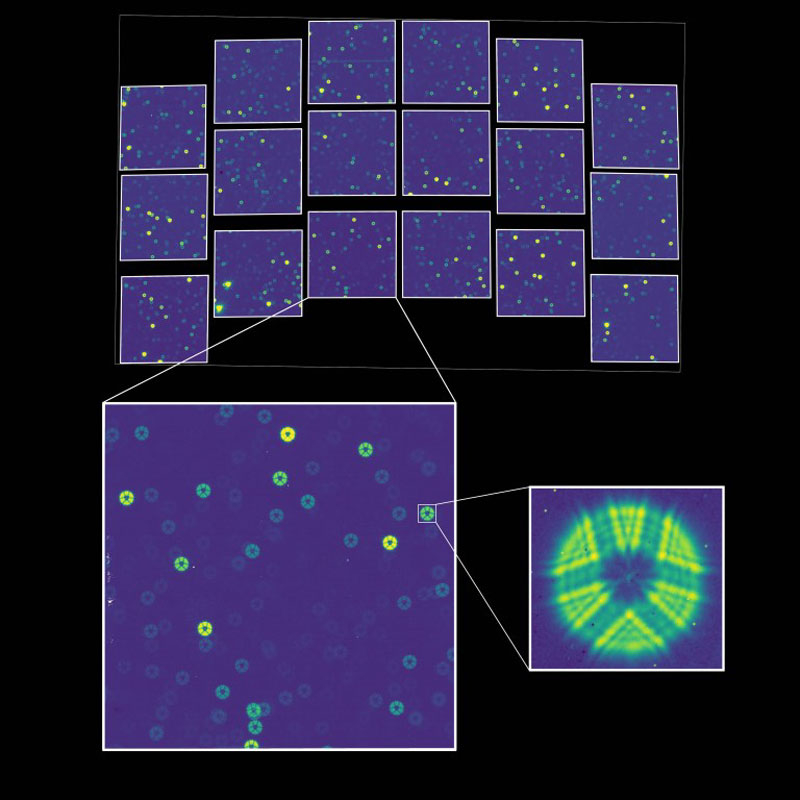
First image from Roman telescope
At the same time, NASA began testing a second instrument, the coronagraph, designed for direct observations of exoplanets. A coronagraph uses a system of masks, mirrors and high-precision deformable elements that suppress the star’s bright light and allow detection of the faint light reflected from surrounding planets. Engineers confirmed the operation of the device’s electronics, drives, cameras and software controls. The entire calibration cycle will continue for several more months, and as mentioned above, the first scientific images of Rome are expected to be obtained in early 2027.
Recently, NASA shared good news that it is possible to extend the telescope’s scientific operation time by up to 12 years or more, save fuel during the initial stages of the mission, and fill the telescope’s fuel tank with more fuel. The telescope is initially expected to operate for 10 years, and if it operates twice as long, it will be a priceless gift to astronomers and astrophysicists.
If you find an error, select it with your mouse and press CTRL+ENTER.