
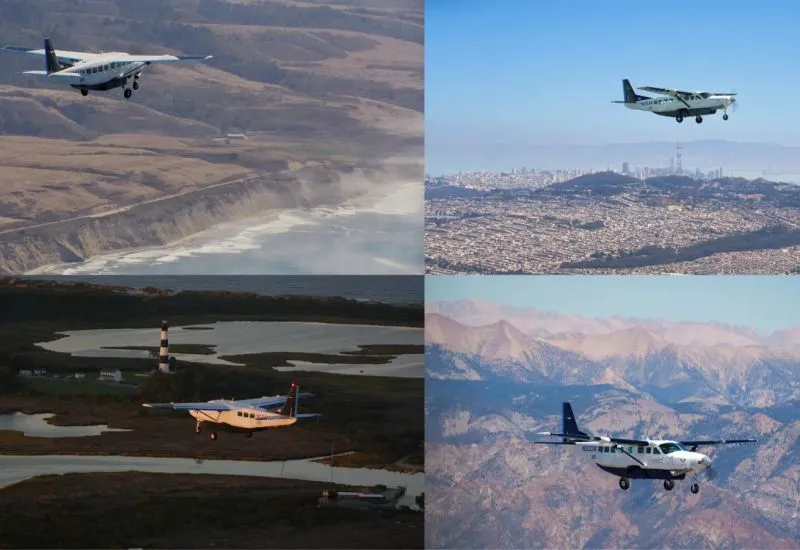
Ironically, it was the aviation industry that gave cars the term “autopilot”, but in the first case it was used only during certain phases of the aircraft’s movement. Joby Aviation says its technology recently enabled a transcontinental flight of a Cessna Caravan without the need for professional pilots to intervene at all stages of the route.
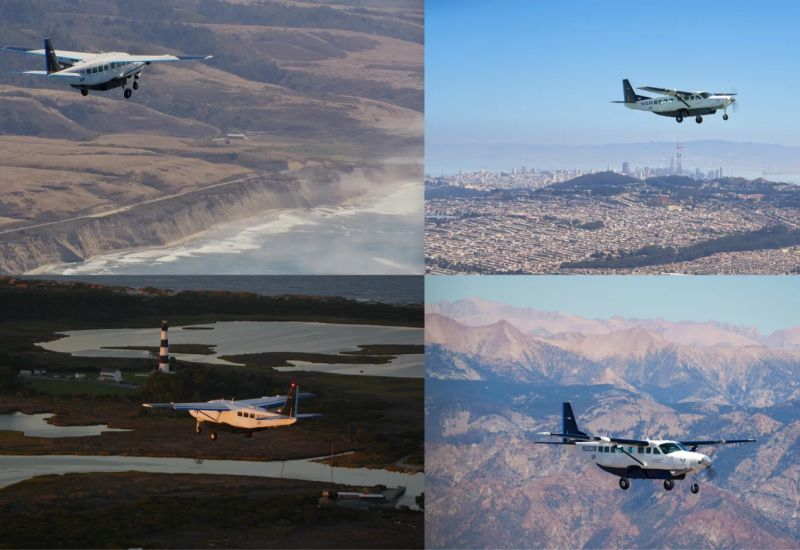
Image source: Joby Aviation
As stated in the press release, the pilot Joby AirThe aircraft actually exists in the cockpit as a backup, but he does not have to interfere with the control process, either during the maneuvering phase along the runway, during climb or descent, or during takeoff and landing, let alone during the phase of uniform movement in U.S. airspace. The transcontinental flight, which included stopovers and covered a total route length of 5,148 kilometers, was designed to test the autonomous system’s interaction in various weather conditions and with various levels of airport ground infrastructure.
The flight, which was continuously monitored by test organizers in California and South Carolina, covered a distance of up to 3,738 kilometers. It is also a test of the onboard communications and monitoring systems. Symbolically, the transcontinental flight ended in North Carolina, not far from where the Wright brothers made history’s first flight in an airplane in 1903. According to representatives from Joby Aviation, its autonomous driving system can be successfully integrated into the existing aviation infrastructure in the United States to solve logistics, rescue and military supply tasks. With the help of drones, goods can be delivered to remote areas, even those without a well-developed airport network.
In 2024, Joby Aviation acquired Xwing’s autonomous driving technology and has completed more than 400 autonomous flights, totaling approximately 800 hours. The company successfully demonstrated the ability of its drones to deliver critical spare parts 24 hours faster than traditional U.S. Air Force logistics channels, and attracted the attention of the U.S. military. In addition, the ability to remotely control the aircraft over a distance of approximately 6,437 kilometers was also demonstrated. The driverless Cessna Caravan that completed its transcontinental flight is now preparing to return. The route is more than 5,000 kilometers long and will cover North Carolina, Virginia, Kentucky, Kansas, Oklahoma, Utah and Oregon.
If you find an error, select it with your mouse and press CTRL+ENTER.