
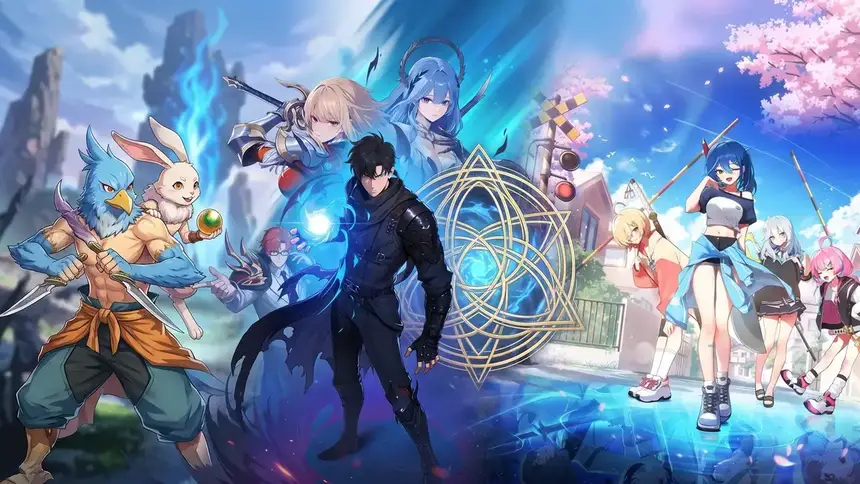
At Tokyo Game Show 2026, Netmarble showed off three upcoming projects: Shangri-La Frontier: The Magnificent 7, Solo Upgrade: KARMA, and Blue Pearl. For more information on publishing strategies, portal reporters 4Gamer.net Speak with Yuta Niibe, Head of Marketing and Alliances at Netmarble Japan. The conversation went well beyond discussions of new product game mechanics. Niibe candidly shared his views on the stagnation of the mobile market, the polarization of the gaming industry, and the importance of sincere and targeted communication with the community in an era of content overload. Here are the highlights from that conversation.
- Yuta Niibe said that the publisher’s main goal at Tokyo Game Show 2026 is not just to showcase three new projects. He says it’s now critical for developers and marketers to receive immediate, immediate feedback from players to gain a thorough understanding of which game elements they’re truly interested in, and which aspects seem buggy, boring or need serious improvement.
- The management of the Korean company Netmarble, like its Japanese division, has traditionally viewed the Japanese gaming market as one of the three most important gaming markets in the world, on par with the US and Chinese markets, and this priority was set by management even before Niibe joined the company. Based on years of successful experience in publishing projects such as Seven Knights, Lineage 2: Revolution, The Seven Deadly Sins and Solo Leveling: ARISE, the company views its marketing mission as global projects adapted to local audiences and actively promotes Japanese series of games on the world stage to provide developers with a development vehicle most popular with Japanese gamers.
- One of the company’s key new products at the show is the role-playing game Shangri-La Frontier: The Magnificent Seven, which is based on the idea of returning to the historical roots of mobile gaming, which is being able to play comfortably one-handed in portrait orientation. The developers noticed that modern mobile projects are becoming more and more heavyweight and require both hands to hold, so they decided to completely transform the control system and created the Switch Battle RPG type, which emphasizes the tactical changes of characters in battle, allowing you to organically combine elements of classic team RPGs with spectacular actions.
- Since the Shangri-La Frontier series is hugely popular not just in Japan but around the world (largely due to the anime adaptation’s high viewership on global streaming platforms), the development team placed great emphasis on faithfully reproducing the atmosphere and details of the original to please its loyal fans.
- The second major project, titled Solo Leveling: KARMA, is an isometric action RPG with roguelike elements, aiming to expand the universe of this extremely popular series, which has gained global recognition from its huge success in Japan (in the form of web comics, novels and anime). While the competition for action RPGs is fierce, this one stands out because it lets you enjoy stylish and fun combat without having to master complex controls, making it equally appealing to hardcore gamers and casual gamers.
- Rather than being a mediocre retelling of known events, Solo Leveling: KARMA’s story campaign fills in the gaps in the history of the fully completed original, providing fans with entirely new content that is radically different in genre and narrative from the first successful game in the same series.
- The third game, Pearl in Blue, is Netmarble’s first foray into the visual novel/girl-centered RPG genre (pretty girl genre), offering players a unique concept of a “monthly romantic comedy” and a very light, energetic and positive atmosphere. Yuta Niibe emphasizes that this project was not cynically launched from above by marketers in order to mechanically occupy a new financial niche, but purely out of the personal enthusiasm and enthusiasm of the Netmarble N2 development team, who themselves are big fans of such games and want to create the best product in their favorite genre.
- In the case of Blue Pearl, Netmarble’s challenge as a publisher boils down to carefully harnessing the creativity of developers, packaging it correctly for the market, and exceeding player expectations, while recognizing that the girls’ game genre is an oversaturated and extremely cutthroat market. The company completely abandoned aggressive and direct advertising campaigns with huge banners or expensive TV spots, because forcing the company’s products on this niche simply would not work and would be rejected by the audience.
- In a fiercely competitive environment, the promotion strategy is based on painstaking, targeted and systematic communication with the gaming community, with the first priority being to publicly demonstrate the developers’ sincere love for the characters they create. The company’s marketers firmly believe that in an era of comprehensive competition for users’ free time, they cannot rely on stereotypes (for example, blindly positioning the game for “30-40-year-old men”), but must communicate with players in person at exhibitions such as TGS, see their faces, hear real comments, and let the project’s popularity grow organically through sincere word-of-mouth.
- Assessing the current state of Japan’s mobile gaming market, a Netmarble representative said the Japanese mobile gaming market is not declining or dying rapidly, but rather is in deep stagnation due to a sharply shortened life cycle for published content. If previously successful games could steadily grow and retain audiences for years, today even explosive financial hits tend to lose popularity within a year as players become accustomed to extremely rapid information consumption.
- The modern mobile gaming industry is facing serious polarization. On the one hand, the sheer cost of producing big-budget projects like Mongol or The Seven Deadly Sins: Origins is why many studios complain about their inability to retain employees and stay afloat. On the other hand, the market is flooded with cheap casual games created in the shortest possible time. In these difficult circumstances, when the boom in indie projects means that making mobile games is no longer the default industry standard, Netmarble sees the key to success in returning to the basic strengths of mobile devices – the ability to play games quickly, comfortably and easily in traffic or during short breaks – and is committed to launching these three new products.