
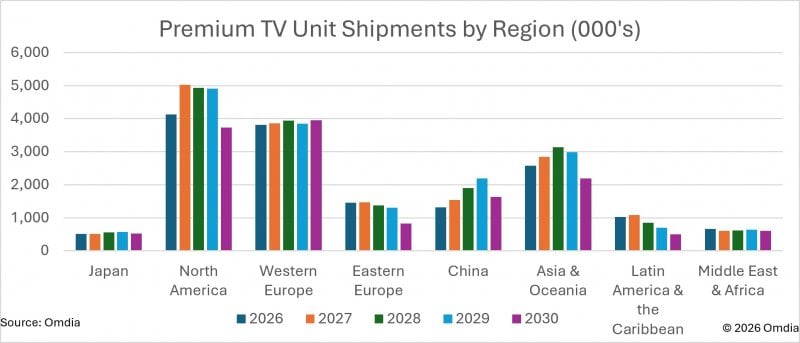
The TV market is preparing to go through a phase of overall soft demand, but with More and more attention is paid to high-end models. According to Omdia’s latest forecast, global TV shipments are expected to decline by 1% in 2027, while high-end TV shipments are expected to increase by 9.3% annually.
The premium category includes TVs with an average selling price of more than $1,000 (approximately 850 euros). However, not all market growth will be uniform and will be accompanied by changes in producer strategies.
Premium TVs, memory costs and new technologies drive market
Most importantly, these affect the future of cheap TVs Rising component costs and limited memory availability. The impact is particularly pronounced for models with lower profit margins: For a 65-inch LCD TV priced at $300 (approximately €255), even a few extra dollars of memory can significantly impact profitability.

However, more expensive models have greater headroom to absorb the same growth without significantly changing the relationship between cost and final price. According to Omdia, component supply is limited, thus forcing multiple manufacturers to allocate Larger supply of high-end TVs.
RAMgeddon will wipe out 230 million smartphones under $200 by 2030


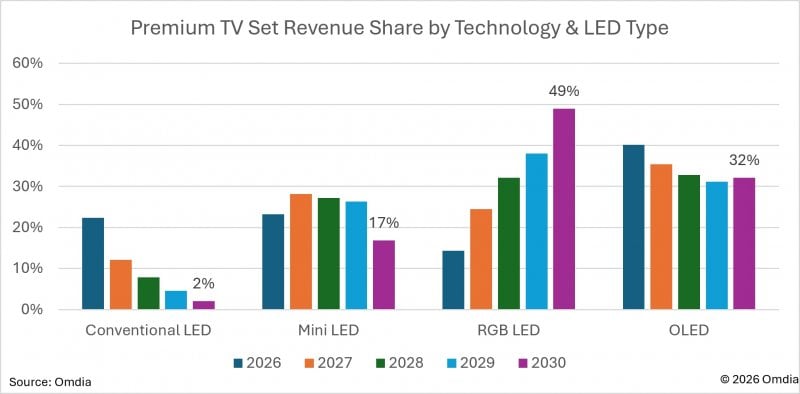
Panel technology is another element of the strategy. RGB LED backlighting is becoming more common This is facilitated by the possibility of increasing the amount of color, improving local backlight control and achieving higher brightness. Omdia predicts that the technology will account for 49% of global pay-TV revenue by 2030.
Over the same period, LCD TVs with traditional backlights are expected to decline to 2% of premium revenue. These figures highlight a gradual shift towards solutions that justify higher price tags through more advanced technical features.

North America is expected to be the market with the strongest growth in high-end shipments, expected to grow by 21.9% in 2027. As a result, Omdia’s new forecast shows that the TV industry will be divided into two parts: declining overall demand and increasing concentration in the high-end market. Over the next few quarters, it will be interesting to see how rising parts costs affect the pricing of cheaper models and the availability of new technology.