
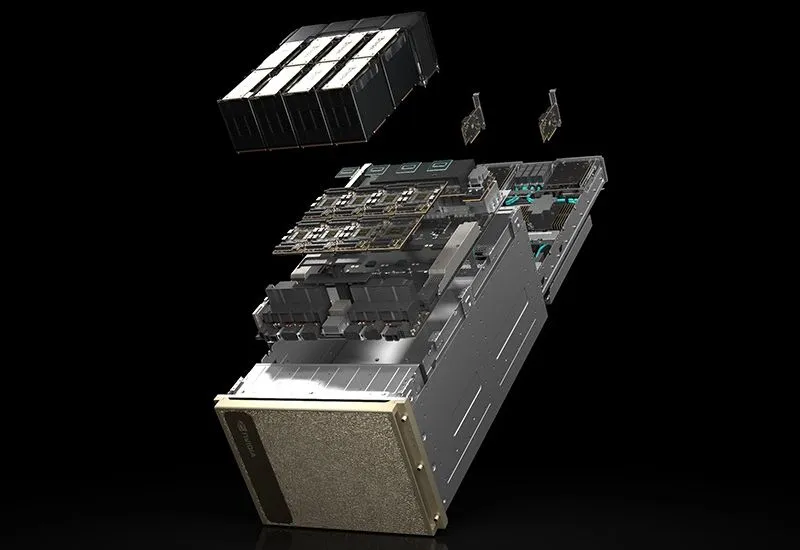
The boom in artificial intelligence requires huge investments, but the prospects for financial returns are bleak. Not surprisingly, it has spawned many ring-financing deals where everyone is passing on money but no one is fully responsible for the end result. Nvidia is trying to balance industry risks by indirectly underwriting data center transactions through insurance companies.
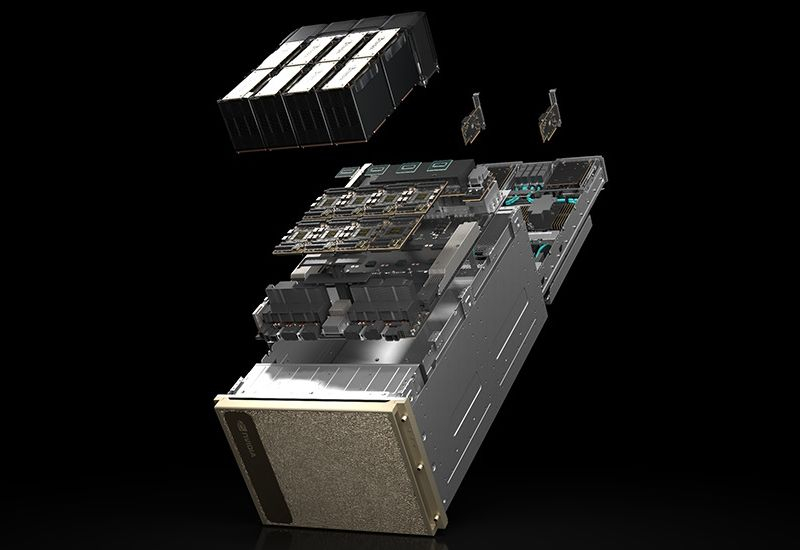
Image source: NVIDIA
The publication reported this financial timesindicating that Nvidia representatives are negotiating with insurance companies. The idea is to insure a company working on building data centers based on Nvidia’s compute accelerators from the risk of bankruptcy. It’s no secret that under normal circumstances their prices drop quickly, and this is largely driven by Nvidia itself, which releases new generations of increasingly powerful accelerators every year. The loan for the data center construction was issued based on a fixed amount estimated based on the compute accelerator purchased for the facility. If the borrower goes bankrupt, these accelerators can be sold at a deep discount, leaving the lender at risk of losing a significant amount of their money. NVIDIA hopes to use insurance companies to bear the amount of the accelerator price reduction in this case.
At the same time, the company also showed off demand for its accelerators and said they would suffer minimal price losses over time amid the artificial intelligence boom. Some third-party evaluators share this optimism. For example, Barkr AI claims that an Nvidia system based on the 8-chip H100 will still cost $320,000 in 2022, which is almost the same as it cost new four years ago. Furthermore, this distortion is only possible because of the lag between demand and supply for such accelerators. Barkr AI experts say that once the market reaches equilibrium, a system of this class will be a third cheaper in the first year of operation and its residual value after six years of operation will not exceed $30,000.
Nvidia is promoting the idea of attracting insurance companies to indirectly finance the industry through its director of financial solutions Ingemar Lanevi. According to Nvidia, the existence of professional insurance plans will help attract more capital into the field of artificial intelligence infrastructure construction. Furthermore, interactions with new cloud providers will become as acceptable to counterparties as interactions with market giants with significant financial muscle. At the very least, risk insurance would equalize the chances of success for both large and younger market players.
Nvidia itself is even preparing to join an investment consortium to provide financing for the development of artificial intelligence infrastructure. It has pledged to attract $500 billion into the field and provided $105 billion in financial guarantees for OpenAI to build large data centers. The scale of investment in the AI industry has reached amounts that even the largest companies cannot raise alone, so joint and several liability plans will become more common. Nvidia is already hiring consultants and brokers to address these issues. The company even uses the following arguments in negotiations with potential partners: “AI infrastructure is an investment-grade asset because it is uniquely productive, reliable and fungible.”. Initially, Nvidia wanted to use its own funds to take on creditor risk, but now it is considering insuring such risks.
If you find an error, select it with your mouse and press CTRL+ENTER.