
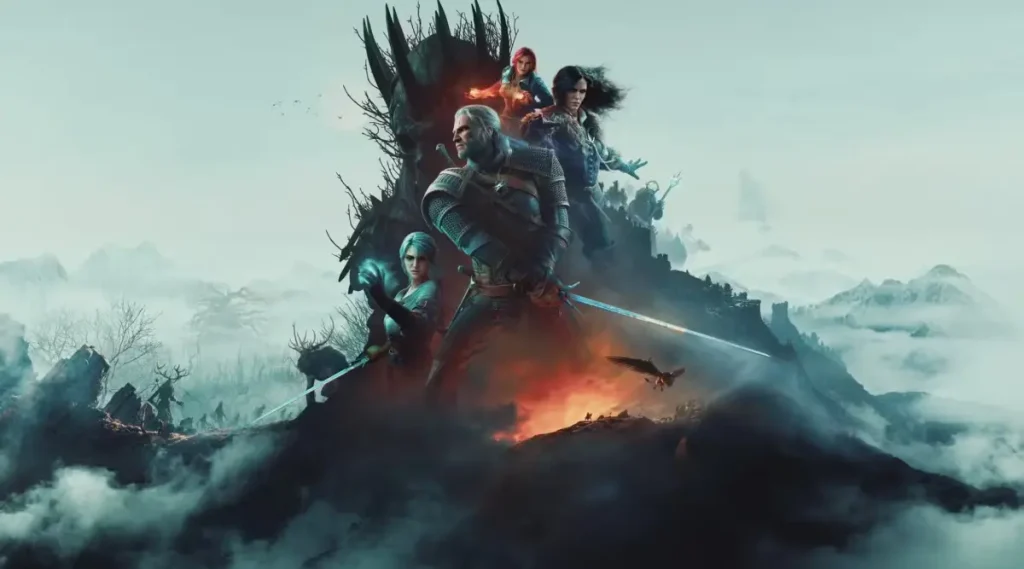
Release date: September 29, 2026 The Witcher 3: Wild Hunt Remastered Edition – CD Projekt RED A massive free update to the famous RPG. The developers did not limit themselves to yet another improvement in textures and lighting: the new version receives a redesigned skill system, changes to the combat system and controls, support for modifications between platforms, an expanded photo mode, new accessibility features and many other changes. At the same time, the studio announced the final system requirements for the PC version, and additional free rewards are waiting for game owners.
Existing owners of The Witcher 3 on supported platforms can get the update for free. On PC we are talking about Steam, GOG, Epic Games Store and Battle.net, while the console version is released on PlayStation 5, Xbox Series X|S and Nintendo Switch 2. Meanwhile, owners of the original version on Nintendo Switch will also be able to get the Switch 2 version. The updated version for owners of the base game also includes two major supplements – Hearts of Stone and Blood and Wine.
At the same time, CD Projekt RED finally increased its requirements for the PC version. Now, running Remastered officially requires Windows 11 64-bit, DirectX 12, and an SSD. The minimum configuration is designed for 30 frames per second, 1080p gaming at low settings and includes an Intel Core i5-8400 or AMD Ryzen 5 2600, 12 GB of RAM and a GeForce GTX 1660, Radeon RX 5500 XT or Intel Arc A580.

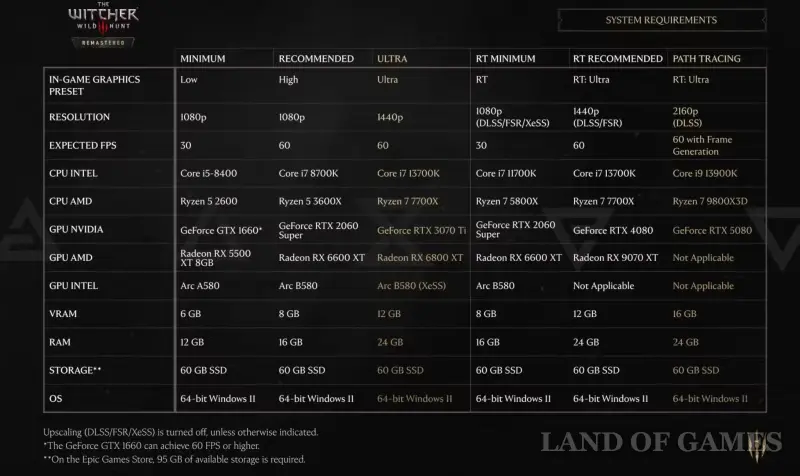
For 1080p at 60 FPS at high settings, you’ll need a Core i7-8700K or Ryzen 5 3600X, 16 GB of RAM, and an RTX 2060 Super, RX 6600 XT, or Arc B580 class graphics card. The next tier – 1440p and 60 FPS on Ultra – requires a Core i7-13700K or Ryzen 7 7700X, 24 GB RAM and an RTX 3070 Ti, Radeon RX 6800 XT or Arc B580 with XeSS. All these modes require approximately 60 GB of SSD.
The most impressive requirements relate to ray tracing. For RT mode at 1080p at 30 FPS, the developers recommend a Core i7-11700K or Ryzen 7 5800X, 16 GB RAM and an RTX 2060 Super, RX 6600 XT or Arc B580. For RT Ultra at 1440p, 60 FPS, the standard goes up to a Core i7-13700K or Ryzen 7 7700X, 24 GB of RAM, and an RTX 4080 or Radeon RX 9070 XT. DLSS, FSR or XeSS upconverters are used in their respective modes.
Finally, for 4K full-path tracking at the target 60 FPS, you’ll need a near-high-end system: a Core i9-13900K or Ryzen 7 9800X3D, 24 GB of RAM, and a GeForce RTX 5080 with 16 GB of VRAM. At the same time, the claimed results are achieved using DLSS and frame generation, which means we’re not talking about native 4K without additional scaling technology.
It turns out that the 5.0 patch itself is much bigger than a regular graphics update. One of the most notable changes is a completely redesigned skill system. Abilities are now organized into a full-blown tree with three levels, and to gain new skills you need to open previous nodes. Due to system changes, all skill points for existing characters will be reset, so old versions will have to be rebuilt after the update is installed.

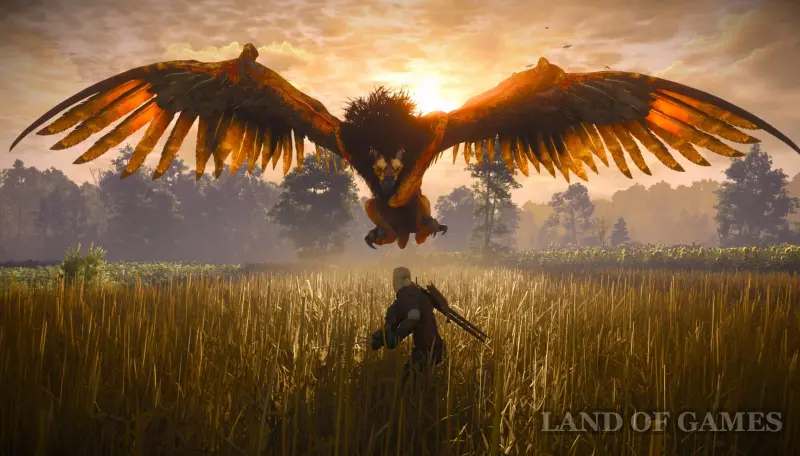
The visual components and technical parts of the game have also been seriously redesigned. The Witcher 3 switches to native DirectX 12 with multi-threaded rendering, new shading models, improved textures and models based on The Witcher 3 HD Remastered project, updated vegetation lighting, new logos and ability effects, improved HDR, GTAO and ray tracing HairWorks. On PC, path tracing, DLSS 4.5 with ray reconstruction, FSR 4 and XeSS 2.0 have also been added.
These changes directly impact gameplay. Monster attacks, reactions, and movement patterns have been improved, Geralt has received new finishing moves and animations, and movement and overcoming obstacles have become smoother. Roach’s controls have also been redesigned: additional sensitivity settings have appeared, some riding moves have been changed, and you can now collect loot without dismounting.
Another great innovation is the reforging system, which allows you to change the appearance of your device without changing its characteristics. This essentially adds full-fledged transmog functionality to The Witcher 3. In addition, the developers have expanded the photo mode: now you can place your character, change poses and facial expressions, add light sources, control weather and time, use different frame ratios, switch to first-person view and save camera presets.

The built-in support for modification deserves special attention. Remastered is integrated with mod.io, so compatible mods can be found directly through the game menu. Support extends not only to PC but also to modern consoles, although specific modding capabilities depend on the limitations of each platform.
CD Projekt RED has also added new accessibility features, redesigned the loot interface, improved quest notifications to allow found items to be grouped, and made numerous fixes to quests, UI, HDR, controls, and performance. Saves from earlier versions of the game are still compatible, so there’s no need to restart hundreds of hours of adventure.
And gifts. Once the game is linked to a CD Projekt RED account, players will receive additional rewards, which can be claimed from the Palace of Vizima after receiving Yennefer’s letter. New items in the remaster include the Crimson Crest armor set, new Demagogue hair, Wolf Bandana, and other cosmetics, as well as returning or re-released rewards such as Gwent’s Cockroach card.
As such, The Witcher 3 Remastered is more than just another visual update. The update also affects the graphics engine, PC requirements, combat system, character development, controls, equipment, photo mode, modifications, and accessibility. However, the entire set is available for free for those who have already purchased the game, and the base version now actually combines two major add-ons.