
Valve releases SteamOS 0.4.3 Beta for Steam Frame, highlights everything About device energy efficiency and stability. According to the company, these optimizations can extend battery life by up to 12%, whether running games locally or via streaming.
However, the actual improvement depends on what you’re gaming and watching, as well as the frame rate used. The update is currently available through the Steam Frame Beta channel and can be selected from the section of system settings dedicated to the update channel.
SteamOS 0.4.3 improves Steam Frame consumption and streaming media
Steam Frame uses Qualcomm Snapdragon 8 Gen 3, supports 16 GB LPDDR5X memory, and uses the ARM64 version of SteamOS. Version 0.4.3 Valve intervenes in consumption Optimization affects rendering and streaming game sessions executed directly from the device.

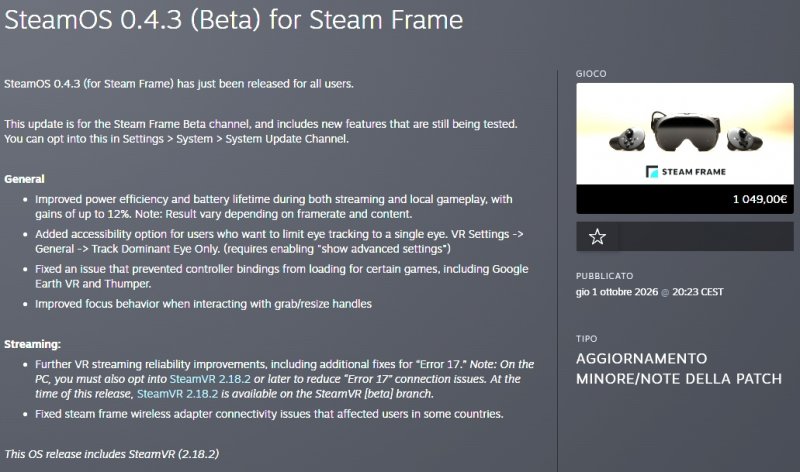
The beta version also introduces New accessibility settings for eye tracking. After activating advanced options, in the VR Settings > General section, you can choose to use only the main eye for tracking.
Steam, Valve prepare a new, more personalized discounts and events section


In terms of resolved issues, Valve reported fixes for: Controller commands are not loading correctly In some games, including Google Earth VR and Thumper. We’ve also changed some focus-related behavior when interacting with elements used to grab and scale objects.
A big part of the update involves streaming, with additional content Interventions in connection stability and the issue identified as “Error 17”. Valve recommends using SteamVR 2.18.2 or higher on the PC running the game, and SteamOS 0.4.3 on the headset. SteamVR 2.18.2 also adds the ability to display eye opening data detected by Steam Frame through OSC. The same version of SteamOS also fixes some wireless adapter connectivity issues affecting users in certain countries.
SteamOS 0.4.3 is released shortly after versions 0.4.1 and 0.4.2, both of which were released at the end of September. Therefore, Valve is conducting a series of rigorous beta updates to Steam Frame, starting with interventions on the autonomy, streaming, and reliability of VR experiences.