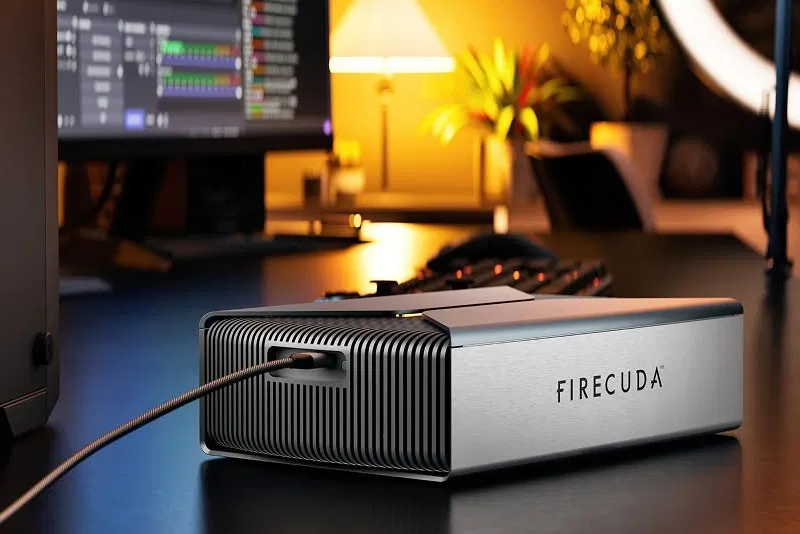
Seagate has introduced a new external storage device, FireCuda Forge, that combines the speed of solid-state drives with the affordability of high-capacity hard drives. This is the first drive to feature Seagate’s new intelligent Alkemi platform, which analyzes data usage and automatically moves more in-demand files to the fast SSD.
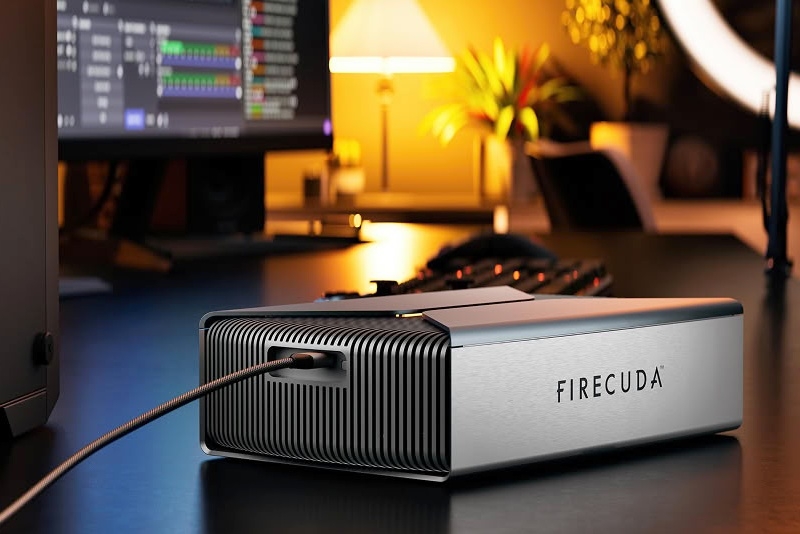
Image source: Seagate
The idea of combining a hard drive with flash memory is not new – Seagate has been producing similar hybrid drives for decades. The peculiarity of the new product is that the owner can choose which HDD and SSD to install in it. While this is similar to how network-attached storage (NAS) works, using an SSD to temporarily cache frequently accessed data, Seagate says FireCuda Forge functions differently.
FireCuda Forge is available in two configurations: with an 8 and 20 TB HDD. The hard drives in both configurations are replaceable, allowing users to later expand their storage capacity. But the user will have to install the SSD in each version independently. Seagate specifies that the FireCuda Forge requires an M.2 2280 SSD with PCIe 3.0 support or higher, a read speed of at least 2,400 MB/s, a write speed of at least 2,000 MB/s, and a capacity of up to 1 TB. It is recommended to use an SSD with DRAM cache.
According to Seagate, Alkemi technology uses machine learning to dynamically move data between drives based on the current workload and user needs. As tasks change, data will be redistributed between the two drives, but to the operating system, the entire system will appear as a single logical drive.
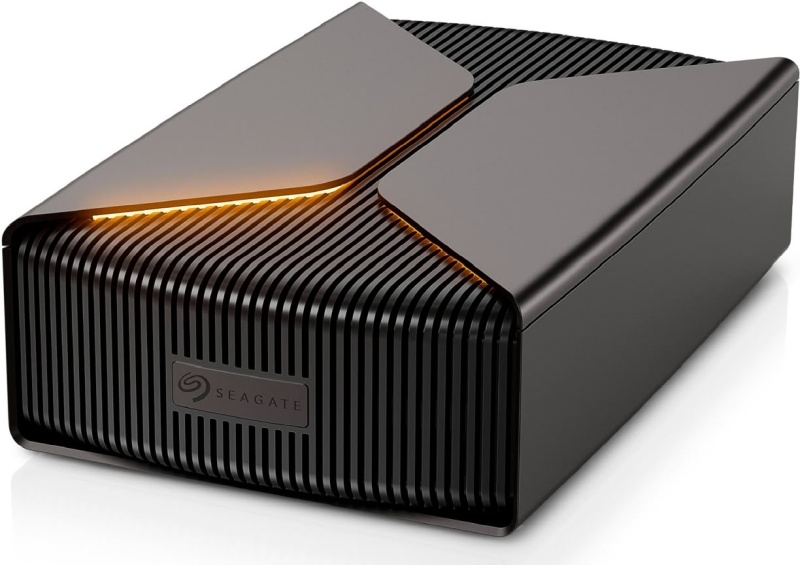
Seagate says the FireCuda Forge is capable of sequential read speeds of up to 2,500 MB/s and write speeds of up to 2,000 MB/s. The external drive connects via USB4 and supports computers running Windows 11 or macOS 26 and later. It also features programmable RGB lighting and is designed for gaming, streaming, video recording, editing and exporting.
The FireCuda Forge drive is now available in the Seagate online store. The version with an 8 TB hard drive costs $699, and with a 20 TB drive costs $899. Since an NVMe SSD is not included in the package, given the current shortage, this can significantly increase the final cost of the device.
If you notice an error, select it with the mouse and press CTRL+ENTER.