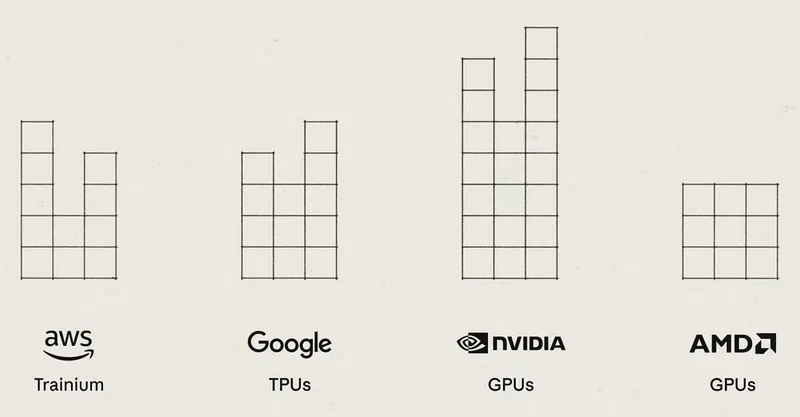
Anthropic said it has eliminated its dependence on Nvidia hardware through a strategy of using different types of chips. The company says it was able to port its Claude AI model to AMD GPUs in just three days. And at the same time practically without human intervention.
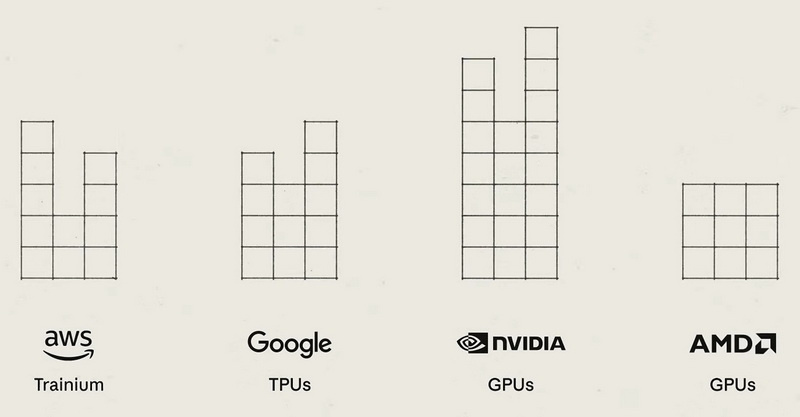
Image source: Anthropic
Nvidia’s main competitive advantage lies in its combination of hardware and software. In particular, we are talking about the CUDA ecosystem, which “ties” developers to the chips of this company. Porting AI models to other chip architectures requires such effort that many companies don’t even try. However, in an investor presentation, Anthropic claims to have solved this problem using artificial intelligence.
According to Tom Brown, co-founder and director of computing power at Anthropic, the company now trains and runs Claude on hardware from four major chip vendors (AWS Trainium, Google TPU, Nvidia GPU and AMD GPU). Early on, Anthropic made an “out-of-the-box bet” to use different types of chips when most in the industry thought the effort wasn’t worth it. Each type of chip requires its own specialized software and inference stack, which is expensive and time-consuming. But Anthropic has been investing in this area for years and, according to Brown, has achieved “incredible success” in it.
The most serious test for the company was working with AMD graphics processors. Previously, adapting a new chip platform required the efforts of dozens of engineers over many months. This year, Anthropic used AMD’s GPU for the first time, entrusting the task to its own advanced AI model, Mythos. According to Anthropic, the Claude model was up and running on AMD chips in just three days, with virtually no human intervention. The model independently transferred or wrote almost 100% of the necessary software kernels.
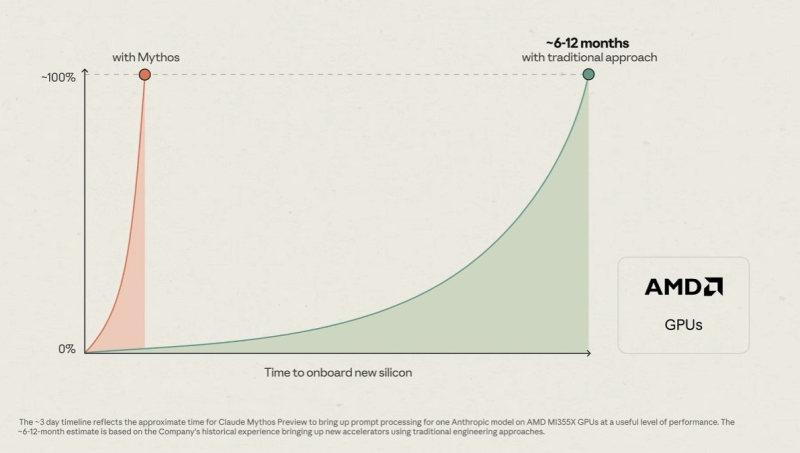
If Anthropic’s results are independently confirmed, it could suggest that the software barriers that have long been considered Nvidia’s main competitive advantage could be significantly reduced by artificial intelligence. Companies will be able to more easily switch between chip suppliers, choosing the most affordable options in terms of price or availability.
In a computing power market where hardware is in short supply, a strategy of using different chip types allows companies to target the best price/performance ratio, regardless of who the manufacturer is. Some chips are better suited for training models, others – for their operation (inference).
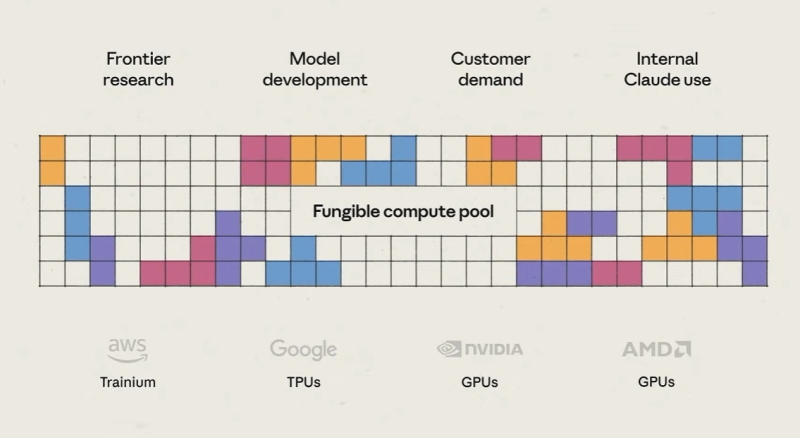
Because Nvidia dominates the AI chip market, it currently enjoys margins of over 70%. Anthropic treats computing resources from different vendors, with different chip architectures, and in different geographic locations as a single, interchangeable pool. The company says it gets more bang for every dollar it invests in computing than any other leading AI lab.
In addition to its strategy of using chips from different manufacturers, Anthropic relies on so-called “compute multipliers” – scientific breakthroughs that allow achieving higher performance with the same physical computing power. According to Anthropic, these “multipliers” complement each other. Each new breakthrough enhances the effect of the previous one.
In the future, the Claude model should learn to independently find such “computational factors”. This would mean a transition to recursive self-improvement – a concept that is actively discussed among AI researchers, but has not yet received practical confirmation.
In addition, as part of the Anthropic Direct program, the company is creating its own facilities in data centers. Instead of simply renting computing resources in the cloud, Anthropic rents the chips and runs them in specially prepared data centers. The goal is to reduce the total cost of ownership.
Notably, both competing chipmakers (Nvidia and AMD) are heavily invested in Anthropic itself. Nvidia has pledged to invest up to $10 billion in the company by the end of 2025, and is also participating in a $26 billion private placement round ahead of the IPO (according to SEC filings dated November 10, 2026). AMD in July 2026 announced a strategic investment of up to $5 billion in exchange for Anthropic’s commitment to deploy up to two gigawatts of capacity based on the new AMD Instinct MI455X accelerators starting in the first half of 2027.
If you notice an error, select it with the mouse and press CTRL+ENTER.