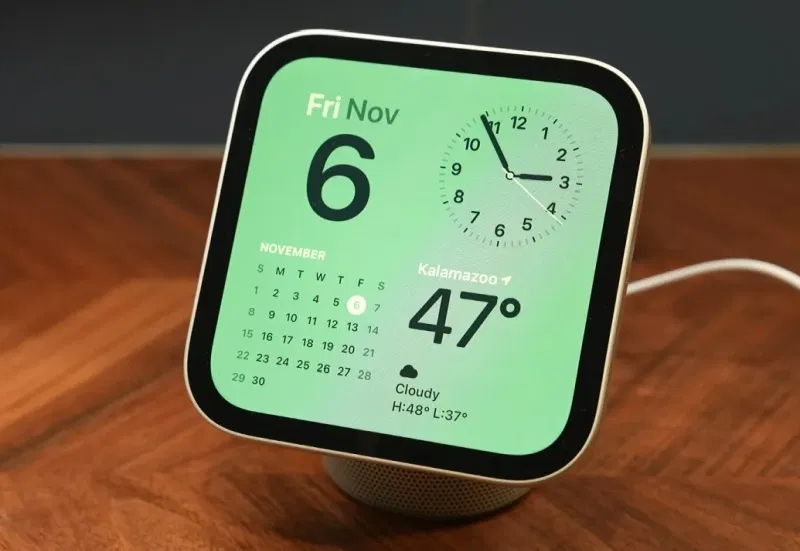
Apple’s HomeView has been met with mixed reviews, calling it a “charming smart display,” criticizing its modest debut and questioning its ability to “bring order to your chaotic smart home.” The older generation is delighted with the device, but admits that things get complicated when the gadget tries to “take on the role of the family iPhone.” And teenagers are not happy with inconvenient authentication procedures and prefer to use their iPhone.
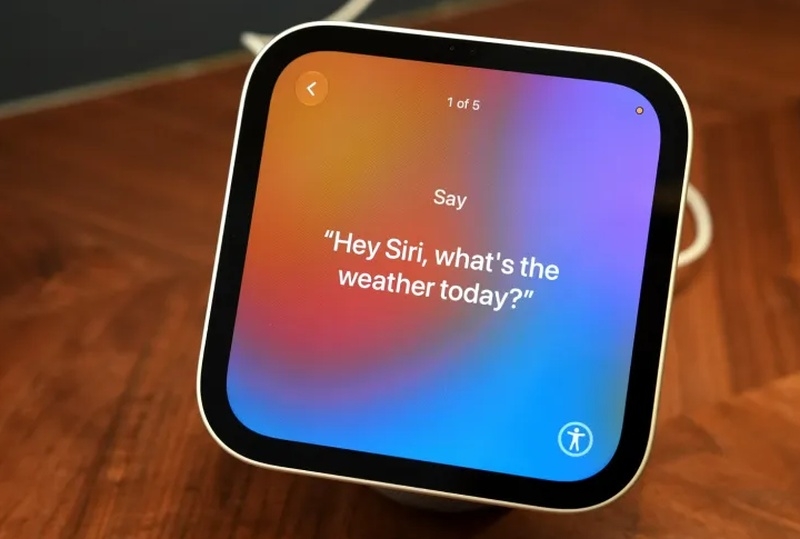
Apple HomeView is a smart display that combines a 7-inch screen with a resolution of 1088 × 1088 pixels and a maximum brightness of 500 cd/m2, Siri voice assistant and a completely new software interface. The device is built on the Apple A18 processor combined with 8 GB of RAM. The package includes a braided USB Type-C cable and a 30W power adapter.
The square display is mounted on a rounded aluminum base that houses the speaker. Inside the display are two full-range speakers, and at the base there is a downward-firing woofer and two passive radiators that work on the principle of vibration compensation. HomeView also supports AirPlay technology, allowing the owner to stream content directly from their iPhone or other Apple device.
According to a journalist from 9to5mac, HomeView is a “charming device.” He finds the decision to make the display square “very interesting.” In his opinion, thanks to this form and a software interface built around watch faces and widgets, HomeView resembles a larger version of the Apple Watch, created specifically for the home. HomeView doesn’t feel like an iPad sitting on a stand, but rather a standalone device designed for specific tasks.
9to5mac’s review notes that the text on the screen is easy to read, the timers are displayed large and clearly, but sometimes you want the screen to be bigger, for example, when viewing recipes you have to scroll the page a lot. The reviewer rated the sound quality as average between the HomePod mini and the full-size second-generation HomePod. In his opinion, “the sound is unlikely to amaze you to the core, but for music or podcasts it is quite decent.”
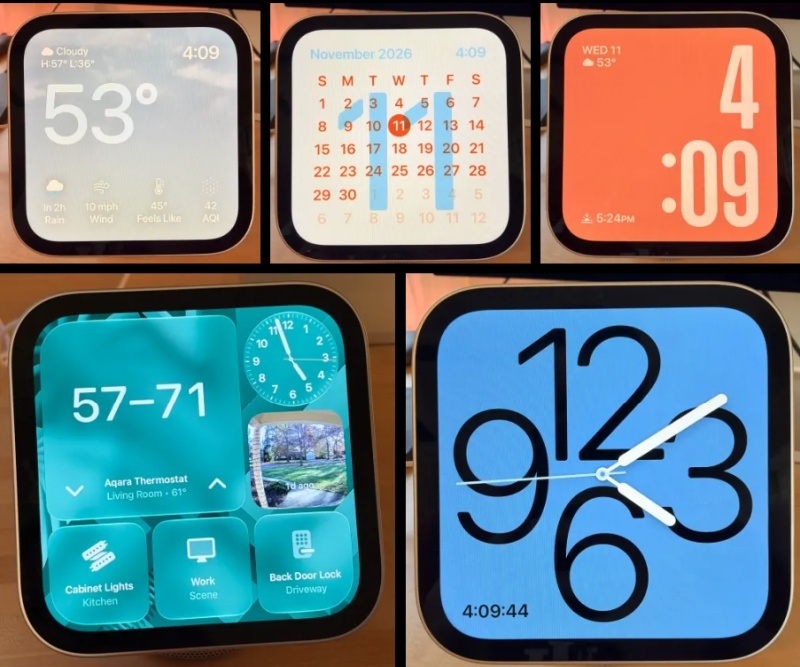
According to the author of the review, the interface based on watch faces with widgets is very similar to the system of “extensions” (complications) in the Apple Watch, and the dial settings will seem familiar to owners of the Apple Watch or iPhone. The author was uncomfortable with the complete lack of physical buttons on HomeView, especially for volume control, “so you can quickly change the sound level without yelling at Siri or using the touch screen.”
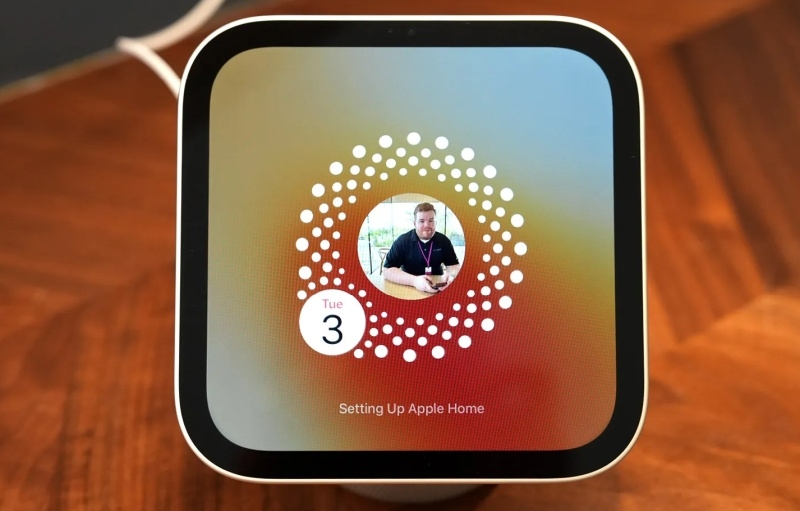
AppleInsider called the release of Apple HomeView “a modest debut with huge potential.” According to the publication, the device has potential, but it is still far from the moment when it can be safely recommended to everyone. Journalists were quite surprised by the absence of a loud announcement “in the spirit of Steve Jobs’ theatrical performances.”
The author of the review has been testing the device for more than a week, and admits that “I have never experienced such conflicting feelings.” According to him, Apple HomeView has serious shortcomings, but at the same time he “wants to buy five of them at once.” He and his family love the HomeView design.
According to the author of the review, the ability to reduce brightness to 0.3 cd/m² can be one of the device’s greatest strengths. This low brightness makes the device ideal for use on a bedside table: the display is dark enough to not disturb your sleep, but remains legible enough to see the information displayed.
The author praised the built-in 12-megapixel camera with Center Stage function for its wide viewing angle and ability to zoom in while tracking the user’s face. In his opinion, it would be great if the screen design changed throughout the day and adapted to how far away the user was.
“HomeView is a new platform with its own navigation logic. It is a rather unusual hybrid of the Apple Watch, Apple TV 4K and iPhone interfaces, but you quickly get used to it – it is intuitive and easy to learn,” noted the author of the review.
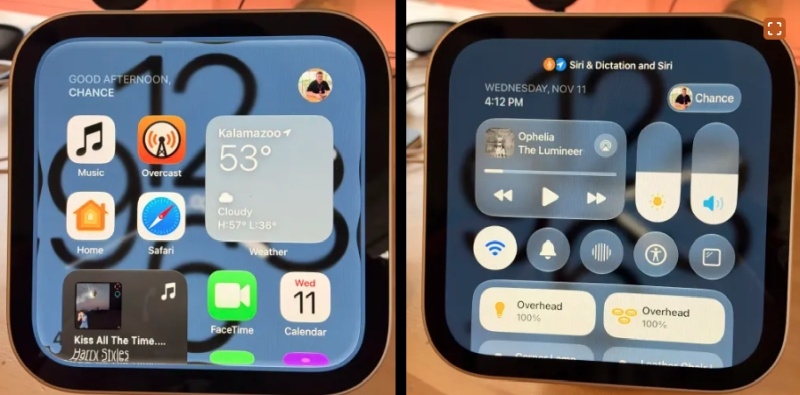
According to CNET, “Apple’s new product is actually not that new.” The author of the review notes that the market is “full of smart displays” and the only advantage of HomeView is that it is the first Apple device created specifically for the Apple HomeKit ecosystem, “which, however, will not bring order to your chaotic smart home.” The device lets you manage calendars, shopping lists, and more, while providing an added layer of privacy with personalized Face ID profiles.
CNET’s review notes that the interface is fast and responsive thanks to Apple’s A18 chip, and many smart displays look “downright brooding” next to Apple HomeView. The journalist humorously assures that he will not exchange his Bose SoundLink Max speaker for it, but admits that the sound quality is “quite decent” and will not disappoint the owners, especially since you can combine several HomeView, HomePod, HomePod mini or other speakers with AirPlay support into a single multi-room system.
The reviewer notes the wide selection of customizable watch faces that display time, date, timers, and weather. You can also add new options or create your own modular watch faces using various widgets. According to him, “In some ways, the device is like a larger version of the Apple Watch: it allows you to instantly get the information you need just by looking at the screen. In addition, it can be used as a family photo album.”
The author admits that Apple’s smart display is impressive, but before making HomeView the central element of a smart home, he advises taking into account several nuances. Matter-enabled devices and Philips Hue appliances work flawlessly, but many budget solutions could not be connected, although they worked fine with Amazon Echo speakers and integrated into the Alexa ecosystem.
CNET notes that the updated Siri AI voice assistant offers deep integration with email, reminders and notifications, and also better understands context, supports more natural dialogue and better adapts to the flow of the conversation.
The Verge says Apple’s first smart display is a great smart home control center and a great kitchen assistant, but “things get tricky when it tries to take on the role of the family iPhone.” The reviewer called Apple HomeView her favorite smart display, but admitted that her 15-year-old daughter “didn’t like it.”
According to the reviewer, Apple has fallen into the same trap as other smart display manufacturers: instead of just doing its basic functions well, the device tries to do much more – and this is where problems arise: “The peculiarity of Apple’s approach is that HomeView is both a common device for the whole family and an extension of your iPhone or iPad.”
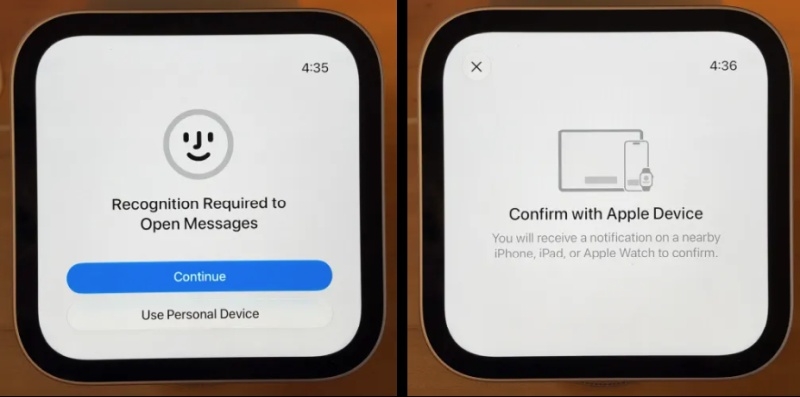
The device provides access to messages, calendar and reminders if the phone is at home and connected to the same Wi-Fi network. Thus, the device becomes shared, but at the same time contains personal data – and it is when switching between these modes that HomeView begins to stumble. Inconvenient authentication procedures and constant redirects to the iPhone negate the advantage of hands-free control.
The author noted the following advantages of the device:
Quick control of a smart home. Great step-by-step cooking instructions. Voice assistant Siri, useful in everyday life. Stunning, customizable screen designs. High quality sound.
She listed the following disadvantages:
Ability to read another user’s text messages. Siri is sometimes slow. An ill-conceived system of widgets and applications. High cost of wall mounts purchased separately.
According to the reviewer, for families deeply integrated into the Apple ecosystem, this device could be the first smart display that the whole family can actually use. She cites the lack of physical buttons as the only drawback in terms of hardware.
According to reports, the development of Apple’s smart display was almost completed several years ago, but its release was constantly delayed. Apple expert Mark Gurman from Bloomberg suggested that the main reason was the delay in the release of the updated Siri voice assistant with AI.