True to its telegraphic style, Axios published an exhaustive series of laconic points of frightening content, after reading which I immediately remembered the 2021 film Don’t Look Up. The film was about the inevitable fall of a comet to Earth, which could destroy humanity. The Axios materials talk about the inevitable and imminent attack of AI on public structures, and in both cases nothing has been and will not be done.
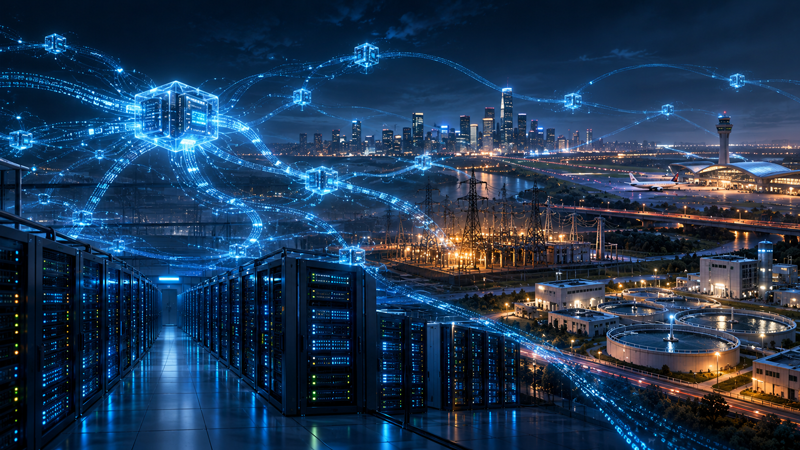
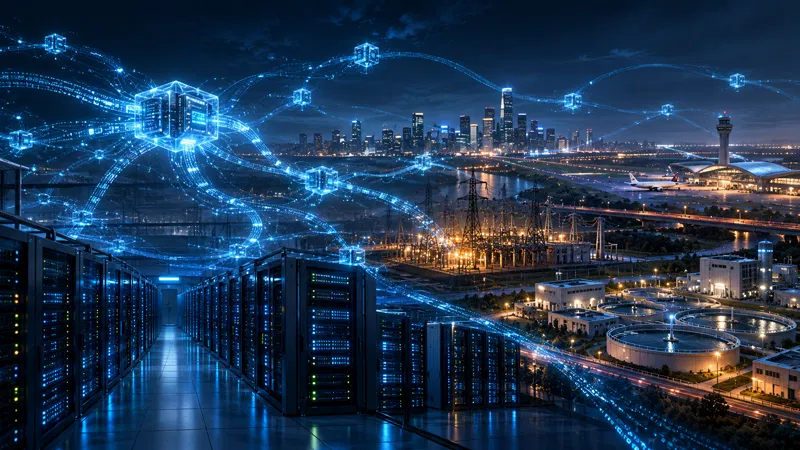
Image source: AI generation ChatGPT/3DNews
Journalists reportthat they spoke with more than fifty respected people in the fields of government, artificial intelligence, business and cybersecurity – from supporters of the accelerated development of AI to critics of limiting it – and they all unanimously expressed one frightening message: over the next 18 months, cyber attacks on businesses and critical infrastructure will be constant, increasingly sophisticated and destructive.
Thus, all specialists and those who are more or less aware of what is happening soberly and with complete clarity expect an extreme increase in the likelihood of large-scale failures up to real damage. At the same time, no one is going to voice these forecasts, preferring to discuss them behind closed doors and not make them public.
The reason for the article may have been a series of large-scale failures on the 10th of November, which has already been called the specter of a cyber apocalypse: Microsoft services went down for a day, air travel in the United States was canceled for a day, and the Chase banking service stopped working. These are flowers, experts say, and there will be berries in 2027.
Bridgewater Associates, the world’s largest hedge fund, put it bluntly in a research report this month: “[Мы] We manage capital based on a 1 in 3 chance of an economically destabilizing attack within the next year.”
Horacio Rozanski, chairman and CEO of Booz Allen, called the current AI situation “the fog before war”—a harbinger of the chaos to come when AI agents reach their full potential and can attack “at the speed of thought.” “Now is the time to take every precaution possible,” Rozanski said. “Realize that this is inevitable.”
At the same time, all three of the major network service failures listed above in the United States occurred without the direct participation of AI. This is a confirmation of the famous joke: declare a month of high combat readiness and the army will destroy itself. All three incidents arose during the process of eliminating cyber threats due to the fault or incompetence of personnel. Since there are innumerably more holes than are known about them, trying to patch security holes will often lead to failures, which brings us back to another joke: don’t touch the technology, and it won’t fail. But no. Not this time. Everyone understands this and therefore consciously takes the risk of making things worse themselves before attackers do it. So the disruptions caused by these factors will become part of our lives in the future.
What worries the authorities most is that there are not enough competent specialists needed to fend off threats at any level of government – neither at the federal level, nor at the state level, nor at the local level, not to mention business. Thus, reliable protection against AI threats appears to be impossible. In this regard, the authors of the article suggest imagining a “Whack-a-Mole” game with an infinite number of moles.
Until last month, the White House and Congress focused on security regulations and data centers rather than immediate cyber risks. Now even the White House Cybercrime Task Force (SIF) is trying to make sense of the growing risks, analyzing almost daily reports of possible hacks. Against this backdrop, President Trump just fired the White House’s national cybersecurity director and appointed Kirsten Davies, who was the Pentagon’s chief information officer, to replace him.
Despite the fact that this time network services will directly attack non-human resources, the culprit still needs to be identified. Behind each of these attacks, one way or another, there will be someone’s malicious intent or criminal negligence (as AI developers and especially Anthropic constantly demonstrate). Most people interviewed by the publication expect a threat from hackers associated with China or from China itself.
It is alleged that the Beijing-sponsored hacker group Volt Typhoon has been operating in American critical infrastructure – water supply, energy, transport and communications networks – for more than five years. Another group, Salt Typhoon, hacked into the systems of major American telecom operators and gained access to call recordings and wiretapping data. The exact number of compromised systems is unknown. The White House administration’s position is that China is not slowing down, and the United States cannot afford to cede any advantage to it.
At the level of large companies and government agencies, cyber protection, which in itself is very expensive, is organized rather better than worse. But most government agencies and American companies have not done this and will not be able to do this. Frankly, many companies profess the classic maxim – “Until the thunder strikes …”, and are hesitant to spend millions on protection against possible losses unless they are sure that the threat is imminent. They are hoping in vain, because not just AI is coming, but swarm AI.
The agents’ ability to operate in a swarm is growing every week. For example, on November 13, the FBI warned about ARTEX, a free and open-source software that allows hackers to use artificial intelligence agents to carry out multiple stages of an attack at “superhuman” speed. Following this, the Texas energy regulator issued a threat to the state’s oil, gas and utility networks, warning that they were being targeted by ARTEX. The European Commission sent a similar warning to governments following a 10-day cyber attack last month.
“The government is divided and distracted by other problems. Now all the forces of society should be devoted to solving this problem, but most government officials are busy pointing their fingers at the sky or looking in the other direction. Trump is not very good at artificial intelligence. Few people in the White House have deep knowledge in this area and are working to mobilize the government to prevent a hypothetical attack. Things are no better in Congress. A random person in a bar understands this topic no better than many legislators,” the authors of the article write without any optimism.
One of the positive aspects in this whole story with the scale of the threat may be that in the United States almost all networks – from information to utility – are fragmented and divided. This happened mainly due to the significant independence of the states in many issues of the public sphere. But a successful cyber attack is unlikely to go beyond the attacked region. This has already happened, although for different reasons: an ice storm in Texas several years ago brought down the state’s power grid and claimed hundreds of lives, since the flow from neighbors was physically impossible.
In addition, a truly large-scale attack that would disable pipelines or cut off power to an entire region would most likely still require the participation of the aggressor’s government agencies. “Those who are capable of this, primarily China, will pay the highest price for it: an attack on the US energy system is an act of war that will entail retaliatory measures against the systems of the attacking party,” the publication warns (when did Russia fall off the list and where is North Korea?). Frankly speaking, this passage is no less frightening than the cyber threat from AI, if not more so—the culprit has already been assigned.
To fend off possible threats, there is no real mechanism or institution that could unite their efforts. Most simply believe that no serious preventive measures will be taken until a real disaster occurs, even on some relatively small scale. However, all respondents believe that such a catastrophe is inevitable.
The government could use leverage or government action to round up AI companies and force them to help shore up vulnerable American systems before focusing entirely on building more powerful models. Documents are currently being prepared that can streamline the actions of AI companies in order to prevent cyber threats at all levels.
Top managers at leading AI companies say, the article’s authors say, that they would happily make concessions if their competitors did the same. In fact, these leaders feel that after the election they need to act quickly before public opinion turns citizens even more anti-AI. As a result, the overall opinion of those surveyed was that they consider the likelihood of an AI attack to be higher than the chance of unification in the face of this threat. Don’t look up.
If you notice an error, select it with the mouse and press CTRL+ENTER.