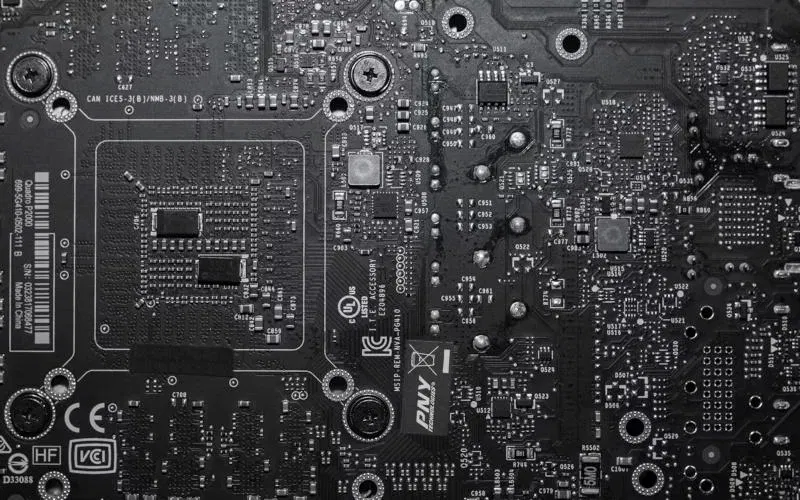
The Global Electronics Association has warned of growing shortages in printed circuit board (PCB) supply chains, writes Evertiq. The development of artificial intelligence technologies is absorbing scarce production capacity. According to the association’s forecasts, the situation will not improve significantly until mid-2028.
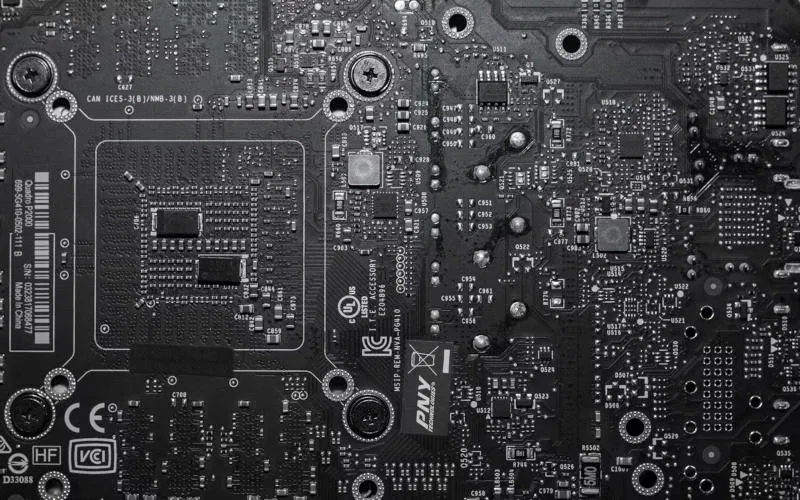
Image source: Albert Stoynov / unsplash.com
The automotive, industrial, medical, defense and telecommunications sectors are already facing increased lead times and difficulties in procuring required components. According to experts, the main problem lies precisely in the availability of products, and not in their price. The scale of this shortage could be comparable to the chip shortage crisis seen in 2021.
The problem lies not only in the high demand, but also in its nature. If a typical printed circuit board consists of about 12 layers, then boards for servers used in the field of AI already have 40–60 or more layers. Each additional layer requires more fiberglass, resin, copper foil and laminate. According to the association, for the year (through September inclusive) the volume of orders increased by 56.1%, while the volume of deliveries increased only by 13.3%. Lead times for orders for multilayer boards reach 16–20 weeks or more.
The association forecasts that the shortage will continue until at least mid-2027. Meanwhile, the largest customers – operators of hyperscale data centers (hyperscalers) – are buying up available volumes of production, pushing other customers from the automotive, industrial, medical and defense industries to the back of the queue.
The association’s averages mask the fact that the market has become extremely heterogeneous. According to market research firm Yole, boards with 18 or more layers will grow at 15.7% annually through 2031, while 4- to 6-layer boards will grow at just 2.3%. According to the latest analysis from Yole, AI boards and materials currently account for about 30% of the printed circuit board market and are projected to exceed 50% by 2031. According to Evertiq, one of China’s key PCB manufacturers specializing in artificial intelligence solutions has notified its customers that orders placed after July 10 will not be able to be fulfilled until 2028.
New production facilities are being created According to industry experts, over the past three years, at least $10 billion has been invested in the construction of new factories for the production of printed circuit boards in Southeast Asia. A similar amount of funds has been allocated to the development of the industry in China. However, launching new production lines depends on the same materials that are already in short supply, so simply increasing board production capacity will not solve the shortage problem.

Image source: Doosanyo
Materials manufacturers are also expanding their capacity, with much of this activity concentrated in Southeast Asia. Doosan is establishing a production base for foil-clad dielectrics (CCL) in Thailand, and Ventec has opened its first plant in the region there. Panasonic Industry will invest 92 billion yen in capacity dedicated to the needs of the artificial intelligence sector. However, the commissioning of some new facilities is expected only in a few years. For example, Mitsui Kinzoku’s new copper foil plant in Malaysia will not begin operations until April 2031.
A particular bottleneck is the production of fiberglass. There are only a few large producers of this material in the world, and according to forecasts, a significant increase in capacity should not be expected before the end of 2027. According to market analysis conducted by Starteam Global and Würth Elektronik in September, the shortage is not expected to significantly ease until 2028.
Asia accounts for more than 90% of global printed circuit board production. Europe’s share of global output has fallen from 13.8% in 2000 to 2.2% in 2023, according to the industry association. Moreover, this downward trend continues to this day. Unimicron is closing its plant in the German city of Geldern, and printed circuit board manufacturer Kubatronik has filed for bankruptcy.
There are, however, exceptions. Ventec and MICAM are planning to launch production of foil dielectrics in Ireland, focusing on the needs of the European defense electronics sector. However, the further development of production capacity in Europe will largely depend on the willingness of customers to commit to long-term purchasing volumes.
The Global Electronics Manufacturers Association urges governments to view the situation as a strategic risk. Her proposals include expanding semiconductor industry incentives to advanced circuit board and wafer manufacturing, accelerating permitting for new capacity, funding the qualification of alternative materials, and using priority resource allocation to ensure orders in the defense, aerospace and medical industries, and critical infrastructure are filled first.
Manufacturers are encouraged to share realistic forecasts with customers and suppliers, avoid double ordering, and qualify alternative sources of laminate, prepreg, and copper foil supplies.
At the same time, the association acknowledges that the situation may change. Support for new capacity must be structured so that it can survive if pre-purchase volumes decline and demand adjusts in 2027.
If you notice an error, select it with the mouse and press CTRL+ENTER.