
Chinese organizations are becoming increasingly sophisticated and able to use the work of cutting-edge American artificial intelligence models to train their own counterparts. In this way, China seeks to expand its AI strategy and offset tightening US restrictions on access to AI accelerators.

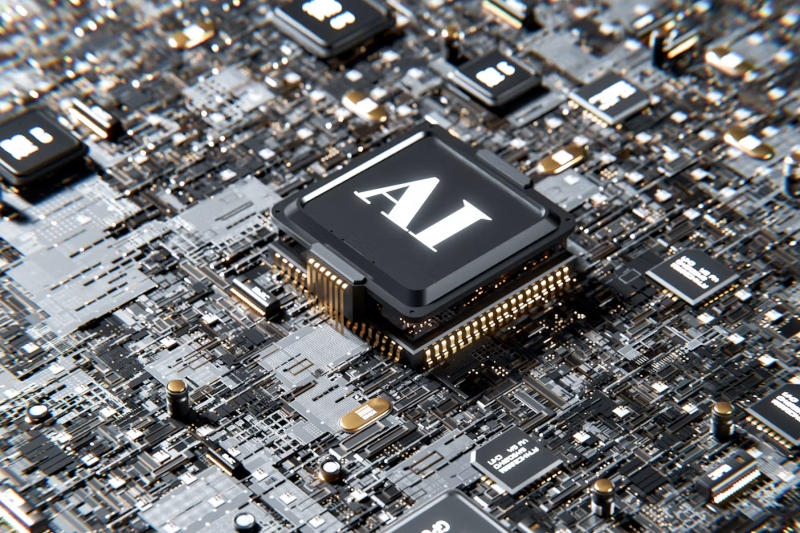
Image source: Igor Omilaev / unsplash.com
Journalists Reuters analyzed more than 300 Chinese scientific articles, patents, corporate reports and government documents. They indicate that distillation has moved beyond academic experimentation and is widely used in Chinese industry. The documents describe how Chinese researchers are using American models to answer questions, write code and find solutions to complex problems. Companies develop software to automate this process, and specialized specialists prepare the data to train more compact models of their own.
Beijing encourages the use of the distillation method as it makes AI technologies more accessible and easier to implement in the manufacturing sector. Distillation is not illegal and is widely practiced in other countries. This process does not fully replicate the capabilities of advanced AI models or eliminate the need for powerful computing resources, but it does give developers the opportunity to transfer individual skills to smaller systems that are less expensive to operate. This helps China reduce its dependence on American technology. The expansion of distillation practices in China is weakening the effectiveness of US restrictions on the sale of advanced AI accelerators.
In September, US authorities openly accused Chinese companies of actively and purposefully distilling American AI models on an industrial scale. Representatives of the US Department of Commerce have expressed concerns to Chinese regulators about the collection of data generated by leading US AI models. These actions may be qualified as theft of intellectual property, the American side warned. In response, Chinese officials have called distillation a standard method for AI development. They stated their readiness to take action if such actions are classified as theft of intellectual property, but did not give specific commitments.
Distillation involves using a more powerful model to act as a “teacher” and generate answers or demonstrate tasks. These results are then used by developers to train a smaller model, the “learner.” This approach is attractive because it allows you to use the results of one expensive query to solve problems multiple times, explained the former Alibaba engineer.
In a November 2024 paper, researchers from Shanghai Jiaotong University described the process of selecting about 5,000 responses from the OpenAI o1 model. These responses were translated using GPT-4o mini, resulting in a set of 10,750 bilingual examples that were used to further train the Alibaba Qwen2.5-72B model. However, an overreliance on distillation could stunt innovation in China and leave developers hostage to the breakthroughs achieved by more advanced American models.
In an April 2025 paper, Alibaba researchers described a systematic approach to generating responses from OpenAI’s GPT-4 and GPT-4o models, which were used as training materials in languages other than Chinese. The answers received were refined and evaluated, and then used to train compact Qwen models. In a February publication, researchers from Shanghai Jiaotong University and the Chinese company Meituan described using GPT-4o to develop plans for coordinating AI agents that collaborate on programming tasks. This data helped train a smaller model to organize similar processes.
Chinese government documents do not directly instruct companies to distill American AI models, but this method is encouraged: there are recommendations for training, retraining and distilling models for industrial use. In recent months, Chinese AI developers, concerned about the escalating debate over distillation, have turned to the relevant regulator for clarification on where the line lies between using foreign models and systematically collecting their output data to train their own systems.
If you notice an error, select it with the mouse and press CTRL+ENTER.