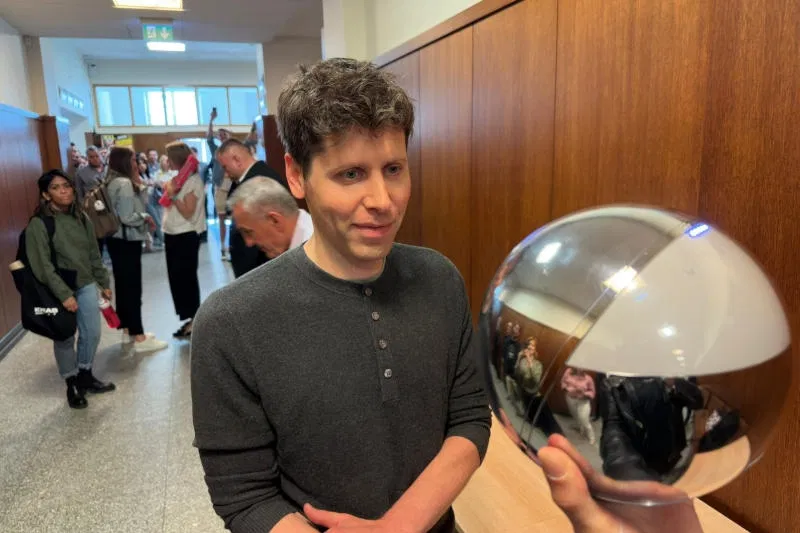
OpenAI CEO Sam Altman has returned to his controversial comments about PC RAM. “Let me be clear: I want people to have a lot of RAM; Everyone should have the opportunity to purchase a large amount of memory for their computer. And I think that independent experiments with technology are great,” he said.

Image source: x.com/sama
His remarks in October sparked controversy. In an interview with the Cheeky Pint podcast, he said that the situation where large amounts of RAM are concentrated in PCs rather than data centers is “pretty terrible.” He subsequently clarified his position, noting, “I want you to have a lot of RAM,” and adding that his original remark was “taken out of context.”
Companies operating in the artificial intelligence industry are actively buying up RAM stocks available on the market for their data centers, which leads to a constant increase in prices for electronics from smartphones to game consoles. Commenting on supply chain issues, Altman noted that OpenAI has “at various times faced some kind of constraint”: lack of memory, server rack assembly, data center capacity shortages, or the absence of any particular component.
“We started saying a few years ago that the world needed to significantly expand supply chains, especially in the area of RAM,” Sam Altman said. In recent months, prices for it have risen sharply, he recalled: “Insufficient capacity has not been created in the world, and now we see that prices for DRAM – I won’t say for sure, but it seems they have increased five, seven times, something like that. It would be much better if there was an abundance of RAM in the world. My comment, which has been misinterpreted, although there is some truth to it that I do not deny, boils down to this: if we are faced with a memory shortage, then perhaps the optimal solution would be – although there are some nuances here, for example, using local hardware to run models – to make the memory shareable so that it works 100% of the time, rather than idle somewhere on the PC. In other words, it is about making optimal use of a limited resource. This may not be the main argument for making decisions, but that’s what I had in mind.”
Sam Altman also commented on the departure of Jensen Huang from the post of Nvidia CEO, noting that he “doesn’t know enough” to judge whether Huang should be returned to this position.
If you notice an error, select it with the mouse and press CTRL+ENTER.