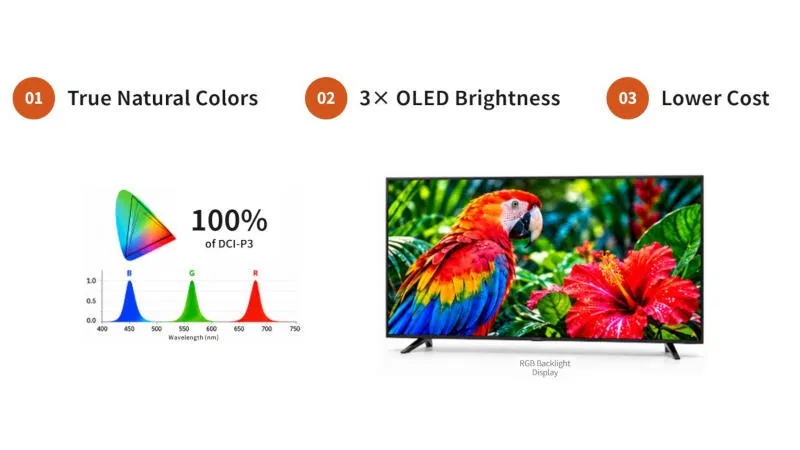
A traditional LCD display includes a white backlight panel – the light emitted from it passes through color filters, being separated into red, green and blue. Seoul Semiconductor proposes to eliminate this step by placing red, green and blue opto-semiconductors behind the LCD panel at a distance of several microns from each other. This technology, called WICOP Pixel, provides 100% coverage of the DCI-P3 color space and brightness up to 3000 cd/m2. The solution has already entered serial production.
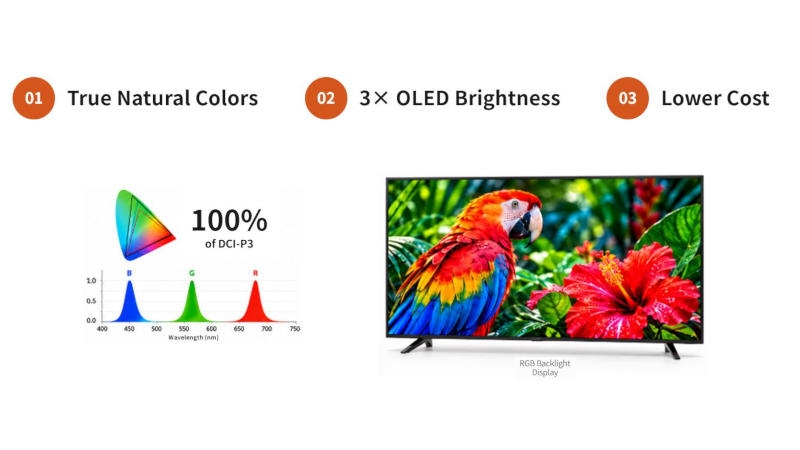
Image source: seoulsemicon.com
The development belongs to Seoul Viosys, a subsidiary of Seoul Semiconductor. The technology allows you to abandon the traditional design with an LED crystal. At the same time, the structure of the chip itself remains strong enough that it can be treated like a regular electronic component. This method was initially used in blue optoelectronic semiconductors, and was later adapted for the green, red and ultraviolet ranges. In the WICOP Pixel system, several of these emitters are combined into a single pixel unit – each color is controlled independently, allowing precise mixing of shades.
The stated characteristics are directly aimed at competing with OLED technology, which is considered the standard for image quality. Peak brightness of up to 3000 cd/m2 is more than triple that of OLED, Seoul Semiconductor notes, and the service life of such a system is more than double that of OLED. High brightness is especially important in areas with intense ambient light, such as living rooms or public spaces, where the difference is most noticeable. The image remains clear even in brightly lit rooms or outdoors.
The indicators given by the developer are not the results of independent tests, but the company’s own specifications. In practice, they will depend on the implementation of LCD panels by TV manufacturers, local dimming systems and image processing algorithms taking into account the new light source. Because the light source is placed behind a standard LCD panel, TV manufacturers can use familiar supply chains and components. This increases product value and profitability for manufacturers – Seoul Semiconductor is positioning the technology as an attractive solution for the home theater segment.
The company is exploring the possibility of eliminating the color filter, which accounts for about 20% of material costs in the production of LCD panels. This is logical: if the backlight already emits red, green and blue colors, then a filter that extracts the desired shades from white light ceases to be necessary. But for now this is only a research project, and not a ready-made commercial solution.
Seoul Semiconductor says it has begun expanding supplies to global TV manufacturers. Its revenue from display sales in the third quarter grew almost 20% compared to the same period last year. Rather than incur significant new capital expenditures, Seoul Semiconductor intends to repurpose its existing white-light production capacity to produce WICOP Pixel.
The company also plans to license related patents. The transition to RGB lighting is now gaining momentum. By 2030, global shipments of RGB-backlit TVs, primarily premium models with large screens, will reach 7 million units, which will account for about 10% of the total revenue of the global TV market, Omdia forecasts. Currently, the market size for white backlit systems is about $3 billion. As we move to new RGB solutions, it could more than double, according to Seoul Semiconductor.
If you notice an error, select it with the mouse and press CTRL+ENTER.