
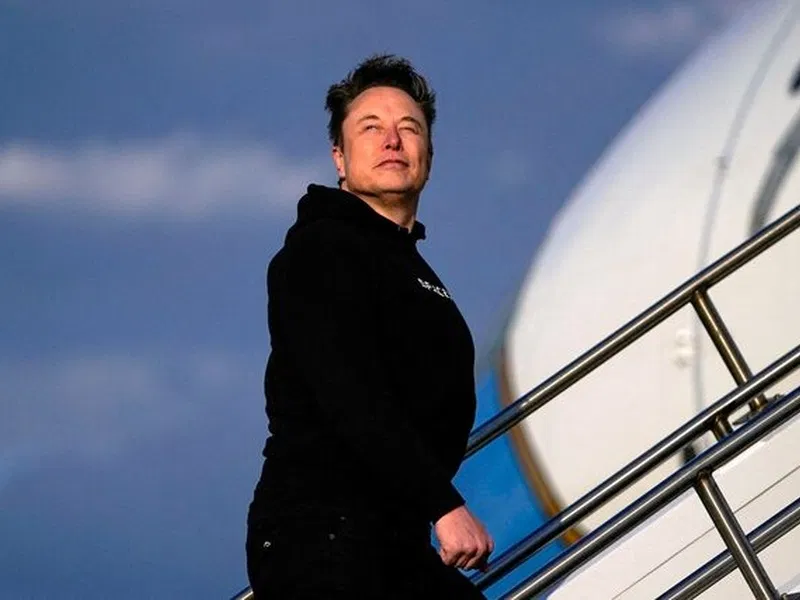
Elon Musk acknowledged that his company SpaceX’s AI division lags behind competitors in the field of advanced AI models, and demanded that employees focus on making money from renting computing power to third-party clients. The company receives billions of dollars from Anthropic and Google, while its own developments do not yet generate comparable income.
Image source: Reuters
How found out The New York Times (NYT), Musk increasingly evaluates the effectiveness of the AI division not by the results of testing neural networks, but by the revenue each GPU brings. In August, the entrepreneur even temporarily renamed the engineering team’s internal chat to “Sell Computing Power Because We Can’t Compete.”
In one of his messages to employees, Musk emphasized that the main indicator of competitiveness should be revenue per GPU, and not the results of performance tests of AI models. In his opinion, companies that are unable to pay for expensive accelerators risk going bankrupt or are forced to turn into suppliers of computing resources.
This strategy is already generating significant revenue for SpaceX. Anthropic leases the company’s facilities under agreements with a total value of up to $120.5 billion, calculated until 2029. Once all contracted resources are delivered, expected in December 2026, monthly payments could reach $3.1 billion, with the agreement allowing for termination with 90 days’ notice after the completion of the initial mandatory periods.
Another major customer is Google Corporation, which also leases SpaceX’s computing infrastructure. According to the NYT, SpaceXSI’s AI division already generates more than half of the company’s revenue. Anthropic became SpaceX’s largest customer back in the third quarter, contributing more than a third of its quarterly revenue.
At the same time, Musk is strengthening control over the use of computing resources by his own developers. According to the publication, he requires engineers to justify the need to allocate expensive GPUs and is reviewing funding for projects that do not demonstrate sufficient commercial return.
In September, SpaceX closed the development of AI companions. Some of the specialists involved in the Digital Optimus project to create virtual AI employees were transferred to the development of the core capabilities of Grok. The company also disbanded the 60-person team that worked on the image and video generation tool Grok Imagine.
At the same time, SpaceX continues to expand its infrastructure. The company previously built the Colossus supercomputer in Memphis in just 122 days, and now intends to invest another $74 billion in data centers in Arizona and Texas. However, using Colossus to train your own models has proven to be technically challenging. Due to problems with combining computing clusters, SpaceX chose to rent out a significant part of its resources to third-party customers.
According to Morningstar Research analyst Nicholas Owens, SpaceX now earns significantly more from renting computing power than from its own chatbot Grok. That said, providing infrastructure to Anthropic and Google actually helps the companies Musk is trying to compete with in the generative AI market.
The entrepreneur himself publicly expresses confidence in the further growth of this business. During the NYT DealBook conference on November 18, he said that Anthropic is likely to continue leasing SpaceX capacity and is interested in additional resources. According to Musk, the customer’s potential demand could be another 10 GW of computing infrastructure.
If you notice an error, select it with the mouse and press CTRL+ENTER.