

turkey established The country’s Industry and Technology Minister Mehmet Fatih Kacir announced on August 13 that the first spacecraft will be launched to the moon in the first months of 2027. According to him, the launch schedule has been determined and testing of major systems has been completed. The device is part of the national lunar exploration program AYAP and should become Türkiye’s first autonomous station to reach the vicinity of an Earth satellite.
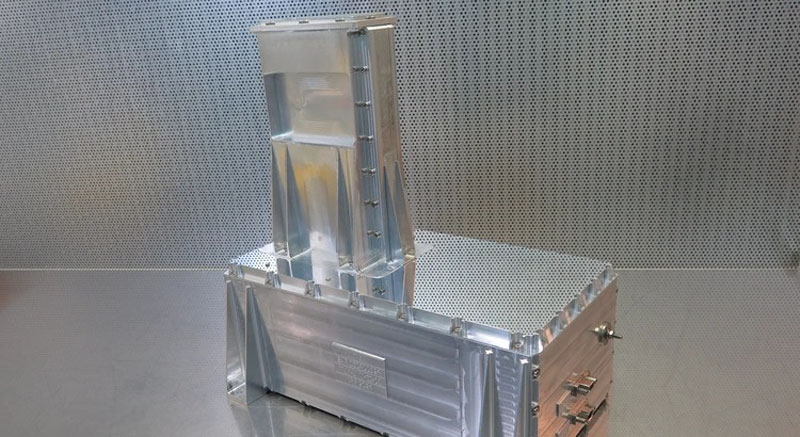
The first Turkish lunar probe AYAP-1. Image source: IRF
The AYAP-1 mission involves the vehicle entering lunar orbit at an altitude of approximately 100 kilometers and operating there for approximately three months. Once the orbital program is complete, they intend to send the space station to the lunar surface for a controlled collision—the first phase does not envisage a soft landing. Turkish sources did not say so, but the Swedish Institute of Space Physics (IRF), which is involved in the project, Directly indicateAYAP-1 is an orbiter that will end its flight with a hard landing.
One of the main technical tasks of the project is to test the HIS hybrid propulsion system for lunar flights developed by the Turkish DeltaV company. The engine uses solid fuel and a separate oxidizer. The average thrust is specified to be 650 N, the specific impulse is about 290 s, the fuel supply is 30 kg, and the oxidizer is 60 kg. The engine is designed to last approximately 100 seconds between starts. Developers claim this will be the first time a hybrid rocket propulsion system has been used on a deep space mission.
AYAP-1 will also be a science mission. In particular, the Lunar Neutral Telescope (LNT), created by a Swedish institute, will be placed on board and will record high-energy neutral atoms produced by the interaction of the solar wind with the lunar soil. Its spatial resolution should reach approximately 12×12 km. The device will make it possible to study the Moon’s local magnetic anomalies, the composition of the lunar surface, and the permanently shadowed regions at the poles, where volatile materials and water ice can persist. The next phase of the program – AYAP-2 – should provide soft landing and delivery to the surface of a full-fledged Turkish lunar rover.
Furthermore, according to the minister, Türkiye will move towards full independence in its space programme. First, the two sides reached an agreement to build a space launch site in Somalia, close to the equator, which will facilitate rocket launches. Secondly, contracts with private actors to create and operate the space station are being prepared. Third, there will be manned flights. Fourth, our own launch vehicle. Time will pass and Türkiye will become a full-fledged space power.
If you find an error, select it with your mouse and press CTRL+ENTER.