


Tom’s Hardware provides an overview of current RAM prices, including “Completely out of touch with reality”. This situation is called “RAM apocalypse” or “RAMgeddon”. The 128GB DDR5 kit costs ten times the lowest price ever recorded. For smaller capacities, the price increase isn’t as shocking, but users are still forced to pay $394 for a 32GB DDR5 kit, compared to the previous price of just $72.
Image source: unsplash.com
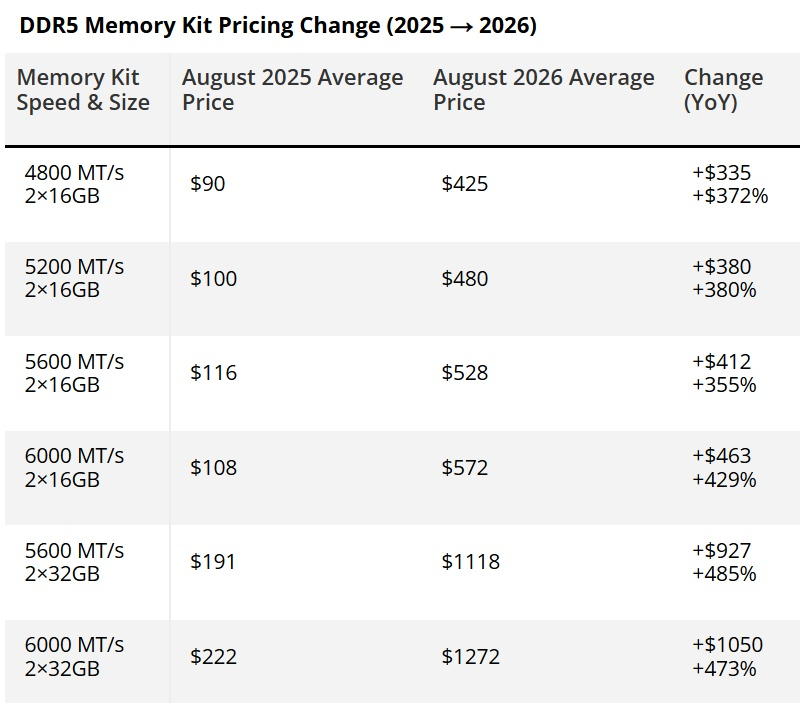
The numbers speak for themselves: In just 12 months, the cost of DDR5 memory has increased dramatically, with the cost of high-capacity kits increasing by nearly 500%.
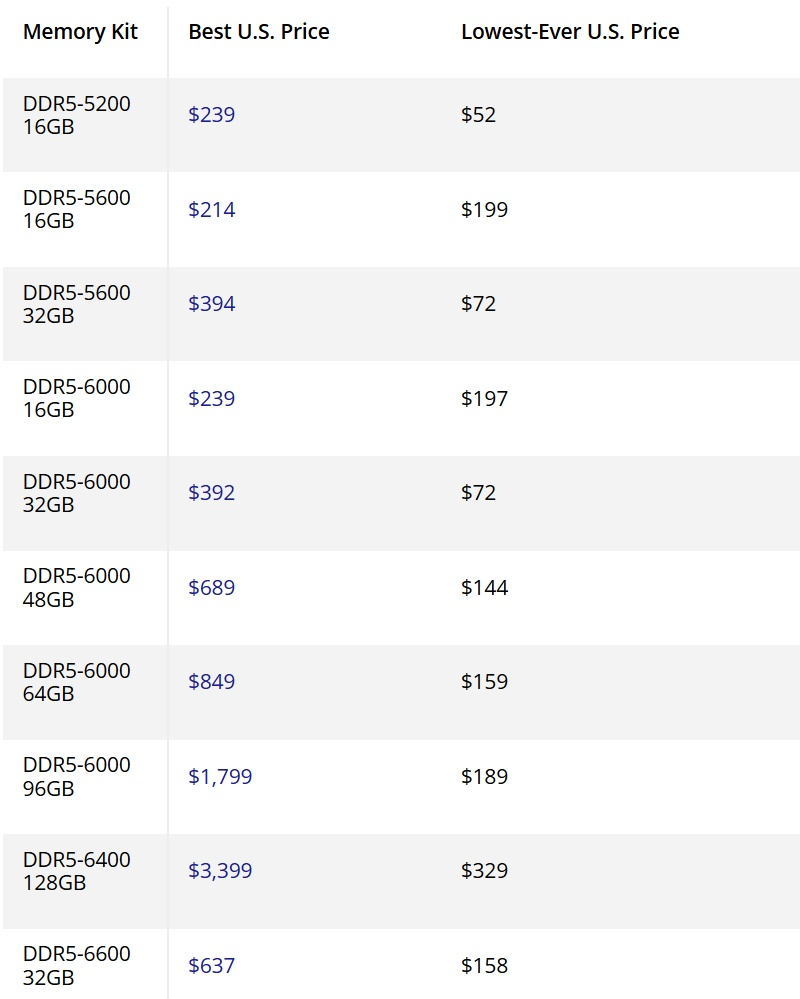
Image Credit: Tom’s Hardware
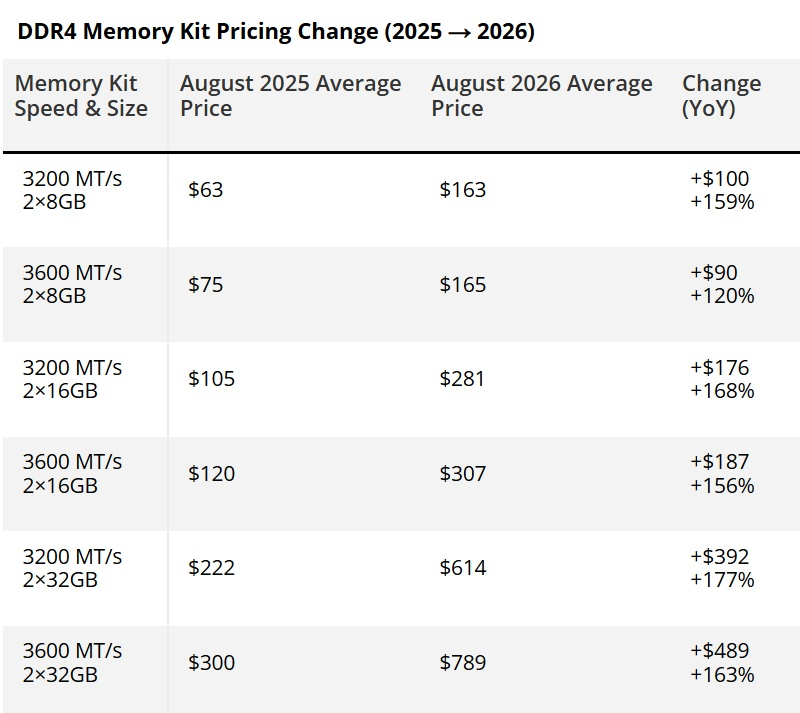
With DDR5 almost completely out of reach for most PC manufacturers, the increased interest in older platforms using DDR4 memory has had a huge impact, driving up DDR4 prices by 120-180%. That’s significantly less than the price increase for DDR5, but it’s still disappointing that a kit that sold for $105 last year is selling for $281 this year.
This phenomenon is by no means limited to the United States. According to data from German technology website ComputerBase, the average price of RAM in Europe has surged 345% since September 2025. This situation extends to other components as well: the prices of hard drives and SSDs have increased by more than 125% during the same period.
Major buyers have reserved nearly all of the world’s DRAM capacity for 2027, making advances to secure supplies of memory, which is currently one of the world’s most expensive commodities by weight. The cost per kilogram of traditional DRAM wafers is more than half the cost of pure gold.
PC and smartphone makers are left scrambling to find surplus products because these markets are a lower priority than lucrative AI data centers. All four memory makers (SK Hynix, Samsung, Micron, and China’s Changxin Memory) have doubled, tripled, or more in revenue in just one year.
Lowering consumer prices would require a significant contraction of the AI market, which would mean a massive correction in global financial markets. SK Hynix CEO Kwak Noh-jung recently warned that 2027 will be the worst year for memory supply in the industry’s history, predicting that demand will exceed its production capacity by 2030. ADATA chairman Simon Chen was even more pessimistic, suggesting the crisis could last as long as ten years.
The days of cheap and easily accessible memory appear to be over—consumers must either accept high prices or learn to make do with less.
If you find an error, select it with your mouse and press CTRL+ENTER.