


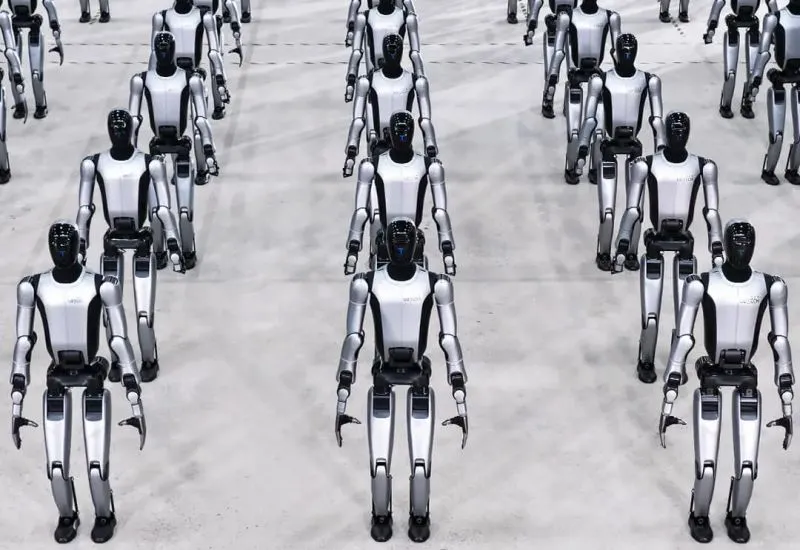
A motion being brewed by U.S. lawmakers to ban the import of Chinese-made robotics products into the U.S. has received attention. IDC analysis. Even for the U.S. market, the expected consequences are not that dire, and may even lead to European markets accepting more Chinese robots.
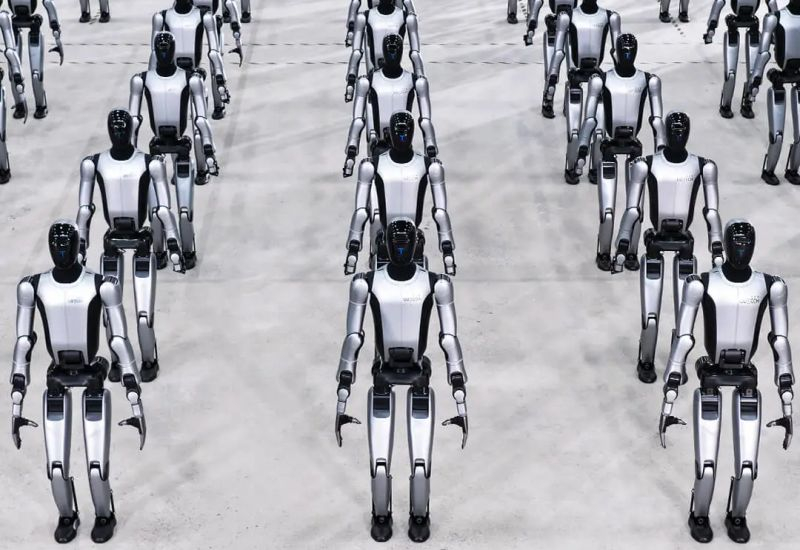
Image source: UBTech Robotics
First, IDC experts explained that only future models of Chinese robots can be banned in the United States, and robots already supplied can be sold as long as their suppliers continue to produce them. The latter can even improve their software to expand functionality within certain limits. It is true that in this case the business model of rapid replacement with new equipment, familiar to Chinese manufacturers, will not work in the US market and will require serious adaptation to new working conditions.
IDC also pointed out that the United States only accounts for 18% of global robot market consumption. China remains the largest geographic market with 21%, but 61% of such products are sold outside the two countries. Europe alone consumes twice as much robotics as the United States, so partially closing the latter market would certainly not be a big tragedy for Chinese suppliers.
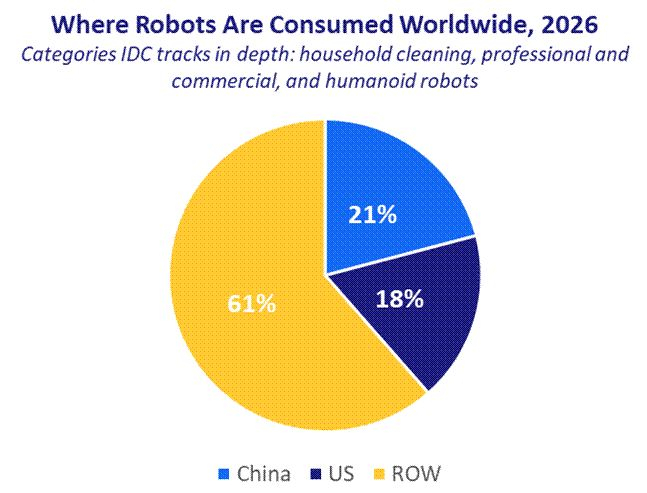
Image source: international information center
In addition, IDC analysts said that even if the import of Chinese robots to the United States is banned, it will not prevent the growth of the local market until 2030 (inclusive). Just from the base case of an average annual growth rate of 13% to an annual growth rate of 9%, the country will shift to a more conservative scenario, which also allows us to talk about maintaining positive momentum. The U.S. robotics market could lose up to $6 billion in revenue between 2026 and 2030, with losses exceeding $2 billion by the end of the period.
In the field of domestic robots, the supply gap between the two scenarios will reach 18% by 2030, and in the industrial and commercial field, the gap will reach 43%, while humanoid robots will lose up to 58% of the possible supply. In fact, in the consumer sector, U.S. buyers suffered the smallest losses of any of these three specific sectors. Everything gets worse for humanoid robots, since American manufacturers will start supplying them in bulk to the market no earlier than the end of 2028, so without Chinese imports, American buyers will not be able to easily solve their problems until then. According to IDC data, Chinese suppliers currently account for 82% of the global humanoid robot market.
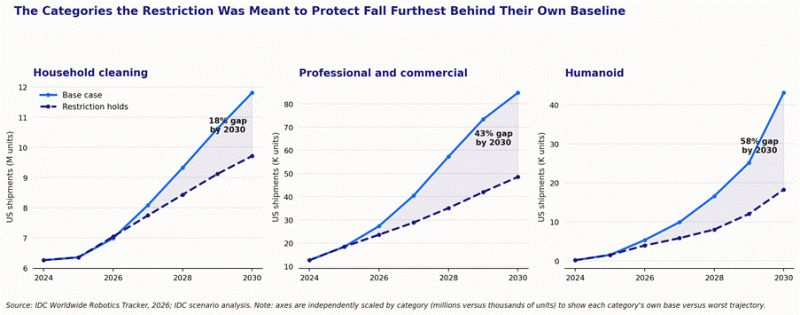
Image source: IDC
If the U.S. market closes, Chinese robot manufacturers’ export supplies will mainly shift to Europe, as the European market is more economically attractive than China’s domestic market, where price competition is fierce. At the same time, it will be more profitable to produce robots in China, while local production in the United States and Europe will remain reasonable for a long time, just for safety reasons rather than economics. Although industrial robots and humanoid robots can still be produced locally outside China with the support of government subsidies in relevant countries, this practice is unlikely to become widespread in the home robot market. This means they will continue to be exported in large quantities from China.
If you find an error, select it with your mouse and press CTRL+ENTER.