



In just a few years, American artificial intelligence startups have become some of the most powerful companies in the world. Although two of the companies, Anthropic and OpenAI, are preparing for IPOs, these companies have not disclosed their greenhouse gas emissions, made no commitments to reduce pollution, and have not released sustainability reports. Just recently, investors were demanding explanations, state Bloomberg.
Even large oil and gas giants like ExxonMobil have been voluntarily publishing sustainability reports for many years, and large technology companies including Google, Meta, etc. have also been voluntarily publishing sustainability reports.✴Amazon and Microsoft all have clear net-zero emissions goals and are at least partially transparent about their current results, especially amid the data center construction boom. However, many investors are no longer actively interested in the relevant indicators, and US regulators are no longer as active in promoting the previous “green” agenda.
One can only guess how badly the creators of artificial intelligence models OpenAI, Anthropic and SpaceX/xAI are harming the climate, and whether they intend to reduce emissions. They can hardly be called startups anymore. Although there are no exact figures, it is clear that the emissions associated with this industry are significant. According to some figures, new natural gas power plants in U.S. data centers alone could produce the same emissions as the entirety of Australia.
Image credit: Tim van der Kuip/Unsplash
This will change in 2026 as California’s SB253 takes effect in November. Specifically, it requires companies doing business in the state with more than $1 billion in annual revenue to disclose Scope 1 and 2 emissions. The emissions calculated are those directly attributable to the company’s operations and those associated with the energy it uses. Importantly, California extended its requirements to the activities of out-of-state companies.
Anthropic said it has partnered with the Watershed platform to calculate its carbon footprint and reveal emissions. OpenAI said it is coordinating with partner data centers to provide the report to California. OpenAI also has a dedicated sustainability committee, and the initiative Stargate Community Involves designing and building artificial intelligence infrastructure in a way that benefits local communities. SpaceX did not respond to requests for comment.
The rise of AI initiatives coincides with declining interest in ESG-based investing (evaluating companies based on their environmental impact, social responsibility and management quality). The ESG concept became popular after the 2015 Paris climate agreement and reached its peak in the early 2020s, when the U.S. Securities and Exchange Commission (SEC) established rules requiring disclosure of CO emissions2 and climate risks. Companies sometimes must take steps to demonstrate environmental responsibility before an IPO, including purchasing carbon credits, committing to carbon neutrality and using 100% renewable energy.
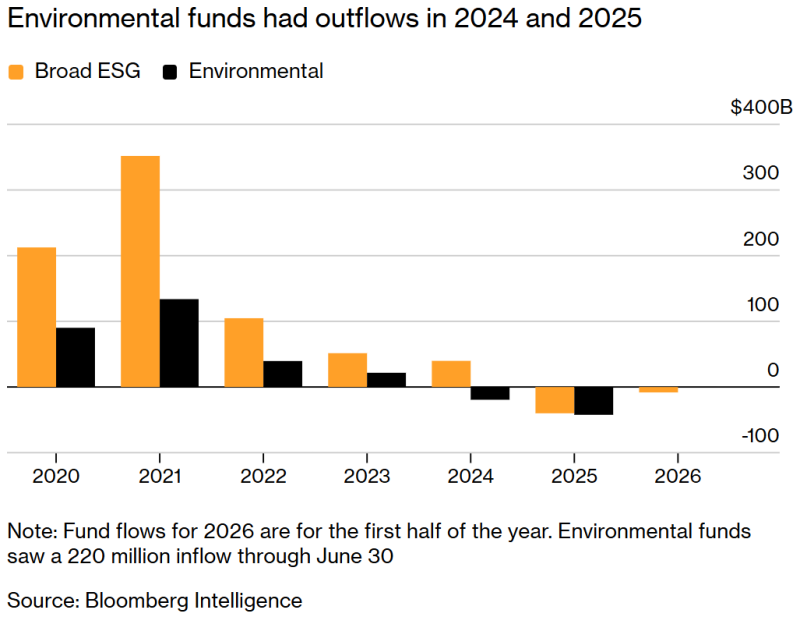
Image source: Bloomberg
While Tesla and CEO Elon Musk emphasized the climate benefits of electric vehicles when they went public in 2010, SpaceX has rarely mentioned environmental issues and its xAI as it prepares for its IPO. sued Its data center uses gas turbines “semi-legally”. SpaceX/xAI’s massive Colossus data center is powered by turbineSome don’t even have sewage discharge permits. Simultaneous anthropic selection Pay Billions of Dollars to gain these abilities. At the same time, criticism of SpaceX and the lack of information provided to regulators apparently did not affect its IPO.
As the fight against climate change wanes with the rise of Donald Trump, regulators and financial institutions are increasingly uninterested in the green agenda. As a result, many banks left the Net Zero Banking Alliance group, causing its work to come to a halt. Funds focused more on ESG or environmental issues raised $485 billion in 2021 but lost $82 billion in 2025. Big investors have stopped putting pressure on companies related to sustainability issues.
However, California’s deadline forces companies to expand their environmental departments and develop reporting systems for sustainability and non-financial performance. However, methods for calculating carbon footprints are still under development. Therefore, there is no single way to calculate the emissions associated with training AI models or the emissions associated with the production of AI devices. Even the California Air Resources Board, the California agency responsible for enforcing SB253, has not provided details about the reporting process.
Anthropic and OpenAI may delay the disclosure of key data until 2027 because they lease capacity from Microsoft, Amazon and SpaceX and may seek to classify it as Scope 3 emissions. California requirements of this type may not take effect until 2027. By 2029, emissions disclosure will become mandatory under the EU Corporate Sustainability Reporting Directive (CSRD). However, deadlines for California and European regulations have been pushed back and may be relaxed in the future. Businesses opposed the law passed by California, and Europe narrowed the scope of the directive under pressure from Trump.
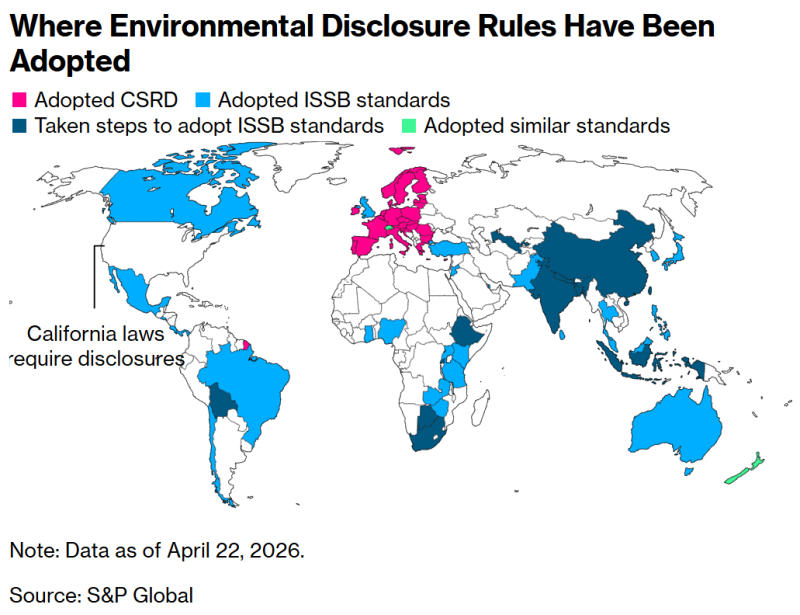
Image source: Bloomberg
Other countries have adopted similar reporting rules set by the International Sustainability Standards Board (ISSB), but in many countries compliance with reporting standards remains voluntary. Notably, about a quarter of shareholders have recently supported improved climate reporting – down from the early 2020s but above pre-Paris Agreement levels.
Some experts stress that, unlike many of their U.S. peers, European investors are not even considering waiving emissions reporting requirements for companies. It is considered important to develop a method for calculating the load of leading artificial intelligence models. Since many of them are “closed”, you have to focus only on open source models and indirect indicators.
The United Nations Secretary-General has called on the artificial intelligence industry to fully disclose its use of electricity, water and land, and to commit to using renewable energy. However, some experts believe that investors concerned about ESG performance should demand transparency from AI companies, but they are “abandoning this position” because they fear “retaliation.” Additionally, news emerged in April that hyperscalers Convinced The EU considers the environmental performance of data centers to be commercial secrets.
source: