


Analysts estimate that total consumer wearable device revenue will exceed $1 trillion by 2032, with smartwatches and wireless headphones dominating Counterpoint study.
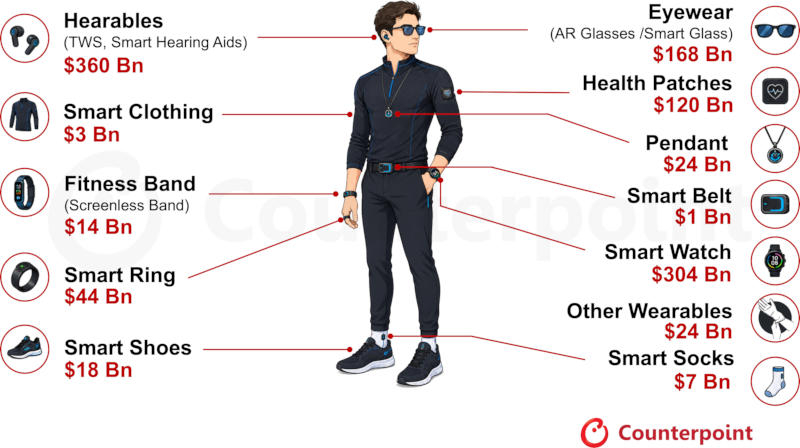
Image source: counterpointresearch.com
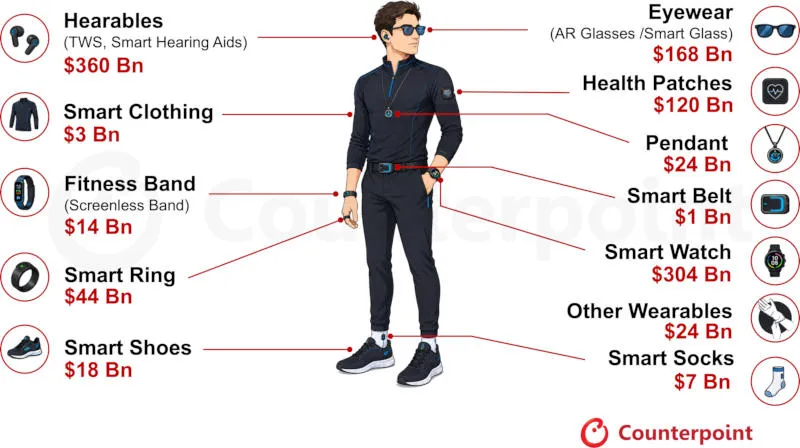
According to data from Counterpoint Research, headphones will account for $360 billion in total revenue, followed by smart watches with a market size of $304 billion and smart glasses with a market size of $168 billion. The scale of smart watches and headphones is supported by a strong base of available devices, replacement demand, daily use in healthcare, communications and entertainment, and tight integration with the smartphone ecosystem.
Increases in the average smartwatch price will be driven by high-quality devices, advanced health sensors and built-in artificial intelligence – the category will expand into preventive medicine and personal computing platforms; but TWS headsets will not increase in price as aggressively – price increases here will be limited by standard feature sets and price competition.
Other categories of smart wearable devices include health patches, smart rings (USD 44 billion), smart pendants (USD 24 billion), smart shoes (USD 18 billion), and fitness bracelets (USD 14 billion) with a market size of US$120 billion; sales of smart socks, smart clothes, and smart belts will each reach US$10 billion. Counterpoint Research pointed out that consumer wearable device sales revenue is growing twice as fast as shipments, and the market is gradually shifting from fitness trackers to preventive medicine. “Devices detect problems before consumers notice them.”
If you find an error, select it with your mouse and press CTRL+ENTER.