
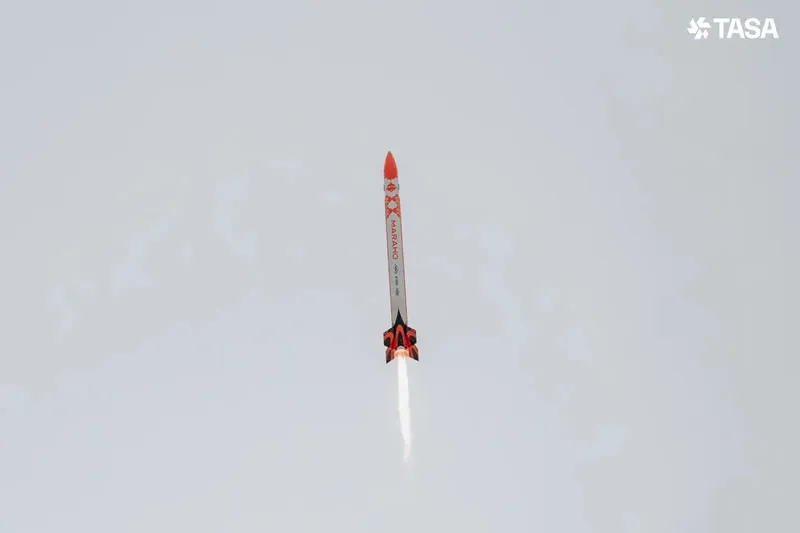
The Taiwan Space Agency (TASA) successfully tested its independently developed Malaho sounding rocket for the first time as part of its orbital launch program. The device accelerates to supersonic speeds and reaches an altitude of 8.1 kilometers, allowing experts to test critical airborne systems under real flight conditions.
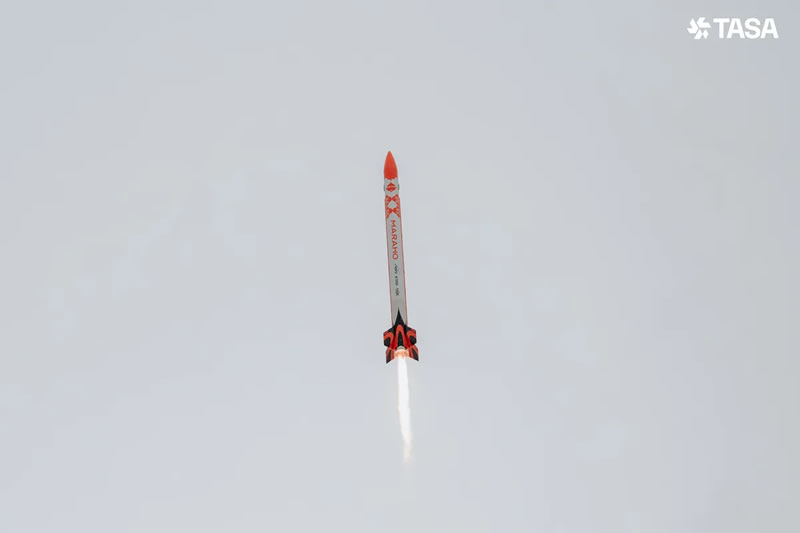
Image source: Tassa
how report The agency’s official website shows that the launch took place at the Xuhai Missile Research Base in Pingtung County at 7:10 a.m. local time on August 22. Maraho, previously tentatively named SR400, is the first sounding rocket independently developed by TASA since launching its orbital launch vehicle program in 2023. The propulsion system operates for 18 seconds, with an initial thrust of 1,500 kgf (kilogram force) and a maximum speed of 408 m/s (Mach 1.2). 49 seconds later, the rocket reached its highest altitude of 8.1 kilometers, with a total flight time of 432 seconds.
The main purpose of the test is to test the continuous communication between the rocket and the ground station for telemetry transmission throughout the flight. At the same time, the Tajik Air Safety Authority tested its own developments in the fields of propulsion, structures, avionics, communications, tracking, ground support and re-entry systems.
In the final stage of the flight, the “Malajo” opened its two-stage parachute system under normal circumstances and splashed down, but due to high waves and drifting, the rescue team was unable to remove the device from the sea. This did not affect the test results: the rocket successfully transmitted all necessary data to the ground station. TASA head Wu Zongxin pointed out that the mission allowed the agency’s young team to go through the entire work cycle – from the design, production and assembly of the rocket to the complex testing and launch itself – and gain the experience needed to reduce the risks of building a larger launch vehicle.
Maraho is a 7.2 m long, 0.4 m diameter rocket that uses a hybrid propulsion system made of 90% hydrogen peroxide and polypropylene. TASA intends to take advantage of the relatively cheap launch of this series of launch vehicles to continue to develop the technology needed for Taiwan to independently enter orbit. The agency plans to test the first-generation suborbital rocket STV1 in 2029, the more advanced STV2 in 2031, and plans to launch its own orbital launch vehicle for the first time in 2034. The ultimate goal of the program will be to create the capability to independently transport payloads weighing approximately 200 kilograms to low Earth orbit.
If you find an error, select it with your mouse and press CTRL+ENTER.