
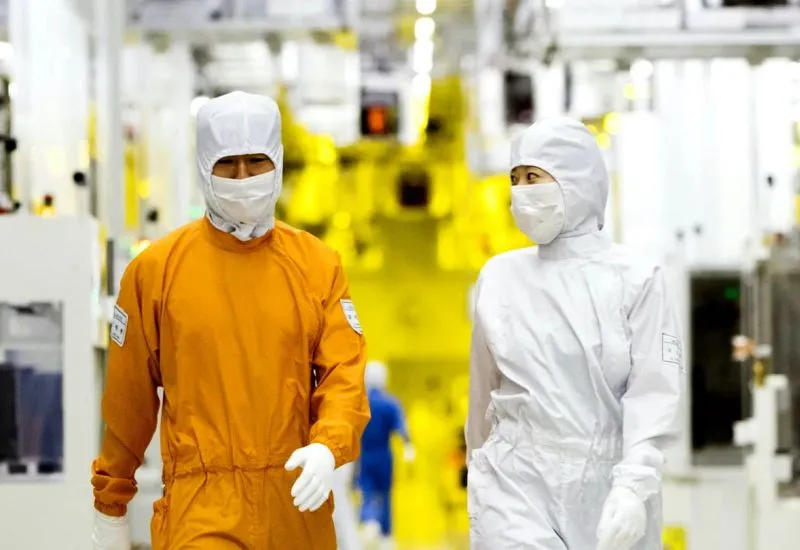
Memory manufacturers are ready to use different methods to increase product offerings, and they’re not always tied to the mediocre debugging of additional production space. How about Samsung Electronics Report Chosun Biz focuses on increasing the production of suitable products and moving to more advanced technological processes.
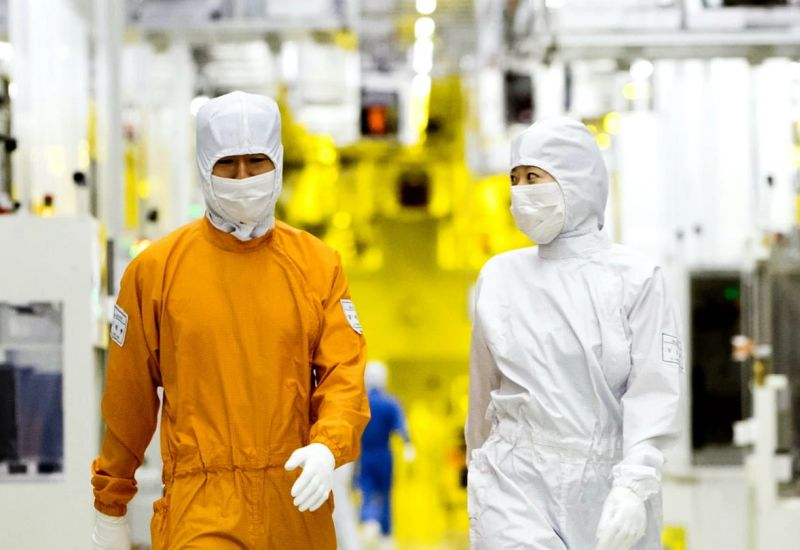
Image source: Samsung Electronics
In this case, no additional space is required to increase throughput, allowing you to quickly increase memory throughput. Sources said Samsung is now focused on moving DRAM production from process technology 1b to process 1c and stabilizing the quality indicators of the final product. Omdia predicts that Samsung’s DRAM production will grow by about 6% this year, reaching 8.2 million silicon wafers. Growth next year will be limited to 1.3%, which will ensure the production of 8.28 million silicon wafers. This is partly to blame on HBM4 memory, which Samsung is trying to focus on.
An unnamed representative of the company confirmed to the publication that Samsung Electronics has been considering increasing memory production as a top priority since last year, but has not actually expanded the area. The Pyeongtaek production base is updating existing equipment. If last year it supplied 49.5% of the company’s planned DRAM production, next year the complex’s share will increase to 55.4%. However, this approach to increasing production has its limitations compared to more extensive approaches involving building new production lines.
According to people familiar with the matter, Samsung’s production base in Hwaseong has experienced negative developments, if not stagnation, over the past three years. The company is modernizing older production lines and in some cases retooling 2D NAND lines to move them to DRAM test and packaging. Mature versions of DRAM and NAND will account for 30% of Samsung’s revenue by 2024, so these product lines hide some potential for further modernization. In Hwaseong, space expansion has also slowed as Samsung chose to focus on revamping existing traditional production lines.
On the other hand, competitor SK Hynix has a more aggressive production policy. By the end of this year, it plans to increase silicon wafer processing volume by nearly 10% to 6.66 million wafers. If Samsung led SK Hynix by 27% in DRAM production last year, the gap may narrow to 13.6% by the end of next year. Experts believe that SK Hynix’s approach provides greater flexibility in a saturated market during times of memory shortages. At the same time, Samsung’s priorities will contribute to an increase in product output to a certain extent due to improved quality and modernization of technological processes.
If you find an error, select it with your mouse and press CTRL+ENTER.