

Last Sunday, the Long March 5 Y14 carrier rocket was scheduled to launch from China’s Wenchang Space Launch Site. As part of the new Chang’e 7 lunar mission, it will launch a space station and lunar rover to the moon’s south pole to search for water ice and conduct general reconnaissance of the situation. Everything is ready to start immediately with no signs of trouble. but launches at the specified date and time canceled and, look likeuntil next year.
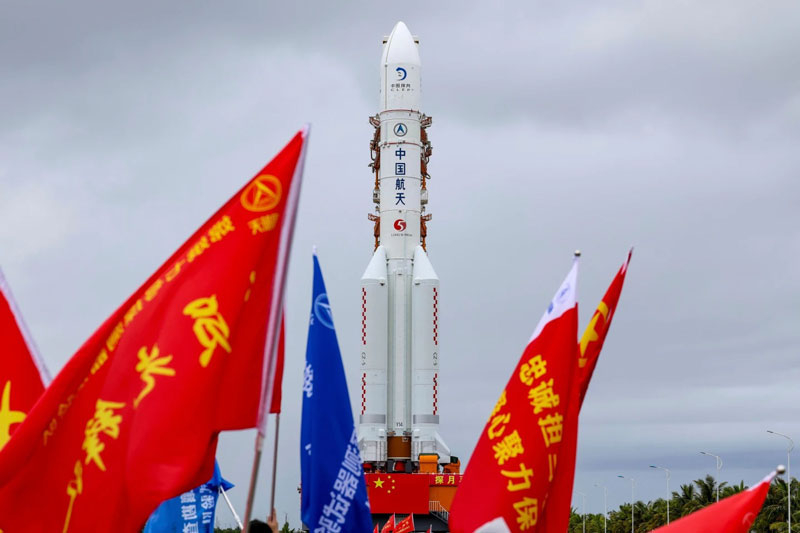
Image source: Xinhua News Agency
The first hypothesis is that the launch was canceled due to unfavorable weather conditions, specifically a typhoon raging somewhere nearby. However, after the China Space Administration announced a comprehensive review of the mission “Does not meet the launch conditions within this year’s planned launch window”it’s clear that everything becomes more complicated.
Launching a rocket to deliver a landing module to the moon’s south pole requires a combination of many conditions, from flight path to illumination of the landing site by the sun. Obviously, this combination can only be used for a limited time, and delaying the launch by even a few days due to weather means delaying the mission by months.
The most annoying thing is that the launch preparations have been basically completed: on August 19, the rocket with the payload installed was transported to the launch pad in a vertical position. The initial launch was expected to be August 23-24. One of the most likely factors for cancellation is a typhoon in the Hainan region, but this has not yet been confirmed by Chinese authorities.
The mission plan is very ambitious – it involves exploring the Moon’s South Pole, including the permanently shadowed area in the Shackleton Crater area where water ice deposits are suspected. The complex consists of an orbiter, a landing platform, a lunar rover and an unusual “hopping” vehicle capable of moving between illuminated and permanently shadowed areas. The latter aims to directly study hard-to-reach and permanently dark craters. This will be a real historical event in the study of Earth’s natural satellites, but it looks like we’ll have to be patient.
If you find an error, select it with your mouse and press CTRL+ENTER.