

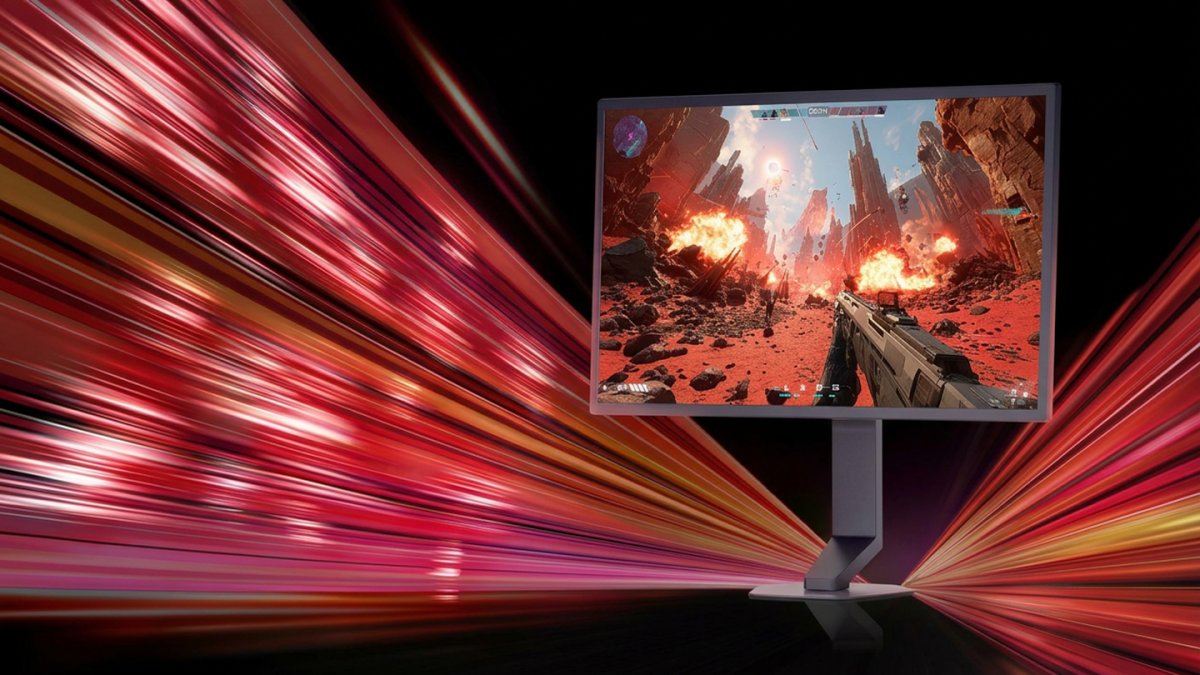
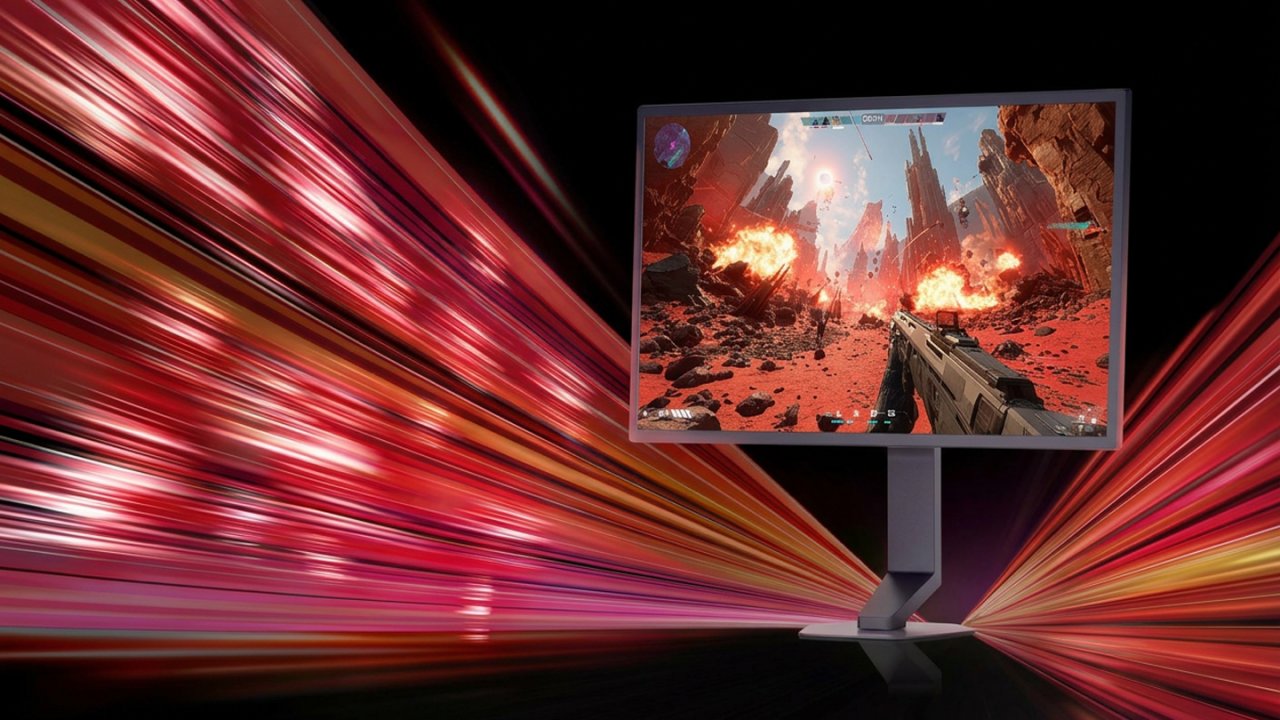
LG has officially Pre-sale for the new UltraGear 25G590B has starteda gaming monitor that boosts a 1000 Hz refresh rate to native Full HD resolution. The company launched the 24.5-inch model last May, and it’s now available in the U.S. for $999.99, which is almost a dollar per Hz.
The monitor is first targeted at the esports and competitive gaming segment, where response time and image smoothness can play an important role. In fact, LG’s first Full HD gaming monitor as a consumer electronics manufacturer can natively hit 1,000 Hz without having to reduce resolution to reach the maximum refresh rate.
What’s 1,000 Hz good for?
UltraGear 25G590B has a 24.5-inch IPS panel, resolution 1920 x 1080. The update rate hits 1,000 Hz in native mode and can be increased further to 1,100 Hz when overclocked, although the latter mode imposes some limitations on sync functionality. To take advantage of 1,000 Hz, you need Windows 11, a compatible GPU, and a DisplayPort 2.1 connection.
This choice is particularly interesting because several competing monitors can only reach 1,000 Hz when using lower resolution modes, Typically 1280 x 720. Instead, LG aims to maintain the full Full HD resolution, thereby avoiding sacrificing the amount of detail displayed on the screen when using higher refresh rates. AOC’s AGON returns to Gamescom 2026 with new QD-OLED displays and models that can reach 720 Hz. This panel also uses ATW (Advanced True Wide) Polarizer and low-reflective processing. LG claims a response time of 1 millisecond, and the monitor supports AMD FreeSync Premium and NVIDIA G-SYNC Compatible. There’s also Motion Blur Reduction Pro technology, designed to make objects clearer when moving quickly and make it easier to track opponents.
The real limitation of a 1,000 Hz monitor isn’t just the panel. To truly take advantage of this, the system must be able to produce extremely high numbers of frames. LG specifies that the 1,000 Hz mode requires the latest graphics cards, such as the GeForce RTX 50 or some compatible Radeon RX 9000 and previous generations, as well as DisplayPort 2.1.
Connectivity includes exactly 1 DisplayPort 2.1 supporting UHBR20necessary to handle such high-frequency Full HD signals, as well as two HDMI 2.1 ports, USB-C and a headphone output. This monitor also integrates some software and hardware features dedicated to gaming, including dynamic motion synchronization, AI scene optimization and AI sound.
But the more interesting question is: is 1000 Hz really necessary? Going from 60 Hz to 144 Hz or from 144 Hz to 240 Hz makes a noticeable difference. However, when the frequency reaches 360, 500, and especially 1,000 Hz, its advantages become increasingly difficult to distinguish with the naked eye. At 1,000 Hz, each frame remains on the screen for about 1 millisecond, compared to 4.17 milliseconds for a 240 Hz monitor and 2 milliseconds for a 500 Hz monitor. So the theoretical advantage is there, but taking advantage of it requires gaming at frame rates in the hundreds of FPS range. For most users, a good 240 or 360 Hz monitor is probably a smarter compromise.
The price makes this product even more special: $999.99 is a high number for a Full HD IPS display, especially considering there are already several lower-priced high-refresh-rate OLED displays on the market. As such, LG’s primary target is enthusiasts and competitive gamers interested in trying out a technology that’s still in its infancy.
LG UltraGear 25G590B Currently Available for pre-order on LG’s US website for $999.99. It is expected to ship on September 1, 2026. For orders placed before August 31, LG is also offering two years of premium coverage for $1 and 5% on purchases using MyLG Rewards points. Pricing and availability for the European market and Italian market have not yet been announced.