

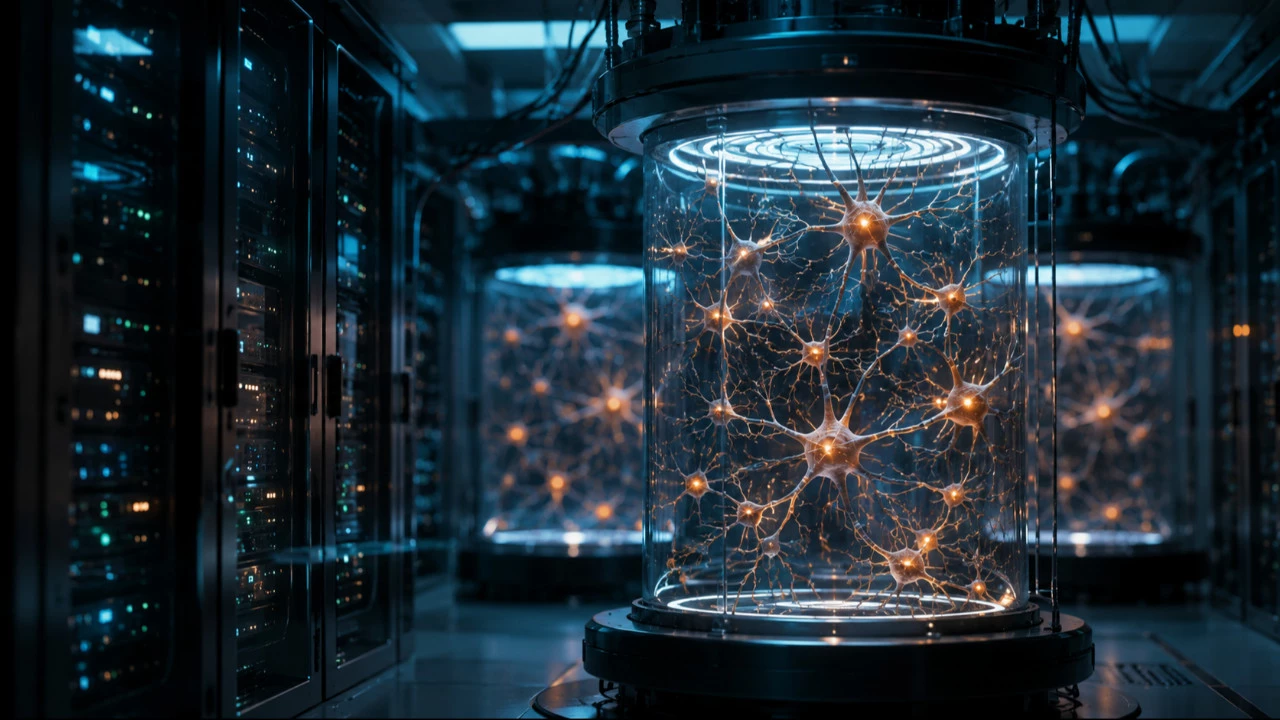

The Center for Life Sciences at the National University of Singapore (NUS) has launched an unusual data center that uses living human brain cells instead of the usual silicon chips to process information.
The project is co-sponsored by Australian biotech start-up Cortical Labs, the National University of Singapore and data center operator DayOne. Currently, the device consists of 20 biocomputers (CL1), each containing at least 200,000 laboratory neurons on electrode chips that receive power every three days.
This new technology aims to solve Singapore’s main problems – the huge energy consumption and resource shortage of traditional data centers. Each CL1 unit, along with the life support system, consumes only about 30 watts of power (by comparison, a server equipped with an Nvidia H100 chip may consume more than 10 kilowatts), and does not require extensive cooling.
The founders see major niches for biocomputing in robotics and cybersecurity, where the ability to learn from limited data sets is crucial. The developer plans to expand the infrastructure to 1,000 units after passing all necessary safety and energy efficiency tests.